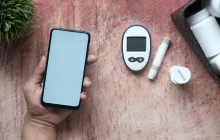
In the modern landscape of digital health, wearable ECG monitors have moved from niche medical devices to everyday companions that continuously track the rhythm of the heart while seamlessly integrating into daily life. These devices empower patients, clinicians, and researchers by turning isolated measurements into streams of insights that can inform diagnosis, treatment, and prevention. The evolution has been shaped by advances in flexible electronics, skin-friendly sensors, intelligent software, and secure connectivity, creating tools that can be worn during work, exercise, sleep, and even aquatic activities without impeding comfort or safety. This article explores the key innovations that are transforming wearable ECG monitors, examining how material science, signal processing, energy management, data governance, and clinical workflows converge to redefine cardiac care in the 21st century, and it highlights the challenges that remain as these technologies scale and integrate with health systems.
Historical context and the evolution of wearable ECG technology
To appreciate today’s wearable ECG monitors, it helps to trace their lineage from the bulky ambulatory devices of decades past to the slim, low-power systems that populate today’s wrists, chests, and even clothing. Early medical monitors relied on multi-lead configurations and tethered data capture, demanding professional setup and hospital-grade environments. Over time, innovations in miniaturization, wireless communication, and battery chemistry reduced size and complexity while expanding use cases beyond hospital corridors. The shift from single-channel to multi-channel sensing, coupled with robust algorithms for artifact suppression, paved the way for comfortable, real-time monitoring that patients could wear continuously for days or weeks. As these devices evolved, they began to blur the line between clinical telemetry and everyday wellness devices, enabling a continuum of care rather than episodic assessment.
Advances in sensor materials and electrode design
One of the most consequential areas of innovation lies in the materials that contact the skin, because comfort, adhesion, and signal quality determine wearable adoption. Modern ECG monitors increasingly rely on dry or semi-dry electrodes, replacing traditional gels that irritate the skin or degrade with sweat. Flexible substrates, ultrathin foils, and conformal coatings allow sensors to bend with the body and maintain reliable contact during movement. Conductive polymers, carbon-based inks, and graphene composites are being explored to reduce impedance and improve signal fidelity without sacrificing comfort. Advanced adhesives balance adherence with easy removal, minimizing skin irritation while maintaining stable contact during vigorous activity. These material advances enable continuous, long-term monitoring in real-world settings, where static laboratory conditions rarely apply and motion, moisture, and temperature can alter measurements.
Signal processing advances and on-device intelligence
Detecting meaningful cardiac events from raw ECG data requires sophisticated signal processing to separate true signals from noise generated by motion, perspiration, or poor electrode contact. Modern wearable systems employ a blend of adaptive filtering, robust QRS detection, and customized artifact rejection pipelines tailored for compact hardware. The rise of edge computing means that many analyses can run directly on the device, delivering near-instant feedback while preserving privacy by avoiding unnecessary data transmission. Deep learning and traditional machine learning approaches are increasingly used to classify arrhythmias, estimate heart rate variability, and identify patterns predictive of events such as atrial fibrillation or ischemia. developers and clinicians collaborate to balance model complexity with energy consumption and interpretability, ensuring that on-device decisions remain explainable and clinically actionable.
Battery technology and power efficiency
Power efficiency is a defining factor for wearable ECG monitors, since continuous data collection and real-time analytics depend on long battery life. Advances in energy-dense chemistries, high-efficiency microcontrollers, and optimized sampling strategies extend usage between charges. Some devices employ energy harvesting techniques or ultra-low-power sensors that dynamically adjust sensitivity based on user activity, reducing unnecessary measurements. Flexible batteries and supercapacitors, paired with smart power management, enable slim form factors without sacrificing runtime. In practice, designers implement duty cycling, event-driven recording, and compressed data formats to minimize energy expenditure while preserving clinically relevant information. As a result, users can wear devices for extended periods between charges, improving adherence and the quality of longitudinal data available for analysis.
Connectivity and cloud-enabled analytics
Reliable wireless communication is essential for real-time monitoring and remote management. Wearable ECG devices leverage low-energy protocols such as Bluetooth Low Energy and, in some cases, near-field or wide-area cellular connectivity to transmit data securely to smartphones, gateways, or cloud platforms. Cloud-based analytics empower clinicians to combine ECG data with other health records, enriching interpretation with longitudinal trends and population-level insights. Interoperability standards and APIs facilitate data exchange with electronic health records, enabling integrated workflows that support remote patient monitoring programs. Privacy-preserving techniques, encryption in transit and at rest, and user-consent models are critical to maintaining trust as data move across devices, apps, and data centers.
Clinical validation and regulatory landscape
Clinical validation underpins the adoption of wearable ECG monitors in routine care. Regulatory pathways vary by region, but common requirements include demonstration of analytical validity, clinical validity, and user safety. Manufacturers pursue rigorous studies to show sensitivity and specificity for key events such as atrial fibrillation, ventricular tachycardia, or ischemic changes, often comparing wearable readings against gold-standard electrocardiography. Real-world evidence from diverse patient populations strengthens regulatory submissions and informs labeling, risk mitigation, and post-market surveillance. As digital health ecosystems mature, harmonization of data standards, device classifications, and patch-level performance metrics becomes increasingly important to ensure consistent quality across devices and between clinical studies.
User experience, form factor, and usability
The success of wearable ECG monitors hinges on user acceptance as much as technical capability. Designers emphasize comfort, low-profile aesthetics, and intuitive interfaces so that patients can wear devices for extended periods without distraction. Hypoallergenic materials, flexible contours, and water resistance extend wearability to daily activities and sleep, while simple pairing with consumer smartphones or dedicated readers reduces friction for nontechnical users. Clear, actionable feedback—such as simple alerts for abnormal rhythms or guidance on when to seek care—helps patients engage with their own health data. Equally important is thoughtful onboarding, accessible maintenance instructions, and robust customer support to maintain usage over time in real-world settings.
Privacy, security, and data governance
As wearable ECG monitors collect increasingly intimate physiological data, robust privacy and security controls become nonnegotiable. Security-by-design principles guide device hardware and software development, including encryption, secure boot processes, and tamper-resistant storage. Data governance frameworks address consent, data minimization, access controls, and audit trails to ensure that patient information is used ethically and only for intended purposes. Patients should be informed about how their data are shared, who can view the information, and how long it is retained. Clinicians and researchers rely on transparent policies to maintain trust while enabling longitudinal analysis that can improve diagnosis, risk stratification, and prevention strategies.
Impact on care pathways and outcomes
The proliferation of wearable ECG monitors is reshaping care pathways by enabling earlier detection of abnormal rhythms and more timely interventions. Continuous or near-continuous data provide a richer picture of cardiac function than snapshot assessments, allowing clinicians to tailor therapies and lifestyle recommendations. In atrial fibrillation management, for instance, extended monitoring can reveal asymptomatic episodes, guiding decisions about anticoagulation. Remote monitoring reduces unnecessary clinic visits and hospitalizations for patients at high risk, while enabling proactive care coordination among primary care providers, cardiologists, and digital health teams. The net effect is a more proactive, patient-centered approach that emphasizes prevention and timely escalation when risk signals emerge.
Future directions and challenges
Looking ahead, wearable ECG monitors are expected to become more capable through better multimodal sensing, improved artifact resilience, and increasingly intelligent, user-friendly interfaces. Integrations with photoplethysmography, respiration sensing, and motion tracking will yield richer context for interpreting heart rhythm data. Advances in materials science are likely to yield even thinner, more elastic sensors with dry-contact performance that still maintain stable readings during vigorous activity or hydration changes. On the clinical side, widespread adoption will depend on scalable validation studies, interoperable data ecosystems, and reimbursement models that recognize remote monitoring as a driver of better outcomes and lower total costs of care. Ethical considerations, equity of access, and patient education will remain central to ensuring that innovations benefit diverse populations rather than widening existing health disparities.
Standardization of metrics and interoperability
To maximize the value of wearable ECG data, there is a growing emphasis on standardizing metrics, reporting formats, and validation methodologies. Consistent definitions of arrhythmia episodes, signal quality indices, and measurement denominators help clinicians compare readings across devices and over time. Interoperability initiatives aim to harmonize data schemas, timestamps, and event markers so that information can seamlessly flow from consumer-facing applications to hospital information systems without losing fidelity. Standardization also supports multi-device studies and meta-analyses, enabling researchers to aggregate data from large populations and derive robust evidence about device performance, risk prediction, and population health trends. These efforts require collaboration across regulators, industry players, and clinical communities to align expectations and regulate quality consistently.
Ethical considerations and patient empowerment
As wearables become more embedded in daily life, ethical considerations expand beyond privacy and security to include equity, autonomy, and the responsible use of predictive insights. Patients gain a sense of empowerment when they actively participate in their own care through data, yet this can also lead to anxiety if information is misinterpreted without clinical guidance. Transparent communication about the limitations of wearable data, the meaning of alerts, and the steps to take when an abnormal reading occurs is essential. Equitable access to these technologies hinges on affordable devices, usable interfaces, and culturally sensitive education that helps diverse populations benefit from advancements in ECG monitoring without being overwhelmed by complexity or driven to unnecessary medical consultations by false positives. Collaboration among clinicians, designers, and patient communities is critical to align technology with real-world needs and values.
Material science breakthroughs and longevity of wear
Beyond the electrode contact, breakthroughs in material science focus on longevity and reliability of wear. Protective encapsulation, breathable microtextures, and skin-compatible interfaces reduce irritation over long wear periods and maintain signal integrity under various environmental conditions. Research into self-healing materials, moisture management, and antifouling coatings promises to extend device life in daily use, while keeping maintenance simple for users. As devices become more embedded in textiles or integrated into fashionable accessories, the boundary between medical devices and everyday wear blurs, offering continuous health monitoring as a natural part of lifestyle rather than an exception to daily routines. These material innovations help ensure that long-term data streams remain consistent and actionable for clinical interpretation and research.
Clinical integration and workforce adaptation
Effectively integrating wearable ECG monitors into clinical practice requires thoughtful changes to workflows, education, and team structures. Radiant gains arise when data from wearables are presented with clear clinical context, actionable thresholds, and concise summaries that fit into busy workflows. Training programs for clinicians emphasize interpreting long-term rhythm data, understanding device limitations, and communicating with patients about alerts and risk. Support roles, such as data stewardship and digital health coordinators, help bridge the gap between device manufacturers, IT departments, and clinical teams. As adoption grows, healthcare systems must invest in standardized protocols for alert management, data storage, and access control to ensure that wearable-derived insights translate into meaningful improvements in patient care.
Exploration of multi-lead concepts in comfortable form factors
Historically, single-lead wearables offered simplicity but limited diagnostic capability. Contemporary innovations experiment with multi-lead configurations embedded in flexible, wearable formats that remain comfortable for daily use. Achieving this balance involves advanced signal processing to decompose complex signals in the presence of motion and impedance changes. Researchers explore channel selection strategies that optimize the most informative leads for a given clinical question while preserving battery life. By integrating intelligent lead management with user-friendly wearability, these devices offer richer diagnostic potential without compromising wearability or comfort, expanding the practical utility of wearable ECG monitoring in real-world settings.
Reinforcing trust through transparency and education
As wearable ECG monitors become part of standard care, transparent communication with patients and clinicians about device capabilities, limitations, and data handling becomes essential. Educational resources that explain how algorithms detect events, what constitutes a true positive, and how follow-up decisions are made help mitigate misinterpretation. Clear labeling of device performance in everyday conditions, shared case studies, and open channels for feedback all contribute to trust. When users understand why alerts occur and what steps to take, adherence improves and anxiety decreases. In turn, this supports more accurate long-term monitoring, better patient satisfaction, and stronger partnerships between patients, clinicians, and technology developers.
Closing thoughts on a transforming landscape
The innovations in wearable ECG monitors described here illustrate a field that is moving rapidly from proof-of-concept demonstrations to integrated components of lifelong health management. While technical progress in sensors, processing, power, and connectivity is accelerating, the true potential unfolds at the intersection with clinical practice, patient engagement, and health system design. By combining durable materials, intelligent software, patient-centered design, and rigorous validation, wearable ECG technology can deliver earlier detection of risk, personalized care pathways, and improved outcomes for people with a range of cardiac conditions. The journey ahead will require continued collaboration, careful attention to ethics and equity, and a steadfast commitment to translating data into healthier lives without overwhelming clinicians or patients with noise rather than signal. This ongoing evolution holds the promise of a future where heart health is monitored continuously, compassionately, and intelligently, turning insights into actions that protect and extend lives.