Introduction and Context
In recent years the emergence of three dimensional printing technologies has begun to transform the field of prosthetics in ways that reach far beyond automated production or rapid prototyping. What began as a tool for engineers and designers to iterate concepts quickly has evolved into a powerful medical aid that enables highly customized devices tailored to the unique anatomy, daily routines, and personal goals of each patient. The shift from mass produced, one size fits many devices toward patient centric design has improved the way people move, work, and participate in daily life. With 3D printing, clinicians can move beyond rigid templates and toward prostheses that feel like an extension of the body rather than an external tool, a difference that translates into more natural control, reduced discomfort, and a stronger sense of autonomy for users.
Historically prosthetic devices faced a combination of challenges that often limited their effectiveness. Traditional sockets could create pressure points, edges and seams might irritate the skin, and the process of manufacturing desired fittings could be lengthy and expensive. In many regions access to specialized prosthetic care was constrained by a shortage of skilled technicians, limited facilities, and the costs associated with custom fabrication. 3D printing has begun to address these bottlenecks by enabling rapid customization, streamlined workflows, and open sharing of design data that can be adapted to a wide range of patients. The cumulative effect is not merely technical advancement; it is a re framed opportunity to restore function with devices that align with a person’s lifestyle and environment, rather than forcing patients to fit into a predefined product.
At its core, the promise of 3D-printed prosthetics rests on a combination of accurate digital modeling, responsive materials, and production methods that can be scaled to clinical settings. When a clinician captures the precise contours of a residual limb, the resulting digital model can be used to generate a socket that distributes pressure evenly, accommodates sensitive areas, and accommodates swelling or shrinkage over time. The same digital backbone supports the rapid iteration of components such as fingers, hands, wrists, and attachment systems, allowing adjustments to be tested in days rather than weeks. The patient experience is central to this process, with feedback loops that incorporate comfort, control, and functional goals into the design cycle. The outcome is a system that evolves with the patient’s needs and capabilities, rather than a static device that quickly feels mismatched after a few weeks of use.
The Core Technology Behind 3D-Printed Prosthetics
Three dimensional printing in this clinical context involves translating diagnostic information into a precise physical form. The workflow typically begins with data acquisition through imaging and measurements that capture soft tissue shape, bone landmarks, and the dynamic changes of the residual limb during movement. This data is then converted into a digital model, where constraints such as joint ranges, grip patterns, and load distribution are defined. A crucial element of this stage is the ability to simulate how forces will travel through the device during different tasks, and how the interface with the skin will respond under varied activity levels. Engineers and clinicians work together to optimize the geometry, ensuring that the socket grips without restricting sensation or circulation while allowing for comfortable ventilation and moisture management over long periods of wear.
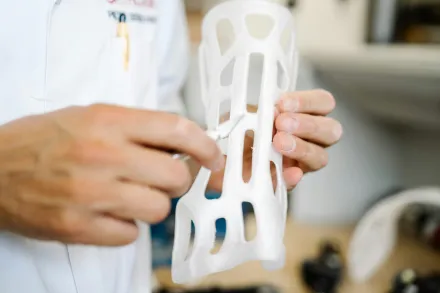
The printing stage transforms the refined model into a tangible structure. Fused deposition modeling, a common additive manufacturing approach, extrudes thermoplastic material layer by layer to build the socket with a balance between strength and lightness. Other methods such as stereolithography and selective laser sintering expand the palette of materials and surface finishes, enabling higher resolution features or different mechanical properties. Composite approaches that combine rigid frameworks with flexible liners further enhance comfort, while modular designs allow components to be replaced while preserving the core fit. In all cases the produced parts must meet safety standards and be compatible with cleaning regimens that maintain hygiene and reduce the risk of skin irritation or infection. The production pipeline is designed to be adaptable to hospital, clinic, or community lab environments, where skilled technicians can supervise the process and validate the final fit before delivery to the patient.
Quality assurance in this context extends beyond dimensional accuracy. It involves evaluating how a device feels during natural movements, how it interfaces with the wearer’s skin, and how easily the patient can don and doff the prosthesis. Clinicians often employ simple functional tasks or observational assessments to gauge grip strength, dexterity, and stability. Feedback from real-world use is fed back into the digital model, enabling a new cycle of refinement. This iterative loop is a defining virtue of 3D-printed solutions, because it allows rapid experimentation with different socket textures, limb contours, or weight distributions without the prohibitive costs associated with fabricating entirely new prostheses through traditional methods. The result is a therapy that grows alongside the patient’s daily life, adapting not only to physical dimensions but to evolving goals such as returning to a sport or resuming a preferred hobby.
Clinical Benefits for Patients
From a purely mechanical perspective, the bite sized advantage of 3D-printed prosthetics lies in the precision fit that a digital workflow enables. The ability to tailor socket geometry to minor variations in residual limb shape helps reduce hotspots and shear forces that commonly cause skin breakdown, fatigue, and soreness. People who once found wearing a prosthesis uncomfortable for extended periods can now experience longer sessions of use with reduced pain, which in turn encourages more consistent participation in activities that matter to them. When comfort is improved, users are more likely to engage in daily tasks with greater confidence, increasing their practice of functional skills and accelerating the process of adapting to life with a prosthesis.
Weight management also plays a pivotal role in perceived ease of use. 3D-printed parts can be optimized to minimize mass without sacrificing stiffness or strength, resulting in a more natural balance around the shoulder, elbow, or knee. Lighter devices place less strain on the body, which translates into less energy expenditure during activities such as walking, running, or carrying objects. In addition, modular designs make it simpler to replace worn or damaged components without re fabricating the entire device, saving time, reducing costs, and enabling faster return to use after a necessary repair. This modularity extends to attachment systems, enabling a patient to switch between different grips or tools according to the task at hand. The practical impact of such flexibility is measurable in improved task performance and fewer interruptions in daily routines, which cumulatively enhance independence and self efficacy.
Medical teams have also realized benefits in the educational dimension of care. Students and new clinicians can observe and participate in the customization workflow, building familiarity with digital modeling techniques and additive manufacturing while maintaining patient safety. The education potential includes teaching patients how to manage their device, monitor skin health, and perform simple self checks that keep them engaged in their rehabilitation process. When patients understand the why behind a design choice and can see the tangible effects of adjustments, they are more likely to take ownership of their device and adopt consistent maintenance practices. This educational loop strengthens trust between patients and the care team and fosters a collaborative mindset that supports ongoing progress toward rehabilitation goals.
Beyond physical fit and mechanics, psychological well being is also influenced by the aesthetic aspects of device design. A prosthesis that looks and feels less clinical can help reduce self consciousness, which in turn supports social participation and confidence in public settings. In many cases, patients elect colorized shells, textured surfaces, or recognizable shapes that reflect personal identity. The freedom to customize appearance is not merely cosmetic; it reinforces a sense of agency and normalcy. The capacity to present a prosthesis as an instrument of personal expression rather than as a medical apparatus shapes how individuals perceive themselves and how they interact with others, creating a positive feedback loop that encourages consistent use and active engagement in rehabilitation activities.
Comfort, Usability, and Daily Life
Comfort is multifaceted in a prosthetic device. It includes the physical interface with the skin, the distribution of weight, the alignment of joints, and the ease with which a user can put on or remove the device. 3D-printed sockets can be lined with soft, skin friendly materials that cushion contact points while remaining breathable. The geometry of the interior surface can be tuned to accommodate variations in tissue softness and to reduce friction that might otherwise lead to sores after hours of wear. Over time, as a patient’s limb changes with swelling or activity, digital models can be adjusted to restore a snug, even fit, mitigating the need for off-the-shelf adjustments that rarely solve underlying fit issues. The result is a prosthesis that effectively travels with the wearer through daily routines, from commuting to work and school to leisure activities at home or in the community.
Functionality, another cornerstone of daily life, benefits from the design flexibility inherent in additive manufacturing. Grips, hooks, or adaptive fingers can be shaped to support precise tasks such as gripping small objects, manipulating tools, or engaging in crafts. Because the design space is not constrained by traditional manufacturing limitations, the range of possible configurations expands, enabling devices that are better matched to the user’s preferred techniques. For individuals with partial hand function, a properly tuned device can restore a level of precision and control that promotes participation in activities that were previously challenging or inaccessible. In such cases the prosthetic is not simply a tool for replacement, but a scalable platform for skill development and personal achievement.
The social implications of improved usability are substantial. A user who can perform daily activities with less assistance gains autonomy and may re engage with work or education opportunities. The confidence that comes from being able to accomplish tasks independently reduces the cognitive load associated with planning, sequencing, and compensating for limb differences. Individuals often report a sense of return when they can handle personal care, cook meals, or engage with sports and hobbies without constant help or adaptation. In some communities this shift extends beyond the patient to family members, who experience reduced caregiving demands and a more balanced distribution of responsibilities. The ripple effect from a better fitting device thus extends through social networks, contributing to stronger inclusion in schools, workplaces, and community life.
Materials, Safety, and Hygiene
The choice of materials in 3D-printed prosthetics is a careful balance between mechanical performance, biocompatibility, and ease of cleaning. Clinicians work with engineers to select polymers that offer sufficient toughness, fatigue resistance, and surface finish while remaining compatible with skin contact over long durations. In some cases, flexible liners or compliant interfaces are used to reduce pressure hotspots and accommodate soft tissue swelling. The interior surfaces can be coated or textured in ways that minimize skin irritation and promote air flow. Hygiene is a central consideration because prosthetic devices are in direct contact with skin and can accumulate sweat, oils, and particulate matter. Cleaning protocols are designed to be straightforward for patients to perform at home, which supports ongoing device health and user comfort. The ability to print replaceable liners or modular components simplifies sanitation routines and reduces the risk of skin issues for users who wear their devices daily.
From a safety standpoint, robust testing protocols ensure that structural components meet expectations for strength, durability, and fracture resistance under typical loading scenarios. Prototypes undergo static and dynamic assessments that simulate real world stresses such as lifting, gripping, and impact. Regulatory considerations require documentation of materials properties, design rationales, and manufacturing controls to demonstrate that devices meet appropriate standards for medical devices in the regions where they are issued. Collaboration among clinicians, engineers, and regulatory experts helps to align design outcomes with patient safety, clinical utility, and ethical practice. When these safeguards are in place, patients can rely on prosthetic devices that maintain their integrity across months and even years of routine use, reducing the likelihood of sudden failures that disrupt rehabilitation progress.
Hygiene strategies are also informed by the modular nature of many 3D-printed systems. Removable liners and easily cleanable surfaces can be integrated into socket designs, making routine care more practical for busy families or patients in remote settings. The ability to swap out a component as a minimal maintenance intervention reduces downtime and supports continuity of use in daily life. In communities with limited access to specialized care, straightforward cleaning regimens become essential to sustaining long term device wear and reducing the risk of skin problems. Cleanliness is not merely about aesthetics; it directly affects comfort, skin health, and overall user satisfaction, which in turn influences adherence to a rehabilitation plan.
The safety and hygiene narrative also embraces education about wear patterns and skin monitoring. Clinicians often teach patients to inspect for signs of redness, irritation, or changes in fit that might indicate tissue shifts or socket wear. By fostering a partnership that prioritizes early detection of issues, patient outcomes improve and long term device performance remains robust. This proactive approach to care underscores the broader philosophy driving 3D-printed prosthetics: a patient centered design mindset that treats each device as a living extension of the person, continuously refined to support health, comfort, and dignity in everyday life.
Accessibility, Global Health, and Economic Considerations
One of the most compelling aspects of additive manufacturing in prosthetics is the potential to democratize access. In regions where specialized fabrication facilities are scarce, community clinics or university partnerships can host compact 3D printing workflows that deliver tailored devices locally. The digital nature of the design process means that a single optimized socket geometry can be shared across clinics, translated into local materials, and produced with minimal logistical hurdles. This capability reduces wait times, lowers costs, and expands the reach of prosthetic care to populations that previously faced long travel distances or prohibitive expenses. For patients, the practical benefits include faster rehabilitation timelines, greater opportunity to experiment with different functional configurations, and the possibility of a more consistent supply of spare parts and replacements as needed.
Economic considerations also influence the adoption of 3D-printed prosthetics. While initial investments in digital scanners, printers, and skilled personnel may be required, ongoing costs for materials and maintenance can be substantially lower than those associated with conventional custom fabrication. The ability to print components on demand reduces inventory pressures and minimizes waste, creating a more sustainable model for prosthetic care. In educational settings, universities and medical schools can incorporate hands on training that builds a workforce proficient in digital design and additive manufacturing, thereby contributing to local economic development while enhancing healthcare capacity. A scalable approach to production supports not only individual patients but communities as a whole by expanding the availability of personalized devices and reducing the disparities that often accompany disability care.
Global health initiatives are increasingly recognizing prosthetics as a priority area where technology and compassionate clinical practice intersect. Projects that plant the seeds for low cost, high performance devices can be adapted to diverse environmental conditions, including tropical climates or arid regions where maintenance routines differ from those in temperate zones. The portability of some 3D printing setups enables outreach teams to deliver care in rural clinics or displaced persons camps, where a flexible manufacturing workflow can provide essential mobility aids. In these contexts, the capacity to tailor devices to local activities—such as agricultural work, water collection, or school attendance—becomes a practical catalyst for empowerment and resilience. The social dimension of access thus intertwines with the technical, producing outcomes that matter in real life rather than in laboratory settings.
Future Directions and Challenges
Looking ahead, researchers and clinicians are exploring how materials science, software tools, and manufacturing processes can converge to expand the capabilities of 3D-printed prosthetics even further. Developments in multi material printing open possibilities for devices that combine rigid structures with compliant interfaces in a single production run, reducing assembly steps and enhancing user comfort. Advances in sensor integration hold the promise of more intuitive control systems, where embedded tactors and haptic feedback can bridge the gap between intention and action, making movements feel more natural and responsive. The integration of machine learning and digital twins could enable personalized optimization over time, automatically adjusting socket geometry or control strategies as the wearer’s activity patterns evolve. While the potential is vast, these innovations must be balanced with rigorous safety testing, regulatory alignment, and ethical considerations to ensure patient well being remains the central priority.
Alongside technological progress, practical challenges persist. Ensuring consistent quality across different production sites, validating long term durability, and maintaining privacy in digital design workflows are issues that require ongoing attention. Individuals with limb differences vary widely in anatomy, physiology, and daily demands, so a universal approach to 3D printed prosthetics is unlikely to emerge. Instead, a robust ecosystem of adaptable designs, shared data standards, and collaborative networks between clinicians, engineers, and patients will be essential. Training and education for clinicians, technicians, and patients must also keep pace with new tools so that users can confidently participate in the design process and make informed decisions about their care. Addressing these challenges will require sustained investment, cross disciplinary collaboration, and a patient centered philosophy that values the lived experiences of those who rely on these devices every day.
In the end, the story of 3D-printed prosthetics is one of accessibility, adaptability, and resilience. It is a story about turning a sophisticated manufacturing technology into a practical ally for people who strive to reclaim movement, independence, and purpose in their lives. It is also a story about communities coming together to design solutions that fit real world routines, about clinicians listening to patients’ daily needs, and about designers listening to patients who teach the technology how to bend toward human goals rather than force a rigid conformity. The cumulative impact of these elements can be seen in quieter mornings when a person rises with less pain and more confidence, in evenings when tasks that once required assistance are now accomplished with ease, and in the shared sense that a device can be a partner rather than a barrier in the journey toward full participation in life’s everyday moments.
As the field continues to mature, the ongoing collaboration among engineers, clinicians, patients, and policymakers will shape the trajectory of accessible, high quality, and individualized prosthetic care. The innovations anchored in 3D printing have already shown that customization does not have to be expensive or slow, and that medical devices can be designed to fit the human being rather than the other way around. This shift in perspective stands as a cornerstone of modern rehabilitation, offering a future in which prosthetics are not simply replacements but enablers—tools that unlock potential, confirm dignity, and open doors to new opportunities for people living with limb differences.
In summary, the impact of 3D-printed prosthetics on patient lives emerges through a complex weave of precise engineering, patient centered design, and practical considerations about access and daily use. The technology makes it possible to tailor devices to individual anatomy, adapt quickly to changing needs, and deliver care more efficiently across diverse settings. It also invites a broader conversation about how healthcare systems organize rehabilitation services, how clinicians train for digital workflows, and how communities can mobilize resources to extend the reach of personalized prosthetic care. The result is a future where prosthetic devices are not static artifacts but dynamic instruments that evolve in step with the people who rely on them, supporting a fuller, freer, and more self determined life.