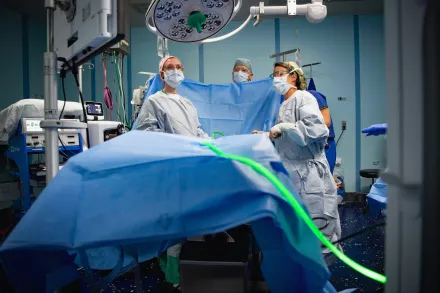
In the rapidly evolving landscape of modern medicine, remote surgery represents a fusion of robotics, high speed communications, and advanced sensing that promises to extend expertise beyond geographic boundaries. This field, once the subject of speculative fiction, has become a tangible practice that allows surgeons to perform complex procedures from distant locations with precision that rivals traditional in-person operations. The innovations driving remote surgery are multi layered, spanning hardware, software, networks, human factors, and regulatory frameworks, all converging to improve patient outcomes while challenging preconceived notions about where expertise can be delivered and when it is most needed. At its core, remote surgery is about creating a reliable bridge between the surgeon’s intent and the patient’s physical tissues, mediated by machines that can interpret intention with high fidelity and execute with steadiness under demanding conditions. The ongoing advancements emphasize safety, reliability, and intuitive control, ensuring that the physician remains at the center of care even when their hands are guiding instruments far away from the patient.
Historical milestones and the evolution of remote surgery
The roots of remote surgery extend back to experiments that sought to separate surgeon and patient by physical distance while maintaining control over robotic instruments. Early demonstrations highlighted the feasibility of teleoperation but also exposed critical gaps in latency, haptic feedback, and image fidelity. These early trials laid the groundwork for a narrative in which technical hurdles and clinical curiosity coexisted, gradually yielding systems with more robust control loops and clearer three dimensional visualization. The narrative took a dramatic turn with landmark procedures in the early twenty first century, including transcontinental demonstrations that showcased what could be achieved when scientists, engineers, and clinicians collaborated across continents. The insights from these demonstrations revealed not only the potential of robotic platforms to enhance precision but also the non trivial challenges of ensuring patient safety, reliable communication, and rapid recovery from any technical disturbance. Over time, the field matured as manufacturers refined master-slave architectures, improved instrument design, and extended the repertoire of procedures that could be performed remotely, helping to normalize remote approaches in some surgical specialties while expanding interest in others where access might be limited by distance alone.
As the early decades progressed, the focus shifted from proving feasibility to enhancing reliability and accessibility. The adoption of more ergonomic robotic interfaces and improved visualization systems reduced cognitive load for surgeons and made remote control feel more natural. The emergence of standardized protocols for setup, calibration, and failover contributed to a more predictable operational envelope, which in turn encouraged hospitals to invest in the requisite infrastructure. In parallel, clinical teams began to document outcomes with greater rigor, enabling evidence based assessments of remote techniques and informing decision making about case selection. Today’s innovations are built upon a lineage of incremental improvements, each addressing specific pain points such as latency compensation, secure data transmission, and safe escalation to local hands when unexpected anatomy or equipment issues arise. The historical arc demonstrates that remote surgery is not a single device or a single protocol, but a continually evolving ecosystem shaped by how reliably information can be captured, transmitted, interpreted, and acted upon in the operating room.
Current technologies enabling remote surgery
At the heart of remote surgery lies a sophisticated control paradigm in which a surgeon operates a master console that translates intended movements into precise actions by robotic or automated instruments. This master-slave architecture relies on a bidirectional flow of data: kinematic commands move the robotic arms, while sensory information—visual, proprioceptive, and sometimes haptic—feeds back to the operator. The precision of this system rests on minimizing latency and ensuring the fidelity of both motion and feedback, a combination that demands robust network design, optimized control algorithms, and resilient hardware. Modern systems also incorporate advanced servo control, real time monitoring, and predictive algorithms that anticipate operator input and streamline motion, reducing fatigue and enabling smoother trajectories across complex anatomical landscapes. As surgeons gain experience, these systems increasingly support nuanced maneuvers that would be exceptionally challenging with traditional manual approaches, expanding the potential for refined dissection, suturing, and tissue manipulation in delicate regions.
Another pillar of current technology is the integration of high definition, stereoscopic visualization paired with motion tracking to provide deep situational awareness. Three dimensional imaging, enhanced contrast, and real time fluorescent or optical imaging techniques assist in differentiating tissue types, identifying critical structures, and guiding instrument paths with heightened confidence. The visualization environment is often augmented by telemetry from instrument sensors, which communicate force, torque, and tremor data to the surgeon in an intuitive format. Together, visualization and haptic sensing create a more immersive experience that mirrors, and in some cases surpasses, the perceptual richness of the operating theater. This convergence of sensing modalities and display technologies underpins safer tissue handling, more precise suturing, and improved ability to adapt when anatomy is variant from typical presentations.
Instrumentation for remote surgery has also advanced considerably. Flexible, elongated, or continuum robots enable access to constrained spaces with reduced risk of tissue trauma. Miniaturized graspers, scissors, and energy devices have become more robust, with improved sterilization profiles and sterilization compatibility, allowing broader deployment across diverse operating rooms. The mechanical design emphasizes smooth motion, reduced backlash, and sometimes torque sensing to provide a coherent sense of instrument resistance to the operator. In addition to mechanical refinements, software improvements such as motion scaling, tremor suppression, and collision avoidance systems help protect delicate tissues and reduce the likelihood of unintended instrument contact. This synergy between hardware and software is critical to delivering reliable remote performance across a wide range of procedures and patient anatomies.
Haptic feedback and sensory integration
One of the most coveted capabilities in remote surgery is tactile feedback that allows the surgeon to feel tissue stiffness, tissue planes, and instrument-tissue interactions. Early iterations offered limited or non existent haptic feedback, which created a disconnection between the operator’s sense of touch and actual tissue response. Over time, researchers have pursued a variety of strategies to deliver meaningful haptics, including force feedback, tactile sensors, and impedance based control strategies that translate subtle resistance into actionable cues at the master device. While fully replicating the richness of in person haptics remains challenging, recent systems provide calibrated force cues and high fidelity impedance information that enable more natural control, improved precision in delicate dissection, and more controlled suturing. The design challenge is to balance the technical complexity and potential latency with the clinical benefit, ensuring that any added feedback contributes to safety and performance without overwhelming the operator with extraneous information.
Beyond force feedback, sensory integration has expanded to include visual cues that enhance perception. Haptic and visual data streams are fused in ways that preserve intuitive understanding of motion, contact, and tissue response. The resulting sensory experience is not a mere replica of real world touch, but a carefully curated approximation that supports steadier instrument handling and more confident tissue manipulation. As controllers become more sophisticated, surgeons can rely on consistent kinesthetic feedback to maintain muscle memory, reduce inadvertent movements, and sustain smooth instrument trajectories during complex tasks such as precise suturing in deep body cavities or performing meticulous dissections near critical vessels. The ongoing refinement of haptic interfaces and sensory integration remains a central theme in pushing remote techniques toward parity with, or even superiority over, conventional approaches in selected scenarios.
Imaging, visualization, and augmented reality
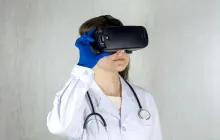
A cornerstone of remote surgery is the quality of visualization. Modern systems deliver high resolution, three dimensional imagery that allows the surgeon to perceive depth and spatial relationships with heightened clarity. Advanced imaging modalities can highlight critical structures, track instrument positions in real time, and provide functional overlays that reveal tissue perfusion or nerve pathways. Visualization fidelity is essential for accurate navigation through variable anatomy, especially in minimally invasive settings where direct vision is limited. In many programs, augmented reality overlays can align preoperative planning data with the patient’s intraoperative anatomy, further guiding decision making and reducing the cognitive load on the operator. The continuous enhancement of imaging pipelines, from camera sensors to display ergonomics, directly translates into more efficient tissue handling, better delineation of margins, and fewer inadvertent injuries during remotely conducted procedures.
To support global access, visualization workflows increasingly incorporate cloud based processing and edge computing strategies that offload resource intensive rendering to remote servers while retaining a responsive user experience. This separation between data capture and processing can allow practitioners to work with richer, more dynamic visualization without requiring prohibitively expensive local hardware. Yet, it also raises considerations about data security, latency budgets, and regulatory compliance. The balance among visual fidelity, latency, and data protection is a recurring design constraint that engineers and clinicians must navigate to ensure that remote visualization remains both safe and practical across diverse clinical settings.
AI assistance and autonomous planning in remote contexts
Artificial intelligence has become a valuable assistant in remote surgery, supporting planning, decision making, and safety monitoring. AI based systems can analyze preoperative imaging to generate optimized instrument trajectories, identify potential tissue planes, and flag anatomy that requires special attention. Intraoperatively, AI can monitor instrument proximity to critical structures, compare real time tissue responses with expected models, and prompt the surgeon if an unusual event occurs or if a safety threshold is breached. Importantly, AI augmentation is designed to support, not replace, the clinician’s expertise. The most effective implementations provide actionable insights at the right moment, preserving the surgeon’s control while reducing cognitive load and the risk of human error. As data accumulates from more cases, AI models improve in their ability to predict potential complications and to adapt to rare anatomical variants, contributing to safer and more reliable remote interventions.
Another technological frontier is the use of autonomous subsystems to handle repetitive or high precision tasks under the surgeon’s supervision. In such arrangements, the surgeon remains the primary decision maker, but autonomous modules carry out components of the task under strict oversight, enabling more efficient operation and potentially expanding the range of cases that can be addressed remotely. The development of these autonomous capabilities demands rigorous validation, transparent performance metrics, and clear accountability structures to satisfy clinical governance requirements. As the field matures, the collaboration between human judgment and machine accuracy could push remote surgery into new domains where patient outcomes are improved by combining swift robotic execution with judicious clinical oversight.
Clinical applications and procedures
Remote surgery has demonstrated value across a spectrum of specialties, ranging from general and abdominal surgery to highly specialized fields such as urology, gynecology, and neurosurgery. In some cases, remote techniques enable complex resections, precise anastomoses, and delicate tumor resections where the surgeon’s presence near the patient would otherwise be required for optimal outcomes. In urologic surgery, remote robotic assistance can facilitate nephrectomies and prostatectomies with meticulous dissection and suturing, often reducing postoperative pain and shortening recovery times. Gynecologic procedures benefit from enhanced visualization and controlled instrument movements, enabling precise tissue handling in constrained pelvic spaces. In neurosurgery and spine surgery, remote capabilities may provide access to experienced specialists who can guide intricate trajectories around critical neural structures, potentially expanding options for patients in regions with limited specialized expertise. Across these fields, patient selection criteria, institutional capabilities, and surgeon training remain pivotal determining factors for successful remote applications.
Beyond elective surgery, remote approaches show promise in urgent or time sensitive contexts where expert availability is geographically limited. Interdisciplinary teams may coordinate to deliver rapid remote interventions in trauma centers or tertiary hospitals, allowing specialists to interpret imaging, guide instrumentation, and supervise procedures performed by on site teams. The clinical value proposition in such scenarios centers on reducing delays, improving consistency of care, and enabling access to subspecialty expertise that would be difficult to assemble locally. As outcomes accumulate from diverse clinical settings, guidelines and best practices will continue to evolve, supporting broader adoption while maintaining patient safety as the guiding priority. The trajectory indicates that remote surgery will increasingly become a complementary option in the perioperative landscape rather than a niche capability, expanding the reach of modern surgical care to more patients with high quality standards.
Safety, regulatory, and ethical considerations
Patient safety remains the central concern in remote surgery, guiding everything from device design to clinical governance. Regulatory frameworks emphasize robust validation, reliability engineering, and comprehensive risk assessment, ensuring that systems can tolerate faults, recover gracefully, and maintain patient protection even in the presence of network disturbances. Standards organizations work to harmonize interoperability between instruments, consoles, imaging devices, and data platforms, reducing the risk of compatibility issues that could compromise outcomes. In addition to technical safety, ethical considerations address informed consent, transparency about the remote nature of the procedure, and the accountability of the clinicians and institutions involved. With remote surgery, patients must understand not only the procedural risks but also the remote specific contingencies such as network outages, device malfunctions, and the steps that will be taken to preserve the standard of care if problems arise. The evolving regulatory environment reflects the need to balance innovation with patient centered protections in a domain where technology and medicine intersect in high stakes ways.
Data security and privacy are critical, given the sensitive information that travels across networks during remote interventions. Encryption, access controls, and audit trails help protect patient data without compromising the timeliness of the procedure. Clinicians must also consider the potential for equity issues, ensuring that the benefits of remote surgery do not disproportionately favor patients with access to cutting edge infrastructure while others face infrastructural barriers or resource constraints. Transparent reporting on adverse events, near misses, and system performance under real world conditions contributes to a culture of continuous improvement and accountability. As systems become more integrated into health networks, governance frameworks must evolve to address issues such as vendor responsibility, software updates, and ongoing safety certification, all of which influence the trustworthiness and resilience of remote surgical programs.
Training, education, and simulation
High quality training is essential for successful remote surgery, given the reliance on sophisticated interfaces, perception of depth, and interpretation of novel sensory cues. Comprehensive curricula typically blend didactic learning with hands on practice in controlled environments. Simulation plays a central role, offering risk free opportunities to rehearse complex cases, test new instrument configurations, and calibrate the interplay between human operators and robotic systems. Modern simulators may incorporate haptic feedback and immersive visualization to approximate the real operating room experience, enabling residents and practicing surgeons to refine skills before performing remote procedures on patients. Proficiency benchmarks and standardized assessment tools help ensure that clinicians attain and maintain the competencies required to work safely in a remote context. Ongoing education also addresses non technical aspects such as team communication, crisis management, and the psychological demands of performing high stakes interventions at distance.
Mentorship and peer review are valuable components of training programs, providing feedback on technique, decision making, and the interpretation of complex intraoperative cues. As remote surgery becomes more widespread, continuing professional development opportunities expand to include international collaborations, multicenter simulations, and case based discussions that broaden exposure to a variety of anatomical challenges and patient populations. The training ecosystem emphasizes not only the technical mastery of robotic systems but also the critical thinking that underpins appropriate case selection, risk stratification, and the dynamic adaptation required when real time data diverges from preoperative plans. In this way, education supports both the clinician and the patient by cultivating a culture of safety minded innovation that places patient welfare at the center of every remote intervention.
Access, equity, and global health implications
The promise of remote surgery includes the possibility of delivering expert surgical care to underserved regions, remote communities, and settings with limited access to specialized surgeons. By enabling specialists to participate in procedures without travel, remote systems can reduce wait times, broaden the availability of high quality procedures, and help address geographic disparities in surgical outcomes. Realizing this potential requires robust investment in network infrastructure, maintenance of equipment, and sustainable business models that balance upfront capital costs with long term clinical and community benefits. Emerging models emphasize shared services, mobile deployment, and regional centers of excellence that coordinate remote capabilities across multiple facilities. In addition, workforce training programs must adapt to new modalities, ensuring that local teams can set up, operate, and troubleshoot remote systems in a manner consistent with international safety standards. The ultimate goal is to extend the benefits of modern surgery to every patient who would gain from access to a skilled specialist, irrespective of where they live or the resources available at their local hospital.
Equity considerations also include patient engagement, language accessibility, and cultural sensitivity in remote care pathways. Generating trust requires transparent information about what remote surgery can and cannot do for a given condition, along with clear instructions about post procedure expectations and follow up care. Ensuring that remote options are offered as part of a comprehensive care plan, rather than as a substitute for in person care when it is clinically indicated, helps maintain quality while expanding reach. As telecommunication networks continue to improve and the cost of robotic systems gradually declines through competition and economies of scale, the potential to democratize access to expert surgical care grows, creating opportunities to reimagine how perioperative services are organized, funded, and delivered in diverse health care ecosystems.
Future directions and potential breakthroughs
The horizon of remote surgery is marked by ambitious visions and careful pragmatism. Advances in cloud based robotics enable more powerful processing capabilities and collective intelligence that each individual system might not support on its own, potentially enabling multi portal collaboration and richer data sharing across centers. Edge computing and robot in the loop architectures may reduce latency by bringing computation closer to the patient while preserving the benefits of centralized knowledge bases. Researchers are exploring ultra high speed networks, such as next generation cellular or satellite links, to shrink response times further and improve reliability in challenging environments where conventional networks falter. In parallel, developments in advanced materials, soft robotics, and miniaturized actuators hold the promise of safer interactions with soft tissues, reducing the risk of mechanical trauma and enabling more delicate maneuvers in confined spaces. The fusion of these technologies with sophisticated AI planning and robust regulatory governance may culminate in remote procedures that are not only safer and faster but also more adaptable to a wider spectrum of clinical scenarios than ever before.
Autonomous surgical subsystems are likely to become more prevalent, offering assistance with precise suturing, fastened vessel control, and standardized tissue handling under the watchful oversight of the surgeon. Such systems would complement human judgment by handling repetitive or ultra precise tasks at a tempo and consistency that surpasses human capability, while still requiring the clinician to make critical decisions and verify instrument intent. This collaborative autonomy hinges on rigorous validation, transparent performance reporting, and a clear delineation of responsibility in the event of adverse outcomes. Another promising direction is the integration of patient specific models derived from preoperative imaging and intraoperative data, enabling real time adaptation to anatomical variations and unexpected findings. The combination of personalized planning with responsive robotic execution could redefine how remote surgery is taught, performed, and evaluated, expanding the repertoire of what clinicians can safely accomplish at distance.
Beyond clinical contexts, remote surgery may play a strategic role in settings such as space exploration or disaster response, where expert surgeons can guide operations remotely while on site teams manage the procedural workflow. This expands the notion of where and how surgical care can be delivered, turning geographic isolation into a surmountable barrier rather than a hard limit. The continued convergence of robotics, communications, sensing, and artificial intelligence will require careful stewardship to ensure that patient safety and ethical practice remain foundational as capabilities scale. Through thoughtful design, rigorous validation, and inclusive dialogue among clinicians, engineers, policymakers, and patients, innovations in remote surgery will steadily contribute to a future in which expert surgical care can be brought to those who need it most, with consistency, compassion, and accountability guiding every decision.
Technological resilience and operational excellence
Resilience is a central theme as remote surgery moves from controlled research environments into routine clinical use. Systems must tolerate a range of disturbances, from transient network fluctuations to hardware wear, without compromising safety. This resilience is achieved through layered fault detection, rapid failover strategies, and robust backup workflows that keep patient care continuous even under duress. Operational excellence also rests on meticulous asset management, from instrument calibration to routine maintenance and software version control. The ability to perform timely service and rapid software updates without interrupting patient care is essential to sustaining trust in remote surgical programs. In many institutions, this operational discipline is as important as the underlying technology, translating into consistent performance, shorter case times, and improved surgeon confidence when performing remotely.
Interdisciplinary collaboration is another driver of resilience. Engineers, computer scientists, anesthesiologists, nurses, and information technology specialists must work in a coordinated manner to anticipate potential failure modes, design intuitive user interfaces, and ensure secure, reliable data streams. Regular drills that simulate network outages, instrument failures, or unexpected anatomic findings help teams rehearse response protocols and maintain composure under pressure. In such collaborative environments, the human factors dimension receives as much attention as the mechanical and computational components, ensuring that teams can maintain situational awareness, make rapid but well informed decisions, and preserve the highest standards of patient safety.
As remote surgery becomes more integrated into standard practice, patient outcomes will continue to provide the ultimate measure of success. Long term follow up data will illuminate the benefits and limitations of remote approaches for different procedures and patient populations. Ongoing research will refine indications, optimize the balance between remote and on site care, and identify new applications where the unique advantages of distance learning and expert guidance can deliver meaningful improvements. The field’s trajectory suggests a steady growth in capability, driven by a combination of clinical demand, technological advancement, and a shared commitment to expanding access to high quality surgical care while preserving the core values of safety, efficacy, and patient centeredness.
In this evolving landscape, clinicians and engineers alike must remain vigilant about unintended consequences, such as overreliance on technology or potential disparities in adoption. Thoughtful policy making, inclusive stakeholder engagement, and patient education will help ensure that the adoption of remote surgery is guided by ethical principles and grounded in demonstrable benefits. With deliberate design, transparent reporting, and a relentless focus on safety and quality, innovations in remote surgery can continue to transform the surgical experience for patients and providers around the world, turning ambitious concepts into reliable, compassionate care that transcends boundaries.