The evolution from traditional cuffs to continuous wearables
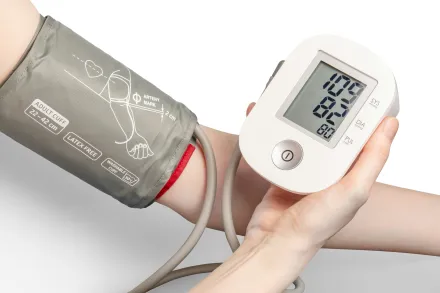
Across the landscape of cardiovascular monitoring, the journey from traditional cuff auscultation to continuous wearable sensing marks one of the most dynamic shifts in modern medicine. Early devices relied on a familiar inflatable cuff and a clinician skilled in listening for systolic and diastolic landmarks, a process that could be invasive in its inconvenience and time consuming in busy clinical settings. In recent decades, the push to empower patients to track their blood pressure beyond the clinic walls has accelerated, driven by advances in microelectronics, flexible materials, and algorithmic interpretation. The result is a family of devices that can be worn on the wrist, upper arm, or even integrated into garments, offering ongoing data streams rather than sporadic measurements. This transformation aims not only to improve individual awareness and self-management but also to enrich clinical decision making with longitudinal patterns that reveal trends, responses to therapy, and the emergence of abnormal episodes. The narrative of these innovations is thus a story of bridging comfort and accuracy, of reconciling user experience with rigorous data standards, and of reimagining how daily life interacts with physiological insight. In practical terms, wearable blood pressure monitors now exist as sleek, low-profile devices that can be worn for extended periods without fatigue, while preserving essential measurement fidelity through robust engineering choices and careful calibration strategies, all while preserving patient autonomy and empowering proactive health behavior rather than passive surveillance.
Technologies enabling cuffless blood pressure estimation
At the heart of modern wearable blood pressure monitoring lies a convergence of sensing modalities designed to infer arterial pressure without the traditional inflatable cuff. A central approach leverages photoplethysmography alongside machine learning and signal processing to estimate blood pressure from peripheral signals, a method that benefits from the noninvasive comfort of optical sensing and the adaptive power of data-driven models. Complementing optical sensing are microelectromechanical systems that monitor subtle changes in arterial wall dynamics, sometimes employing principles akin to arterial tonometry to capture pressure waveforms when a device rests against the skin. The combination of these signals with sophisticated algorithms enables the extraction of features related to pulse shape, waveform reflection, and arterial compliance, which in turn inform estimates of systolic and diastolic values. The landscape also features pulse transit time metrics, where the delay between a proximal and distal arterial pulse is correlated with pressure fluctuations, though this method requires careful calibration and attention to the influence of vascular stiffness, temperature, and autonomic tone. Importantly, manufacturers continually refine sensor placement, contact mechanics, and motion resilience to minimize artifacts during daily activities, sleep, or exercise, thus striving for measurements that hold steady under real-world conditions rather than only in controlled laboratory environments. The overarching objective is to deliver a credible surrogate for cuff-based measurements that respects the constraints of wearability while offering meaningful clinical value through continuous surveillance and context-rich data streams.
The role of PPG and pulse transit time in cuffless devices
Photoplethysmography stands as a cornerstone technology in cuffless designs because it captures blood volume changes in the microvascular bed of tissue with light. Its relative simplicity, compatibility with small, low-power optics, and potential for deep integration into consumer devices make it an appealing component of wearable systems. When paired with timing information derived from the same or adjacent measurement sites, pulse transit time emerges as a promising proxy for arterial stiffness and pressure shifts. Yet the promise of cuffless estimation via PPG and PTT is tempered by complexities. Individual vascular properties, skin tone, ambient lighting, and sensor-skin contact quality can influence signal integrity, requiring models that adapt to personal baselines and dynamic physiological states. The field responds with layered approaches: pre-processing that reduces motion-induced noise, calibration routines that align cuff-based references with wearable estimates, and machine learning architectures that can reconcile nonlinear relationships between PTT, PPG features, and actual arterial pressure. Researchers also explore multi-parameter fusion, combining PPG with electrodermal signals, temperature, and accelerometry to disambiguate posture, exertion, and hydration effects from true blood pressure trends. The practical upshot is a resilient estimation framework that remains useful across sleep, work, and sport, with explicit acknowledgement of uncertainty ranges and confidence intervals to support responsible clinical interpretation.
Calibration, validation, and clinical equivalence
The quest for clinical reliability in wearable blood pressure monitors centers on calibration protocols that anchor wearable estimates to validated cuff measurements while preserving the convenience of continuous observation. Calibration is not a one-time event but a calibration strategy that can be periodically refreshed using cuff-based references or population-informed priors, all while accounting for the natural drift that can occur as sensors age, as skin properties change, or as a user’s physiological state shifts with lifestyle factors. Validation studies increasingly emphasize not only average accuracy but also the ability to detect clinically meaningful excursions such as hypertensive spikes or hypotensive dips, which are often the most consequential events for patient management. The concept of clinical equivalence guides regulatory discussions, encouraging devices to meet predefined performance criteria across diverse populations, age groups, and comorbid conditions. Real-world testing plays a critical role, with long-term field data enabling refinement of algorithms and improvement of robustness against motion and environmental variables. Transparent reporting of performance metrics, including bias, precision, and failure modes, is essential for clinicians to weigh wearable information alongside traditional measurements. In this ecosystem, developers pursue adaptive calibration that learns from ongoing data while preserving user privacy and ensuring consistent behavior across updates and software revisions, thereby supporting durable trust in the technology.
Materials, ergonomics, and power management
The tangible success of wearable blood pressure devices is inseparably linked to the physical design, which must balance comfort, durability, and security of measurement contact with user aesthetics and lifestyle compatibility. Materials science plays a pivotal role, with flexible, skin-friendly substrates, biocompatible adhesives, and breathable encapsulation reducing irritation during extended wear. The form factor matters just as much as the sensing accuracy because users are more likely to adopt devices that disappear into daily routines rather than disrupt them. Power management emerges as a critical discipline, with energy-efficient sensors, ultra-low-power processors, and intelligent duty cycling that allows continuous monitoring without frequent recharging. Innovations in energy harvesting, such as tiny photovoltaic cells or motion-powered mechanisms, offer the tantalizing possibility of devices that sustain themselves for longer periods, while modular designs enable easy replacement of components prone to wear without compromising overall system integrity. The interplay of materials, comfort, and endurance shapes not only the feasibility of home use but also the equity of access, as affordable, reliable wearables can extend monitoring benefits to a broader population segment beyond niche consumer segments or specialty clinics. In practice, designers pursue seamless integration with textiles and accessories, enabling monitoring to occur in the background while preserving the wearer’s sense of autonomy and personal expression.
Sensor fusion and artificial intelligence in interpretation
To translate raw physiological signals into actionable information, modern wearables rely on sensor fusion and advanced analytics, where disparate data streams converge to provide a coherent estimate of cardiovascular status. Multimodal processing blends optical, mechanical, thermal, and inertial information to model arterial behavior, compensate for direction of motion, and infer posture and activity levels that influence blood pressure readings. Artificial intelligence techniques, including machine learning and adaptive algorithms, continually refine estimations by learning from annotated data and clinician feedback, enabling personalized baselines and improved anomaly detection. This intelligent layer supports the differentiation of true physiological change from noise, facilitates trend analysis over days to weeks, and can flag readings that warrant clinical attention or device recalibration. A key challenge lies in maintaining explainability and transparency in the face of complex models, ensuring that clinicians and patients understand how a given estimate was derived, what uncertainties exist, and how to interpret sudden deviations in the context of medication changes or lifestyle adjustments. Through careful design, regulatory-compliant validation, and ongoing collaboration with medical professionals, sensor fusion and AI-driven interpretation move wearable blood pressure monitors toward not only reporting numbers but informing decisions about therapy, risk stratification, and proactive disease management.
Data privacy, interoperability, and integration into care ecosystems
As wearable blood pressure monitors generate rich streams of personal health data, the surrounding ecosystem must prioritize privacy, consent, and secure interoperability with other health information systems. Best practices emphasize data minimization, encryption in transit and at rest, and transparent user controls that empower individuals to decide what is shared, with whom, and for how long. Interoperability standards and open APIs facilitate seamless integration with electronic health records, telemedicine platforms, and patient-facing apps, enabling clinicians to access longitudinal traces alongside laboratory results, imaging, and medication histories. This coordination supports more nuanced risk assessment and timely clinical interventions while reducing redundancies in data collection. Equally important are governance frameworks that address data ownership, consent revocation, and the right to access or delete information, ensuring that technology complements patient trust rather than eroding it. As regulatory landscapes evolve, manufacturers strive to align with established privacy laws, adopt privacy-by-design methodologies, and provide clear documentation for patients and clinicians about data provenance, measurement uncertainties, and device-specific limitations that may influence interpretation in certain populations or under particular physiological conditions.
Market dynamics, regulatory landscape, and patient access
The diffusion of wearable blood pressure monitors into everyday life is shaped by market dynamics, reimbursement pathways, and the evolving regulatory environment that governs medical devices. On the market side, consumer demand for health insights and proactive wellness tools drives rapid innovation cycles, while healthcare systems seek scalable solutions that can improve population health without escalating costs. Regulators evaluate safety, efficacy, and reliability, requiring robust clinical evidence that wearable estimates can support clinical decision making with parity to cuff-based measurements in appropriate contexts. This tension between accessibility and rigor motivates ongoing clinical trials, real-world evidence studies, and standardization efforts that harmonize measurement protocols, reporting formats, and performance benchmarks. Equitable access remains a central concern as devices move from niche medical devices to mainstream wearables, with considerations of socioeconomic disparities, digital literacy, and data infrastructure playing decisive roles. The outcome is a nuanced ecosystem in which researchers, clinicians, patients, and industry collaborate to produce devices that are not only technically proficient but also financially viable, culturally acceptable, and integrated into comprehensive care pathways that respect patient preferences and clinical realities alike.
Future horizons in wearable blood pressure monitoring
Looking ahead, innovations in materials science, signal processing, and cloud-enabled analytics point toward a future in which cuffless measurements become more accurate, robust, and context-aware than ever before. Emerging directions include the refinement of noninvasive pressure sensing through integrated nanoengineered interfaces, more precise control of contact pressure without discomfort, and the development of personalized reference models that adapt to a user’s vascular health trajectory over years rather than months. Researchers continue to explore hybrid modalities that combine optical, acoustic, and electrical signals to capture multiple facets of cardiovascular function, enabling richer assessments beyond single-point blood pressure estimates. The confluence of wearable technology with clinical decision support systems holds promise for improved management of hypertension, enhanced adherence monitoring, and earlier detection of complications in at-risk populations. As this field matures, it is essential to balance innovation with rigorous validation, transparent reporting, and a patient-centered ethos that values privacy and autonomy as much as measurement accuracy and technological novelty. The resulting ecosystem aims to empower individuals to live healthier lives while providing clinicians with actionable insights that can refine treatment strategies, reduce cardiovascular risk, and promote a more proactive model of health care that seamlessly blends everyday living with evidence-based medicine.