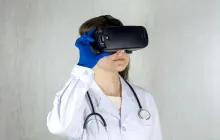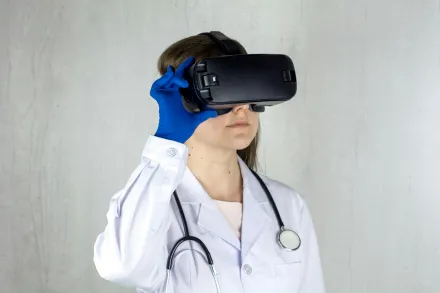
Virtual reality has emerged as a transformative force in modern surgery, offering immersive environments where clinicians can rehearse, plan, and refine complex procedures outside the high stakes of the operating room. The central appeal of virtual reality in this domain lies in its capacity to lower the incidence of errors by reshaping how surgeons acquire competence, interpret anatomy, and manage unforeseen events. Traditional apprenticeship methods, while invaluable, are inherently constrained by patient safety concerns, scheduling limitations, and the variability of real-world cases. By contrast, VR creates scalable opportunities for deliberate practice, objective feedback, and iterative improvement that can be quantified and tracked over time. In this article we explore how VR reduces surgical errors across the spectrum from cognitive preparation to team dynamics, from patient-specific planning to ongoing performance monitoring, and we consider the practical realities of integrating VR into everyday surgical training and practice.
The nature of surgical errors and why they occur
Surgical errors arise from a convergence of factors that stress cognitive systems, motor skills, and collaborative processes. Surgeons must rapidly interpret noisy or ambiguous information, maintain precise spatial awareness, and coordinate with anesthesia teams, nurses, and assistants, all while managing time pressure and fatigue. Distractions in the operating room, interruptions from electronics, and the necessity to recall a large repertoire of steps can lead to slips, lapses, or deviations from standard protocols. Anatomy itself can be highly variable among patients, and small misinterpretations of a three dimensional field may cascade into larger mistakes. In this context, even highly skilled practitioners can be vulnerable to errors when real-time data is incomplete or when the consequences of a single misstep are magnified by the complexity of the procedure. Virtual reality helps address these vulnerabilities by offering safe spaces that can mimic the pace, pressure, and intricacies of surgery without risking patient harm.
Beyond technical faults, non-technical skills such as communication, leadership, situational awareness, and decision making play decisive roles in error prevention. In high-stakes operations, miscommunication can lead to misinterpretation of goals, missed steps, or delayed responses to complications. VR environments can embed structured communication models, crisis scenarios, and team-based drills that train surgeons and their teams to anticipate contingencies and to recover quickly when plans diverge from reality. By focusing on the cognitive and social dimensions of surgical performance in addition to the tactile aspects of technique, VR helps reduce the frequency and severity of errors that stem from human factors as much as from pure technical skill.
Immersive training and deliberate practice
Immersive VR training is designed around the principle of deliberate practice, a framework in which learners engage in focused, repetitive work with clearly defined objectives, coupled with immediate feedback and opportunities for refinement. In surgical settings, VR platforms simulate a wide range of procedures, from routine tasks to high-stakes operations, enabling learners to drill core competencies in a controlled, consequence-free environment. The immersion creates a perceptual experience that closely resembles real surgery, including three dimensional visualization, instrument navigation, and haptic cues that convey a sense of touch. Even when haptics are imperfect, the spatial fidelity and kinesthetic feedback can be sufficient to reinforce muscle memory and spatial reasoning, laying the groundwork for smoother transfer of skills to actual operations.
Critical to this approach is the availability of objective performance metrics. VR systems can measure time to complete steps, accuracy of incisions, trajectory deviations, tissue handling, force application, and adherence to safety checklists. Trainees can compare their performance against benchmarks or peer cohorts, enabling a transparent trajectory of growth. Instructors, meanwhile, can tailor curricula to address identified weaknesses, enabling a personalized path from novice to expert that accelerates the learning curve while maintaining patient safety. This data-rich feedback loop is a powerful antidote to reliance on anecdotal experience alone, providing a reproducible map of skill development that can be shared across training programs and institutions.
Deliberate practice in VR is enhanced by scenario variety and graded difficulty. Early modules might focus on fundamental tasks such as tissue identification and precision dissection, advancing to complex, multi-structure procedures with variable anatomy and simulated complications. The gradual escalation of challenge mirrors real clinical progression, ensuring that learners build confidence and competence in a structured, measurable fashion. In addition, VR environments can freeze, rewind, or replay critical moments, allowing learners to study and destress before attempting a more advanced variation. The combination of immersion, goal-oriented practice, and robust feedback makes VR an unusually efficient engine for reducing errors that stem from skill gaps or inconsistent technique.
Procedure rehearsal and anatomy visualization
One of the most compelling rationales for VR in surgical training is its ability to render patient-specific anatomy with extraordinary clarity. Preoperative VR rehearsals enable surgeons to explore an individual’s unique spatial relationships, identify potential challenges, and develop a stepwise approach that minimizes intraoperative guesswork. By importing high-resolution imaging data into a three dimensional VR space, clinicians can rotate, slice, and annotate anatomical structures, test alternative approaches, and visualize the consequences of different instrument paths before entering the operating room. This preparation is particularly valuable in complex oncologic resections, intricate vascular reconstructions, or congenital deformity corrections where precision and planning directly influence margins, blood loss, and functional outcomes.
Beyond static anatomy, dynamic simulations allow practitioners to simulate tissue properties, resistance, and tissue-plane interactions. Although tactile fidelity may not yet match real palpation perfectly, advances in VR technology continue to improve the calibration of tissue behavior and response to instrumentation. This level of anatomical and procedural fidelity supports more accurate mental rehearsal, reduces surprises during real cases, and helps surgeons anticipate how variations in patient anatomy could affect plan feasibility. The cumulative effect is a lower likelihood of errors born from unexpected anatomical nuance or misjudgment about how a procedure will unfold in a living patient.
In addition to individual preparation, patient-specific VR simulations contribute to safer teamwork. When the entire surgical team can view and manipulate the same virtual model, communication around anatomy, critical steps, and contingency plans becomes synchronized. Shared VR visualizations foster a common mental model, which in turn reduces misinterpretation and misalignment during actual surgery. This alignment is essential for cohesive execution, particularly in high-stress situations where every team member must anticipate the next move and coordinate actions precisely.
Team communication and non-technical skills
Non-technical skills such as communication, leadership, decision making, and situational awareness are central to reducing errors in the operating room. VR-based simulation environments allow teams to practice closed-loop communication, standardize handoffs, and rehearse crisis management without endangering patients. In many simulations, roles are assigned to each team member, including surgeons, anesthesiologists, nurses, and assistants, to replicate the real dynamics of the OR. The objective is to reinforce a culture of speaking up, clarifying intent before actions, and rapidly escalating concerns when patient safety is at risk. By repeatedly triggering high-pressure scenarios in a controlled setting, teams develop muscle memory for coordinated responses, which translates into smoother real-world collaboration during complex procedures.
Effective VR training also emphasizes debriefing, a crucial step in any learning cycle. After a simulated case, participants review what went well, what could be improved, and what environmental factors may have contributed to performance. Structured debriefings, guided by data from the simulation, help clinicians internalize lessons and adjust their communication strategies accordingly. This reflective practice is a powerful antidote to complacency and helps ensure that improvements in technique are matched by improvements in teamwork, safety culture, and procedural discipline. The cumulative effect is a reduction in errors that arise when teams fail to synchronize their actions or misread one another's intentions.
Real-time intraoperative assistance and simulation-guided decision making
While virtual reality is primarily experienced outside the OR, its impact reverberates through intraoperative decision making and procedural execution. VR-informed planning helps surgeons enter cases with a clear, rehearsed plan while also equipping them to pivot quickly when unexpected findings arise. In some centers, VR models guide intraoperative navigation by providing reference pathways and risk zones that can be cross-referenced with real-time imaging. Although direct VR overlays in the sterile field are more commonly addressed by augmented reality (AR) technologies, the cognitive preparation built in VR translates into more confident, methodical actions during the operation, reducing the likelihood of hasty or improvised decisions that might lead to errors.
Moreover, VR-based simulations are increasingly used to train for rare but dangerous intraoperative events, such as unanticipated vascular injury or severe bleeding. Practicing these scenarios in VR helps surgeons anticipate the sequence of actions required to minimize harm, practice time-sensitive decision making, and rehearse communication protocols that ensure rapid mobilization of the entire team. Even when the VR scenario does not replicate every sensory cue of the real event, the exposure to timing, sequence, and escalation dynamics strengthens the surgeon’s ability to manage real emergencies without succumbing to delay or miscommunication that could worsen outcomes.
Data, metrics, and validation studies
Validation of VR’s impact on surgical performance relies on a growing body of evidence from randomized trials, observational studies, and simulation-based assessments. Researchers measure a range of outcomes, from technical accuracy and efficiency to error rates, tissue handling quality, adherence to safety protocols, and time to complete critical steps. In simulated environments, participants who train with VR often outperform peers who receive traditional training on standardized tasks, particularly in high-pressure or complex scenarios. Over time, institutions are compiling longitudinal data that track skill retention, transfer to live operations, and improvements in patient safety indicators associated with VR-based curricula.
Systematic reviews of VR training across surgical specialties consistently highlight several themes. First, there is a notable improvement in technical precision and procedural confidence after structured VR courses. Second, the benefits tend to be greatest when VR training is integrated with a broader educational strategy that includes expert feedback, progressive difficulty, and deliberate practice. Third, while cost and access can be barriers, the scalable nature of VR platforms means that many centers can provide standardized training experiences to a wide cohort of learners without duplicating expensive, resource-intensive live-operating room time. These findings collectively reinforce the argument that VR is an effective accelerator of safe practice and error reduction in modern surgical education.
In addition to outcome metrics, qualitative research highlights improvements in learners’ mindset, such as increased tolerance for feedback, greater openness to reflective practice, and a heightened appreciation for the variability of human anatomy. The combination of tangible performance data and developing professional attitudes suggests that VR training not only reduces observable errors but also cultivates a culture of continuous improvement that enhances patient safety at multiple levels. The empirical picture, while still evolving, points toward durable benefits when VR is implemented thoughtfully and aligned with institutional quality goals and patient-centered standards of care.
Challenges and limitations
Despite the promise, several challenges temper the universal adoption of VR in surgical education. The initial cost of high-fidelity simulators, the ongoing expenses of software updates, and the need for specialized technical support can be substantial barriers for some institutions. Content development requires collaboration between surgeons, engineers, and educators to ensure that simulations accurately reflect current best practices and reflect the evolving standards of care. Fidelity gaps between virtual tissue behavior and real biological tissue remain a focal area of research, with ongoing work aimed at closing the gap through improved haptics, better material models, and more precise instrument-tissue interaction physics.
Accessibility is another hurdle. Rural or under-resourced centers may struggle to provide regular VR sessions, leading to disparities in training exposure. To mitigate this, many programs pursue hybrid models that blend VR with cadaveric simulation, animal models, and supervised operating room experience, aiming to balance realism with safety and cost. Additionally, there is a need to standardize evaluation measures across programs so that the impact of VR training on surgical error rates can be fairly compared and aggregated. Without common benchmarks, translating findings from one setting to another can be challenging, and decisions about investment may rely on institutional appetite rather than rigorous evidence alone.
There are also practical concerns around workflow integration. VR modules must fit into crowded residency curricula and continuing medical education schedules without displacing essential clinical responsibilities. For practicing surgeons, time is a valuable resource, and the opportunity cost of dedicating hours to simulation must be weighed against anticipated safety gains. Institutions that successfully incorporate VR tend to align simulation time with explicit competency milestones and provide protected time for practice alongside meaningful feedback and performance review, thus preserving both training quality and patient care commitments.
The future trajectory and integration with surgical education
The horizon for VR in surgery is bright, with multiple trajectories converging to enlarge its impact on error reduction. Advances in artificial intelligence promise to deliver adaptive coaching that tailors a learner’s curriculum in real time, guiding practice toward the specific skill gaps that most threaten performance. AI-driven analytics can identify subtle patterns in instrument handling, decision latency, or force application that humans might overlook, offering targeted feedback and corrective strategies. As data accumulate across learners and institutions, these insights can inform standardized best practices and facilitate benchmarking that propels the entire field forward.
Haptic feedback remains a central area of development. While current VR systems approximate the sense of touch, ongoing research aims to render more convincing tactile cues to better simulate tissue resistance, suturing tension, and instrument feedback. When the fidelity of haptics reaches closer to real life, the translational value of VR training to actual surgery will likely increase, further reducing the risk of errors that arise from unfamiliar tactile experiences. In parallel, cloud-based platforms and modular curricula will enable rapid sharing of high-quality simulation content across geographies, promoting equity in access and ensuring that best practices diffuse quickly to where they are needed most.
Integrating VR with other modalities, such as augmented reality during real procedures and decision-support systems that provide real-time safety checks, will create a more cohesive ecosystem for patient safety. In such a framework, surgeons could rehearse within VR, then carry forward a dynamic plan into the OR with AR overlays that reinforce the steps and risks previously identified. The result would be a continuum of practice, planning, and execution that continuously reinforces safe behaviors, minimizes cognitive load, and curbs the kinds of errors that historically have challenged even experienced surgeons.
Case studies and real-world examples
Across leading medical centers, VR-based training programs are becoming a core component of residency education and ongoing professional development. In some institutions, residents spend a defined portion of their training in VR laboratories where they practice a range of procedures under the supervision of experienced faculty who track progress with quantitative benchmarks. In these settings, learners repeatedly perform critical steps, handle complications in simulated environments, and receive structured debriefings that connect performance data to clinical reasoning. Early results from such programs often show improvements in procedural speed, precision, and decision-making consistency, with a corresponding decline in avoidable errors once learners transition to real cases.
Several surgical specialties have reported meaningful gains through VR integration. In orthopedics, VR rehearsals of intricate fracture fixations and joint reconstructions have correlated with more accurate hardware placement and fewer intraoperative adjustments. In neurosurgery, detailed brain and spine simulations have helped surgeons navigate complex vascular territories and avoid eloquent areas, contributing to safer resections and better functional outcomes. In urology, VR modules that simulate delicate suturing and tissue handling have been linked to steadier hands and fewer inadvertent injuries during minimally invasive procedures. While these findings vary by program and procedure, the overarching pattern is consistent: immersive rehearsal enhances technical execution and reinforces patient safety tenets in actual practice.
Beyond technical metrics, case studies emphasize the human dimensions of VR adoption. Teams that integrate VR with a culture of continuous feedback often report greater psychological safety, where members feel empowered to voice concerns and question plans without fear of judgment. This cultural shift itself reduces errors by improving vigilance, encouraging preemptive problem-solving, and ensuring that potential hazards are discussed openly before they escalate. In places where VR is treated as a supplement rather than a centerpiece, benefits may be more modest. When embraced as part of a holistic safety framework, VR training can become a durable driver of quality improvement that persists beyond a single cohort of learners.
Ethical and patient safety considerations
As VR becomes more deeply embedded in surgical education and practice, ethical considerations come to the fore. Data generated by VR training, including performance metrics and debriefing notes, constitute sensitive information that must be protected to preserve learner privacy and institutional integrity. Clear policies regarding consent for the use of patient-specific imaging data in simulations are essential, ensuring that de-identified or appropriately anonymized materials are used whenever possible. Institutions must balance the educational value of realistic simulations with the imperative to safeguard patient confidentiality and comply with applicable regulations governing medical data.
Another ethical dimension concerns the transfer of skills from simulated to real-world contexts. It is incumbent on educators and clinicians to design VR curricula that do not overstate the capabilities of simulation or create false assurances about competence. Rather, VR should be positioned as a powerful complement to real-world training, not a substitute for hands-on surgical experience under appropriate supervision. Transparent communication with patients about how simulation-based training informs the care they receive can reinforce trust and uphold the ethical obligation to deliver the highest standard of care. In practice, ethical VR use entails rigorous validation, ongoing quality assurance, and a commitment to equity so that all learners have opportunities to benefit from these advances without compromising safety or dignity.
The broader safety ecosystem also benefits from maintaining robust debriefing cultures, where teams examine both successes and near misses in VR and real cases. By normalizing reflection, healthcare systems can detect latent safety threats, such as gaps in equipment availability, communication bottlenecks, or unclear role expectations, and address them before they contribute to patient harm. In this progressive environment, VR not only reduces individual errors through repeated practice but also strengthens systemic defenses that safeguard every patient undergoing surgery. The ultimate ethical objective remains clear: to harness technology in a way that enhances patient safety, respects patient autonomy, and advances the science and art of surgical care for diverse populations across settings.
As the field evolves, the ethical stewardship of VR in surgery will require ongoing collaboration among surgeons, educators, technologists, patients, and regulators. This collaboration should aim to establish shared standards for content validity, safety testing, and outcome reporting, while also fostering innovation that remains responsive to the real-world demands of diverse surgical environments. When these elements converge, VR becomes not merely a tool for practice but a trusted partner in the pursuit of safer surgeries, better outcomes, and a more resilient health care system overall.
In sum, virtual reality holds substantial promise for reducing surgical errors by strengthening cognitive readiness, enhancing technical proficiency, improving team dynamics, and supporting data-driven quality improvement. The most enduring benefits are realized when VR is integrated into a broader education and safety program, anchored by rigorous validation, ethical governance, equitable access, and a shared commitment to placing patient well-being at the center of every training and every procedure. As technology continues to advance, the medical community has a unique opportunity to translate immersive learning into tangible improvements in the safety and effectiveness of surgical care for countless patients around the world.