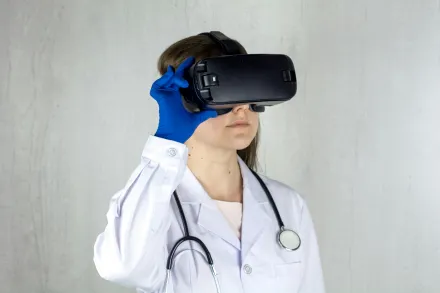
In modern healthcare, patient engagement is a critical determinant of outcomes, satisfaction, and adherence. Virtual reality offers a new set of tools that transform passive receipt of information into active participation. By simulating immersive environments, VR makes complex medical concepts tangible, reduces anxiety, and fosters a collaborative dynamic between patients and clinicians. This technology does not replace traditional education or bedside conversations; it augments them by creating experiential moments where feelings, risks, and options can be explored in a safe, controlled space. For patients facing unfamiliar procedures or chronic condition management, VR becomes a bridge between knowledge and action, enabling people to visualize what happens inside their bodies, practice decisions, and rehearse coping strategies before real events occur. The result is a shift from information deficit to experiential understanding, and from passive compliance to empowered choice.
Historical Context and Conceptual Foundations
The idea of using immersive technology to aid patient understanding has roots in the late twentieth century, but it gained practical traction only after the convergence of affordable head mounted displays, improved tracking systems, and higher fidelity simulations. Early explorations focused on distraction during painful procedures, leveraging the brain’s capacity to substitute one sensory experience for another to diminish perceived pain. Over time, researchers and clinicians extended the reach of VR beyond pain relief to education, exposure therapy, rehabilitation, and shared decision making. The conceptual foundations rest on the recognition that human beings learn best through experience, not merely through reading or listening. When a patient can inhabit a scenario and observe the consequences of choices in a controlled environment, the cognitive and emotional processes required for durable understanding are activated more robustly than with traditional didactic methods. This historical arc helps explain why VR has evolved from a novelty into a practical instrument in the clinician toolbox, capable of shaping engagement at multiple points along the care continuum.
From a theoretical perspective, engagement is a dynamic state that encompasses attention, relevance, confidence, and a sense of ownership over health decisions. Virtual reality contributes to these dimensions by providing immersive cues that align with a patient’s interests, by situating information in meaningful contexts, and by offering immediate feedback that reinforces learning. The digital medium also enables personalization—patients can adjust the level of detail, pace, and scenario type to match their goals and readiness. This adaptability is crucial when working with diverse populations, including children, older adults, non-native language speakers, and individuals with varying levels of health literacy. The historical trend toward patient-centered care finds a natural ally in VR, which can be tuned to reflect the patient’s lived experience and to validate their questions as part of a shared journey toward healthier choices.
How Virtual Reality Works to Immerse Patients
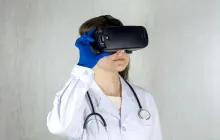
Immersion in VR arises from a combination of sensory engagement, interaction, and narrative context. A headset delivers a visual field that replaces the user’s real surroundings with a computer-generated scene, while motion tracking translates physical movement into corresponding shifts in the virtual space. This alignment between action and perception creates a compelling sense of presence, which is the feeling of being truly inside the virtual environment rather than merely watching a screen. The design of the scene matters as much as the technology; carefully crafted visuals, plausible physics, and consistent audio cues contribute to credibility and emotional resonance. When patients interact with objects, manipulate controls, or receive guided feedback, they move from passive observation to active participation, thereby enhancing memory encoding and the likelihood of correct recall during real procedures or home-based regimens. The result is a more robust foundation for informed choices and sustained engagement over time.
In clinical settings, VR can leverage a spectrum of modalities to tailor experiences to specific goals. For example, interactive simulations may demonstrate anatomy, explain how a particular device functions, or rehearse steps involved in a procedure, all while the patient remains in a supervised environment. Distraction-based VR, which employs immersive scenery and engaging tasks, has demonstrated analgesic effects during minor procedures or intrusive therapies by competing with nociceptive inputs for attentional resources. Education-focused VR uses gamified elements and narrative arcs to scaffold learning, while exposure-based VR gradually reduces anxiety by presenting controlled, non-threatening versions of feared situations. The convergence of these modalities with patient-specific data allows clinicians to align the experience with each individual’s risk profile, health literacy level, and emotional state, thereby maximizing relevance and uptake.
Education and Informed Consent Through Virtual Reality
Education through VR offers a near tangible form of consent through comprehension. When patients observe a simulated representation of a procedure, its potential complications, and the expected recovery trajectory, they can ask more precise questions, articulate preferences, and express concerns that might not surface in traditional explanations. The depth of immersion helps bridge gaps in health literacy by transforming abstract concepts into concrete experiences—the patient can see how an incision might affect tissue planes, or how a medication’s mechanism translates into physiological changes. This experiential form of learning nurtures a foundation for shared decision making, enabling a patient to weigh trade-offs with greater confidence. It also supports clinicians by providing a reference point during discussions, reducing misinterpretations that often arise from medical jargon. While VR cannot replace the nuanced dialogue of a medical team, it can prepare patients to participate more actively, thereby enhancing satisfaction with the care process and potentially improving adherence to chosen plans.
Moreover, VR can be adapted to cultural and linguistic contexts to increase comprehension and comfort. By integrating multilingual narration, culturally sensitive visuals, and accessible pacing, VR experiences can meet diverse patient needs more effectively than one-size-fits-all approaches. For patients facing complex treatment choices, VR can simulate outcomes under different scenarios, allowing users to evaluate how various options align with personal values and lifestyle considerations. This alignment strengthens autonomy, a core principle of patient engagement, by granting patients a clearer sense of potential benefits, burdens, and probabilities that matter most to them. In this way, VR becomes a facilitative partner in the informed consent process, ensuring that consent is truly informed and reflective of the patient’s authentic preferences rather than a mechanical completion of a form.
Behavioral Adherence and Rehabilitation Through VR
Engagement is not only about understanding but also about translating knowledge into consistent behaviors. VR offers a platform for rehearsal, practice, and feedback that can reinforce health-promoting habits. In rehabilitation, patients can perform therapeutic exercises within an engaging virtual environment that provides real-time cues, progress tracking, and motivational prompts. The immersive setting can transform repetitive routines into meaningful activities by embedding them in gameplay or meaningful simulations, thereby reducing perceived monotony and increasing intrinsic motivation. This can be particularly beneficial for chronic diseases where daily adherence to therapy, medication schedules, or lifestyle modifications is essential for long-term outcomes. Through immediate performance feedback and gradual elevation of task difficulty, VR can help patients calibrate effort, recognize incremental progress, and sustain engagement beyond the clinical encounter.
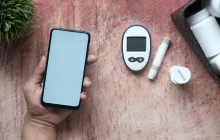
Beyond physical therapy, VR has potential in behavioral health and chronic disease management by enabling patients to practice self-management skills in a controlled space. For instance, individuals managing diabetes can simulate meal planning and glucose monitoring in a safe, consequence-free environment, then transfer those insights to real-world settings. The confidence gained through repeated, guided experiences can translate into better adherence and problem-solving when facing real challenges. Clinicians can tailor scenarios to each patient’s goals, track responses over time, and adjust the difficulty or complexity of tasks to match increasing competence. In this way, VR does not merely inform; it scaffolds behavior change, turning intention into observable action and providing a sense of mastery that sustains engagement through the course of treatment.
Pain Management, Anxiety Reduction, and Distraction
Pain and anxiety are major barriers to active participation in care. VR offers a nonpharmacologic strategy to modulate the subjective experience of pain and reduce anticipatory anxiety before procedures. By commanding attention through immersive visuals, captivating narratives, and interactive tasks, the brain’s processing of nociceptive signals can be attenuated, which can translate into lower perceived pain intensity and less reliance on sedatives or analgesics. This effect can be particularly meaningful for pediatric patients who may fear needles, injections, or hospital routines. The sensory richness of VR sessions can create a temporary but meaningful shift in the patient’s emotional state, enabling calmer cooperation during procedures, better tolerance of medical equipment, and shorter delays due to distress. In chronic pain management, VR can function as a distraction-based adjunct that reduces the emotional amplification of pain, creates opportunities for patient empowerment, and supports engagement with longitudinal treatment plans.
In addition to distraction, VR can deliver relaxation training, guided breathing exercises, and mindfulness components within immersive environments that promote a sense of safety and control. When patients experience relief and mastery during VR sessions, these positive associations can generalize to real-world contexts, strengthening willingness to engage in necessary medical activities. For families and caregivers, VR experiences can model empathetic support strategies and demonstrate how patients can navigate discomfort with resilience. The net effect is a more collaborative, compassionate care experience in which patients feel understood, in control, and more willing to participate actively in their treatment journey, even when confronted with challenging medical situations.
Shared Decision Making and Patient Autonomy
Shared decision making relies on transparent information, mutual respect, and a collaborative tone between patients and clinicians. VR can create a platform where information is personalized, accessible, and presented in a way that aligns with a patient’s cognitive style. By visualizing risk probabilities, potential outcomes, and the practical implications of different options, VR helps patients articulate values and preferences with greater clarity. This clarity is essential for negotiating treatment plans that honor patient priorities, whether those priorities involve minimizing invasiveness, balancing quality of life with longevity, or aligning choices with personal lifestyle constraints. VR experiences can simulate long-term consequences in a short, comprehensible session, allowing patients to consider scenarios such as lifestyle changes, rehabilitation timelines, or the trade-offs of surgical versus nonsurgical approaches without the pressures that sometimes accompany in-person consultations. The result is a partnership approach to care, where patients are not passive recipients but active co-designers of their treatment trajectory.
Equally important is the clinician’s role in guiding VR experiences with ethical sensitivity. The design of VR content must avoid coercive framing and should present options in a balanced manner, including uncertainties and alternatives. Clinicians can use VR as a tool to elicit patient preferences, confirm understanding, and document the alignment between stated goals and proposed plans. The safety of patient autonomy depends on ensuring that VR experiences are accessible, culturally appropriate, and inclusive of diverse health beliefs. When done thoughtfully, VR can enhance trust, reduce decisional conflict, and promote confidence that the care plan reflects what matters most to the patient as an individual rather than as a generic case.
Design Principles for Inclusive Engagement
Effective VR experiences begin with thoughtful design that anticipates a wide range of abilities, backgrounds, and contexts. Accessibility considerations include adaptable interface complexity, readable text, and comfortable hardware usage to minimize fatigue or motion sickness. Designers should also account for sensory differences, such as color vision variations, hearing impairments, and cognitive load limitations, by offering multimodal channels for information, clear narration, and adjustable pacing. Personalization features, such as choosing narratives that reflect a patient’s culture or tailoring levels of interactivity to comfort with technology, help ensure that VR remains a tool of empowerment rather than a barrier. In practice, this translates to content with flexible durations, opt-in complexity, and options to pause, rewind, or revisit crucial moments, allowing patients to control the rhythm of their engagement according to their emotional state and cognitive readiness.
Another core principle is alignment with clinical objectives and workflow feasibility. VR experiences should complement, not complicate, the clinician’s day. This requires interoperability with electronic health records, secure handling of patient data, and streamlined onboarding for both patients and staff. The most effective VR solutions are those that integrate into patient journeys seamlessly, from pre-visit education to post-discharge follow-up, allowing continuity of learning and support. When designers prioritize real-world utility alongside immersive novelty, VR becomes a sustainable asset that preserves clinical time while expanding the horizon of what patients can understand and influence. Inclusivity, therefore, is not an afterthought but a guiding criterion that shapes every design choice, from content accuracy to narrative tone and from accessibility options to privacy safeguards.
Safety, Privacy, and Ethical Considerations
Incorporating VR into patient care requires rigorous attention to safety and privacy. Physical safety concerns include the need for clear space for movement, risk of motion sickness, and appropriate supervision during high-immersion tasks. Clinicians must screen patients for susceptibility to vertigo or seizures triggered by visual stimuli and establish protocols for stopping a session quickly if discomfort arises. Privacy considerations center on safeguarding personal health information used to tailor VR content and on ensuring that data collected during VR sessions are stored and transmitted in compliance with relevant regulations and institutional policies. Ethical considerations involve avoiding manipulation or coercion, ensuring informed consent for VR participation, and presenting information in a balanced, nonprescriptive manner. When these safeguards are in place, VR can be deployed with confidence that patient welfare, autonomy, and confidentiality remain central to clinical practice.
In addition to safety and privacy, there is a need to monitor potential disparities that may arise from access to VR technology. Not all patients may have Equitable access to high-end hardware, reliable internet, or comfortable home environments for remote VR experiences. Health systems should plan for these gaps through loan programs, on-site VR-enabled clinics, and caregiver involvement that supports participation without creating dependency on a single modality. Ethical practice also calls for ongoing evaluation of how VR impacts disparities in care, including whether certain populations benefit differently or whether content unintentionally reinforces cultural biases. Continuous vigilance, patient feedback loops, and independent research are essential to ensure that VR remains a force for equitable engagement rather than a source of new inequities.
Clinician Training and Workflow Integration
For VR to deliver sustained engagement, clinicians must be prepared to integrate it into routine care. Training should cover not only the technical operation of VR hardware and software but also motivational interviewing techniques, cultural competence, and the ability to interpret patient responses to immersive experiences. When clinicians are comfortable guiding VR sessions, they can personalize the content, explain observed reactions, and connect VR insights to concrete care plans. The workflow integration challenge often lies in coordinating guardians or family members, scheduling VR sessions around clinical procedures, and ensuring that VR data become part of the patient’s medical record. By integrating VR usage into pre-visit education, intra-visit explanations, and post-visit reinforcement, care teams can leverage the immersive medium to reinforce learning, track progress, and adjust treatment paths in real time, thereby creating continuity across the patient journey rather than a fragmented episodic experience.
Operational considerations include cost-benefit analysis, maintenance of hardware, and ensuring that content remains up to date with evolving clinical guidelines. To maximize impact, healthcare organizations should establish metrics for engagement, such as time spent in VR, knowledge retention, adherence rates, and patient-reported comfort with decision making. These data can inform iterative improvements to VR content and help prioritize scenarios that yield the greatest clinical value. Importantly, staff should receive ongoing support to troubleshoot common issues, manage patient concerns, and tailor experiences to the diverse needs of their patient populations. When well executed, VR becomes a scalable component of care delivery that respects clinicians’ time while expanding patients’ capacity to engage meaningfully with their health.
Case Studies, Evidence, and Future Directions
Across several specialties, case studies have demonstrated that VR can enhance patient engagement by improving understanding, reducing anxiety, and supporting adherence to treatment plans. In pediatric care, children who explored VR simulations of procedures often reported less fear and greater cooperation during injections or scans, translating into smoother clinical workflows and better data quality. In adult populations, VR education modules about surgical procedures or implant choices have been associated with increased knowledge retention and more confident questions during consultations. Rehabilitation programs that incorporate VR have shown improvements in motivation and engagement, as patients perceive progress in real time and feel a stronger sense of agency over their recovery. While these findings are encouraging, researchers emphasize the need for larger, randomized trials to quantify the causal impact of VR on engagement-driven outcomes such as adherence, functional recovery, and long-term health behavior changes. The future direction includes more sophisticated personalization, real-world deployment outside hospital walls, and integration with wearables and ambient sensors that provide continuous feedback to patients and clinicians alike.
The evolving evidence base also points toward a more nuanced understanding of where VR adds the most value. VR is particularly effective when it clarifies complex decision scenarios, reduces procedural anxiety to enable timely care, and supports skills training that patients can execute autonomously after discharge. As content quality improves and technical barriers decrease, VR experiences can be scaled to serve diverse care pathways—from chronic disease management to perioperative education—while remaining sensitive to patient preferences and cultural contexts. Researchers are exploring adaptive algorithms that adjust to user responses in real time, ensuring that the experience remains engaging without becoming overwhelming. With thoughtful implementation, VR has the potential to sustain long trajectories of patient participation, turning once intimidating medical journeys into collaborative explorations where patients feel seen, heard, and actively involved in shaping their health outcomes.
Implementation Challenges and Practical Strategies
Implementing VR in clinical settings comes with practical hurdles that require proactive planning. Technical challenges include ensuring device reliability, streamlining content updates, and maintaining a clean, sanitized environment for headset use. Organizational challenges revolve around securing administrative buy-in, aligning with reimbursement models, and designing workflows that minimize disruption to existing patient care processes. Addressing these challenges often involves piloting VR in targeted patient populations, gathering feedback from both patients and staff, and iterating on content and process improvements before broader rollout. A practical strategy is to designate champions within departments who can mentor colleagues, guide patients through the VR experience, and serve as liaisons with IT and procurement teams. Another key strategy is to integrate VR activities with measurable objectives, such as reducing procedure times, improving preoperative preparedness, or increasing adherence to home-based regimens, and to track these metrics over time to justify investment and guide scaling decisions.
Equally important is the creation of sustainable content ecosystems. Health systems should partner with interdisciplinary teams that bring together clinicians, educators, designers, and patient representatives to co-create VR experiences. This collaborative approach ensures that the content remains clinically accurate, culturally sensitive, and user-friendly. Regular content reviews, pilot testing with diverse patient groups, and feedback channels help maintain relevance and reduce the risk of content becoming outdated or less engaging. Finally, building a culture that values patient-centered innovation requires leadership commitment, clear governance, and transparent evaluation of both successes and challenges. When these elements are in place, VR can become an enduring component of patient engagement that complements other digital health strategies rather than competing with them, ultimately enriching the patient experience and supporting better health outcomes.
The Patient Journey with VR-Enhanced Care
The patient journey in VR-enhanced care begins with the pre-visit phase, where educational modules set expectations, clarify the purpose of procedures, and address common fears. This early engagement primes patients to approach the clinical encounter with questions and a readiness to participate actively in decision making. During the visit, VR experiences can be used to illustrate the proposed care plan, simulate possible outcomes, and provide hands-on practice with coping strategies or device usage. The immediate feedback from the patient’s interactions helps clinicians tailor explanations, pause to answer questions, and adapt the plan to align with patient preferences. After the visit, VR resources can serve as a reference point for home use, reinforcing learning, supporting adherence, and enabling patients to revisit information as needed. The cumulative effect is a care pathway that is more transparent, more reciprocal, and more responsive to patient needs, with VR acting as a continuous catalyst for sustained engagement rather than a one-off intervention.
Across this journey, the patient’s experience is enriched by a sense of autonomy and mastery. When a patient navigates a realistic medical scenario, practices decision making, and observes outcomes in a nonthreatening space, confidence grows. This confidence is not merely about understanding; it translates into a willingness to participate in shared decisions, to commit to prescribed regimens, and to engage in ongoing communication with the care team. Clinicians benefit as well, gaining a clearer sense of which concerns are most salient to the patient and where knowledge gaps persist. In this reciprocal dynamic, VR serves as a bridge that connects knowledge, emotion, and action, enabling patients to become partners in their health rather than passive recipients of care. The broader implication is a healthcare ecosystem in which patient engagement is not episodic but embedded in every touchpoint, with VR supporting continuity, personalization, and empathy at scale.