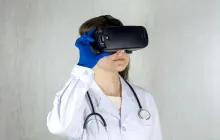
As healthcare continues to evolve, the role of education within the patient journey has become increasingly central to improving outcomes, satisfaction, and adherence to treatment plans. Virtual reality offers a unique pathway to transform traditional didactic methods into immersive experiences that engage the senses, foster empathy, and translate complex medical concepts into tangible, memorable learning moments. By transporting patients into carefully designed digital environments, VR can simplify explanations of anatomy, procedures, and potential risks, while also enabling patients to practice decision making in a safe, controlled space. The potential impact spans preoperative counseling, chronic disease management, rehabilitation, and preventive care, creating a bridge between knowledge and action that is often difficult to achieve with conventional patient education alone. This introductory view emphasizes that virtual reality is not merely a novel gadget but a versatile educational modality that aligns with how humans learn best when immersion, relevance, and autonomy are combined within a supportive framework.
The core promise of virtual reality in patient education rests on three interrelated capabilities: first, the ability to visualize internal processes that are otherwise hidden from sight; second, the chance to simulate real-world experiences without risk to the patient; and third, the opportunity to tailor learning to individual needs, preferences, and literacy levels. When patients can witness a heart valve functioning in a three-dimensional space, or observe how a medication is metabolized within a simulated body, their cognitive models become more accurate, reducing fear and uncertainty. Moreover, VR supports active learning, where patients are not passive recipients but participants who can pause, rewind, and experiment with choices. This kind of agency has the potential to deepen understanding and increase recall by linking information to concrete actions rather than abstract concepts, a pattern that is strongly associated with improved health literacy and empowerment.
Equally important is the emotional dimension that VR can address in patient education. Emotions shape attention, memory consolidation, and motivation, and virtual environments can evoke appropriate affective responses without overwhelming the learner. For patients confronting procedures, the chance to observe the process from intake through recovery in a controlled, nonthreatening setting can demystify fear triggers and reduce anticipatory anxiety. For individuals managing chronic conditions, VR can model the lived experience of symptoms, daily routines, and the impact of lifestyle choices, which often helps patients recognize the consequences of small decisions over time. The result is not a sterile tutorial but a narrative that resonates with the patient’s own health goals and daily life, thereby aligning educational content with personal meaning and purpose.
In practical terms, the adoption of VR for patient education requires thoughtful design, clear instructional goals, and collaboration among clinicians, educators, and technologists. A well-crafted VR experience begins with a needs assessment that identifies gaps in understanding, determines the appropriate level of detail, and establishes measurable learning outcomes. The content then translates into interactive scenes, guided simulations, and optional supplementary text or audio, with accessibility features that accommodate diverse abilities. Importantly, educators must balance fidelity with clarity; while ultra-realistic graphics can enhance immersion, excessive complexity can distract from core concepts. The most effective VR modules present a coherent storyline, concise explanations, and opportunities for rehearsal, feedback, and reflection, all embedded in a patient-centered framework that respects time constraints and clinical workflows.
Finally, the integration of VR into patient education must be evaluated through ongoing assessment and refinement. Clinicians should track learning progress, changes in health literacy, and patient satisfaction, as well as clinical endpoints such as adherence rates, informed consent quality, and outcomes after procedures. Feedback from patients and families should shape future iterations, ensuring that the technology serves diverse populations and adapts to evolving standards of care. When used thoughtfully, virtual reality becomes a catalyst for a more informed, engaged, and collaborative patient experience, one that honors patient autonomy while supporting clinicians in delivering precise, comprehensible information.
Understanding Patient Education and Learning Styles
Patient education is not a single event but a dynamic process that unfolds across time, settings, and personal circumstances. A crucial element is recognizing that learners come with different backgrounds, prior experiences, and preferred ways of processing information. Some patients respond best to verbal explanations delivered in plain language, while others gain insight through visual demonstrations, hands-on rehearsal, or reflective contemplation. Virtual reality has the capacity to address this diversity by offering adaptable modalities within a single platform. In VR, clinicians can present information through visual models, narrated guides, and interactive tasks that let patients manipulate variables, observe outcomes, and observe cause-and-effect relationships in a risk-free environment. This multimodal approach supports universal design principles while preserving the option to tailor experiences to individual needs.
Moreover, VR can accommodate varying levels of health literacy without compromising accuracy or safety. A patient with limited literacy may benefit from experiential learning that relies less on reading comprehension and more on direct observation of processes and outcomes. The spatial organization of information in virtual spaces can anchor memory through contextual cues, helping patients recall steps more reliably during follow-up visits or at home. Conversely, patients who prefer more technical detail can access layered explanations and optional prompts that delve into mechanisms, statistics, and best practices. The result is a flexible educational framework that respects patient autonomy, fosters understanding, and minimizes cognitive overload by offering scalable depth aligned with the patient’s momentary readiness to learn.
Beyond modality and depth, motivation plays a pivotal role in learning effectiveness. VR environments can be designed to incorporate elements of intrinsic motivation, such as personal relevance, mastery experiences, and immediate feedback. When a patient experiences mastery—correctly identifying a procedure step, for instance, or successfully managing a simulated symptom—the brain associates the achievement with positive reinforcement, strengthening confidence and engagement. This motivational dynamic is especially valuable in preoperative education and rehabilitation, where sustained engagement correlates with improved adherence to preparation instructions and therapy regimens. Careful pacing, rest periods within the VR session, and optional breaks help maintain attention and prevent fatigue, ensuring that the learning experience remains productive without becoming emotionally taxing.
Education also benefits from social and cultural considerations, and VR can be used to reflect diverse patient perspectives. By offering scenarios and narratives that resonate with different cultural backgrounds, languages, and personal identities, VR supports more inclusive patient education. In practice, this means providing multilingual voice-overs, culturally informed visuals, and guidance that respects values and beliefs while maintaining scientific accuracy. The goal is not to replace human conversation but to augment it with a powerful visual and experiential layer that can bridge gaps in communication, improve trust, and empower patients to participate meaningfully in decisions about their care. When designed with cultural humility and patient-centered goals, VR becomes a conduit for clearer conversations and more respectful partnerships between patients and clinicians.
Immersive Learning Environments and Retention
One of the core advantages of virtual reality in patient education is its capacity to create immersive learning environments that mimic real-world contexts without exposing patients to actual risk. Immersion helps anchor concepts in a sensory-rich framework that supports deeper encoding of information in memory. In a VR setting, a patient may watch a simulated surgical procedure from different angles, observe how a medication interacts with the body, or perform a guided self-care routine under the watchful guidance of a virtual mentor. The combination of visual, auditory, and tactile cues fosters a multisensory learning experience that has been shown to enhance retention compared with traditional lecture-based formats. Importantly, the immersive quality is not about spectacle but about relevance, ensuring that the scenario presented aligns with the patient’s actual health concerns and care pathway.
Retention in VR benefits from active participation. Rather than passively observing, patients in VR simulations can make decisions, adjust parameters, and immediately see the consequences. This active experimentation strengthens procedural memory and conceptual understanding, helping patients recall steps during appointments or at home. For example, in preparation for a colonoscopy, a VR module might guide a patient through bowel prep steps, demonstrate the expected sensations, and allow the patient to practice timing and communication with caregivers. The ability to rehearse in a consequence-free environment reduces anxiety, clarifies expectations, and enhances self-efficacy. When patients feel confident in their ability to perform required actions, adherence improves, and the likelihood of adverse events decreases.
Consistency across sessions is another factor that VR can support to bolster retention. Repetition in a controlled VR setting can reinforce correct practices while eliminating misleading heuristics that might arise from inconsistent real-world experiences. Yet VR also allows personalized pacing, so a patient who needs more time to digest complex information can spend extra cycles on a given topic, whereas another patient who demonstrates strong comprehension can move forward more quickly. This capacity to adapt repetition and progression to individual learning curves helps avoid both boredom and cognitive overload, two factors that can erode motivation and hinder long-term retention. In essence, VR creates a stable, patient-centered learning ecosystem where memory is reinforced through meaningful practice and timely feedback.
Beyond individual retention, VR supports social learning elements that contribute to lasting understanding. When patients observe peers or family members interacting with a scenario, or when a clinician guides a group through a shared VR session, a collective learning dynamic emerges. Even in a solitary VR encounter, the design can incorporate elements that simulate social perspectives, such as showing how a caregiver might respond or how different stakeholders weigh risks and benefits. These social cues help patients interpret information within a realistic social framework, reinforcing appropriate behaviors and improving communication with healthcare teams. The cumulative effect is education that not only informs but also equips patients to participate actively in their care and to convey their needs clearly to others involved in treatment decisions.
Explaining Procedures with VR Simulations
Explaining medical procedures through virtual reality offers a level of clarity that static diagrams or verbal descriptions often struggle to achieve. When patients can visualize anatomy, trace the steps of an intervention, and observe potential complications in a nonthreatening environment, comprehension increases and misconceptions decline. A VR module might illustrate how an endoscopic procedure navigates the human body, where instruments travel, what sensations might occur, and how the team responds to variations in anatomy. This kind of visualization supports informed consent by helping patients weigh benefits, risks, and alternatives in a manner that is concrete and memorable. The goal is not to sensationalize but to illuminate the pathway a patient will undergo, so decisions are made with confidence and a realistic understanding of expectations.
VR simulations also enable patients to rehearse communication with clinicians before a procedure. By practicing questions to ask, preferences to express, and consent choices to confirm, patients can participate more actively during preoperative conversations. This rehearsal reduces the cognitive burden of remembering questions during rushed consultations and fosters a sense of agency. Additionally, VR can model what post-procedure recovery will entail, including pain management strategies, activity restrictions, and warning signs that would require medical attention. When patients experience a comprehensive preoperative narrative, they are better prepared for the actual experience, which can reduce anxiety and enhance cooperation during the procedure itself.
From a technical perspective, VR modules for procedure explanations should be designed with accuracy, safety, and ethics in mind. Content must reflect current standards of care, be reviewed by clinical experts, and include disclaimers about the limits of the simulation. Visual fidelity should support learning without implying guarantees or definitive outcomes. Equally important is the user interface, which should be intuitive for patients who may be anxious or unfamiliar with technology. Clear prompts, accessible controls, and optional guided commentary help ensure that patients can engage with the material without frustration or confusion. When these elements coalesce, VR becomes a trusted bridge between clinical expertise and patient understanding, transforming abstract procedural knowledge into a practical, affirming sense of preparedness.
Informed Consent and Shared Decision Making
Informed consent is a cornerstone of ethical medical practice, yet achieving true understanding can be challenging in the face of medical jargon, uncertainty, and time pressures. Virtual reality offers a powerful tool to support shared decision making by presenting information in an understandable, interactive form. A VR experience can outline the goals of a proposed intervention, describe the steps involved, illustrate potential risks and benefits, and compare alternatives in a way that patients can explore at their own pace. Visual demonstrations of probabilities, timelines, and likely outcomes can help patients form a more realistic expectation of what lies ahead, reducing surprises and aligning decisions with personal values and preferences.
Beyond information delivery, VR can facilitate dialogue between patients and clinicians. After engaging with a VR module, patients may be more prepared to articulate questions, articulate concerns, and express their values regarding quality of life, independence, and the tradeoffs between benefits and burdens. Clinicians can use the VR session as a shared reference point during consultations, clarifying misunderstandings, correcting misperceptions, and guiding the patient through decision points with transparency. The ultimate aim is to empower patients to participate actively in their care while maintaining professional guidance that supports patient safety and standards of care. When used with informed consent as a collaborative process rather than a one-way presentation, VR enhances trust and the quality of decision making.
Quality control and ethical considerations are essential in VR-informed consent. Content must be accurate, up to date, and free from bias, with explicit statements about uncertainties and limitations. Privacy and data security should be prioritized, given that interactive sessions may collect information about patient preferences and responses. Accessibility is equally important; VR experiences should accommodate patients with disabilities, sensory impairments, or those who rely on assistive devices. The combination of clinical rigor, patient-centered design, and ethical safeguards ensures that VR-supported informed consent respects patient autonomy while preserving clinical integrity.
In practice, institutions may adopt a staged approach to VR-based informed consent, starting with education modules that cover general topics and progressively tailoring content to the specific patient and procedure. By enabling patients to review information before consultations, the healthcare team can allocate in-person time to address individualized questions and clarify uncertainties. The long-term effect is a more efficient, compassionate, and participatory care process in which patients feel heard, informed, and prepared to participate in decisions that impact their health and well-being.
Managing Anxiety and Fear Through Virtual Reality
Anxiety and fear about medical care can impede learning, cooperation, and recovery. Virtual reality provides a calm, controlled space in which patients can encounter realistic clinical scenarios without the real-world consequences. For many individuals, the ability to observe a procedure, understand what to expect, and rehearse coping strategies reduces anticipatory anxiety and enables a more focused engagement with educational content. VR can incorporate relaxation techniques, paced exposure to procedural cues, and guided breathing exercises within the learning environment, helping patients regulate physiological responses that might otherwise interfere with comprehension and decision making. When fear is lowered, patients tend to absorb information more effectively, engage more fully in discussions with clinicians, and adhere more closely to preoperative or postoperative instructions.
Importantly, VR can be customized to address individual triggers and sensitivities. Some patients respond to visual realism, while others may be more affected by audio cues, motion, or the pace of information delivery. By adjusting variables such as scene complexity, pacing, and feedback, educators can create experiences that desensitize fear gradually and positively. In pediatric contexts, VR has shown particular promise for transforming anxiety into curiosity and playfulness, turning difficult information into approachable and even enjoyable experiences. However, it is crucial to monitor for signs of distress during VR sessions and provide immediate support or a pause when needed. The responsibility to maintain a safe, comforting environment rests with clinicians, educators, and technical staff who design and implement these experiences.
The therapeutic potential of VR for anxiety extends beyond individual settings. When integrated into perioperative pathways, VR-based education can shorten preoperative preparation times by delivering concise, repeatable information while maintaining patient calmness. In rehabilitation or chronic care, anxiety reduction can support better engagement with therapy, improve adherence to exercise regimens, and promote more accurate self-monitoring. The practical takeaway is that VR enhances patient education not only by improving cognitive understanding but also by fostering emotional readiness, which together support better outcomes and more positive healthcare experiences.
Accessibility and Personalization in VR Education
Accessibility is a core consideration in any patient education strategy, and virtual reality offers both challenges and opportunities in this domain. Some patients may have visual or hearing impairments, vestibular sensitivity, or mobility limitations that complicate the use of head-mounted displays or other VR hardware. Thoughtful design can mitigate these challenges through features such as high-contrast visuals, adjustable font sizes, alternative text representations, audio narration with adjustable speed, and compatibility with assistive devices. Accessibility also means ensuring that VR content can be used with a range of devices, from dedicated headsets to desktop simulations, so that patients without access to the latest hardware can still benefit from high-quality educational experiences.
Personalization is another strength of VR in patient education. By capturing basic patient data, preferences, and learning goals, VR experiences can be tailored to present information at the appropriate level of detail, select scenes that align with the patient’s medical condition, and adjust pacing to the learner’s tempo. Personalization extends to language preferences, cultural contexts, and the patient’s family or caregiver involvement. The result is an educational experience that feels relevant and respectful, which can foster greater engagement and retention. The combination of accessibility and personalization supports health equity by ensuring that diverse patient populations have meaningful opportunities to learn, understand, and participate in their own care.
Technological advances continue to enhance accessibility, including more compact hardware, improved battery life, and software innovations such as cloud-based VR experiences and adaptive user interfaces. As these tools become more portable and affordable, health systems can expand access to education beyond the walls of clinics and hospitals, including home-based learning and remote guidance. When patients can practice at home under remote support, education becomes a continuous process rather than a single event, allowing ongoing reinforcement of key concepts and skills in the context of daily life. The ongoing development of inclusive, adaptable VR educational programs promises to narrow gaps in understanding and participation across communities and care settings.
In addition to patient-facing content, there is value in educating families and caregivers through VR experiences. Caregivers who understand the rationale behind instructions, expected outcomes, and warning signs are better equipped to support patients between clinical visits. Family involvement can improve adherence to treatment plans, reduce the burden on healthcare systems, and strengthen the support network around patients. When VR education engages caregivers as colearners, it becomes a collaborative tool for improving overall care quality and patient safety. The shared learning experience fosters empathy, improves communication among all parties, and aligns expectations across home and clinical environments.
Impact on Health Literacy and Empowerment
Health literacy encompasses the ability to obtain, process, and understand basic health information needed to make appropriate health decisions. VR has the potential to elevate health literacy by presenting information in concrete, experiential formats that translate abstract concepts into visible, interactive models. By observing physiological processes, manipulating variables, and receiving immediate feedback, patients may develop a more accurate mental model of their health conditions and treatment options. This deeper understanding can translate into more confident questions, more precise requests for information, and a greater willingness to engage in shared decision making with clinicians.
Empowerment arises when patients feel capable of participating actively in their care. VR supports empowerment by giving patients control over their learning journey, including the choice of topics, the pace of exploration, and the level of detail they wish to pursue. This sense of agency complements clinical expertise and helps patients move from passive recipients of care to active partners who contribute insights about symptoms, preferences, and daily routines. Empowered patients are more likely to adhere to treatment plans, monitor their own health indicators, and communicate openly about challenges they encounter. They are also better prepared to navigate healthcare systems, ask informed questions, and advocate for necessary services and supports.
However, there is a need for careful evaluation to ensure that VR-based education truly enhances health literacy and does not inadvertently create new disparities. Ensuring content accuracy, cultural relevance, and accessible delivery must be ongoing commitments. It is also essential to provide options for patients who may wish to engage with traditional educational modalities or who require alternative explanations for personal or cognitive reasons. When designed with equity in mind, VR can become a powerful catalyst for improving health literacy across populations, enabling more people to understand medical information, compare options, and participate in decisions that affect their health.
Ultimately, the impact of VR on health literacy and empowerment depends on thoughtful integration into clinical workflows, rigorous content development, and continuous feedback from patients and clinicians. By aligning educational experiences with patient goals, clinicians can support better understanding, trust, and collaboration, which are foundational to high-quality, patient-centered care. The result is a healthcare landscape in which technology amplifies human communication and knowledge, helping patients navigate complex information with greater clarity and confidence.
Clinical Settings and Workflow Integration
Introducing virtual reality into clinical settings requires careful consideration of how it fits into established workflows, the time available for education, and the objectives of each encounter. VR modules should be designed to complement rather than replace face-to-face interactions, serving as a preparatory, supplementary, or post-encounter resource. In busy clinics, short, focused VR sessions can deliver essential information efficiently, enabling clinicians to devote more time to individualized discussion and shared decision making. The most successful implementations integrate VR into a broader educational pathway that includes written materials, standard counseling scripts, and follow-up opportunities to reinforce learning in real-world contexts.
From an operational standpoint, equipment logistics, hygiene protocols, and staff training are crucial considerations. Reusable hardware must be cleaned according to infection control guidelines, and software should be updated regularly to reflect current best practices and new clinical evidence. Staff members who facilitate VR experiences require training not only in the technical aspects but also in patient-centered communication, privacy considerations, and strategies for recognizing and responding to distress. Clear protocols help ensure consistency and safety across providers and settings, from outpatient clinics to inpatient wards. By embedding VR education within reliable processes, healthcare teams can deliver high-quality patient education at scale without compromising patient safety or care continuity.
The patient journey benefits when VR education is linked to measurable outcomes. Tracking metrics such as knowledge gains, changes in risk perception, time to decision making, and adherence to preoperative or postoperative instructions provides evidence about effectiveness and informs ongoing improvements. Data collection should be designed with patient consent, privacy protections, and transparency about how information will be used to enhance care. When clinicians can see how VR education influences understanding and behavior, they can tailor subsequent education, adjust counseling approaches, and share successful strategies with colleagues, creating a feedback loop that elevates the standard of care across the organization.
Coordinating VR education with other modalities is essential for coherence. VR should not exist in isolation but as part of an integrated patient education program that aligns with health literacy goals, cultural considerations, and the patient’s journey. For example, a VR module used before a surgical procedure can be complemented by in-person coaching, printed summaries, and aftercare planning discussions. In rehabilitation, VR sessions may be followed by therapist-led exercises, home practice instructions, and remote monitoring to reinforce learning and track progress. When designed with alignment and continuity in mind, VR becomes a seamless component of a holistic educational strategy that supports patient safety, satisfaction, and outcomes.
Limitations, Challenges, and Safety Considerations
Despite its promise, virtual reality in patient education faces several limitations and challenges that must be acknowledged and addressed. Access to hardware and reliable internet connectivity can be uneven across communities, creating disparities in who can benefit from VR education. The initial cost of equipment, software development, and ongoing maintenance can be a barrier for some institutions, particularly smaller clinics or under-resourced settings. These economic realities require thoughtful budgeting, scalable solutions, and partnerships that maximize value, such as shared VR resources or open-access educational content. The goal is to democratize the benefits of VR without compromising quality or safety.
Safety is another critical consideration. Some patients may experience motion sickness, dizziness, or vertigo when using VR headsets, which can limit tolerance for longer sessions. Screening for vestibular sensitivity and providing options to pause or adjust motion parameters helps mitigate adverse reactions. Eyestrain, fatigue, and cyber-sickness are additional factors to monitor, particularly in populations with age-related vulnerabilities. Clear safety guidelines, patient education about potential side effects, and flexible session lengths can reduce risk and improve the overall learning experience. It is essential to have trained staff available to supervise sessions and to intervene promptly if a patient shows signs of distress or discomfort.
Content quality is another area of concern. VR education must be accurate, up to date, and reviewed by clinical experts. The risk of oversimplification exists if content focuses too heavily on novelty rather than clinical relevance. To maintain trust and efficacy, educational modules should present evidence-based information, acknowledge uncertainties, and provide pathways for patients to obtain additional explanations or clarification. Ongoing content review and updates are necessary to reflect evolving guidelines, new treatments, and emerging research findings, ensuring that VR remains a reliable educational resource rather than a moving target.
Privacy and ethical considerations require careful attention as well. Interactive VR sessions may collect data on user behavior, preferences, and learning progress. Institutions must implement robust data protection strategies, restrict access to personal information, and clearly communicate how data will be used to support learning and care. Informed consent for data collection should be obtained when appropriate, and patients should have options to opt out if they prefer not to participate in data-driven educational enhancements. By prioritizing privacy, consent, and transparency, VR education can maintain ethical integrity while delivering meaningful benefits.
Finally, equity remains a central challenge. Ensuring that VR education reaches diverse populations requires deliberate outreach, culturally sensitive content, and accommodations for varying literacy levels and languages. It also means recognizing and addressing broader social determinants that influence access to education and health care. Institutions must design inclusive strategies, monitor outcomes across different patient groups, and commit to continuous improvement to prevent VR from widening disparities. When these safety, ethical, and equity considerations are integrated into the development and deployment process, virtual reality can deliver high-quality patient education that is not only innovative but also responsible and just.
Future Trends and Research Directions
The field of VR in patient education is dynamic and rapidly evolving, driven by advances in hardware, software, artificial intelligence, and human-centered design. Looking ahead, we can anticipate more compact, user-friendly headsets with higher resolution and more comfortable ergonomics, enabling longer and more engaging learning experiences in diverse clinical environments. Cloud-based platforms and interoperable standards will facilitate seamless updates, remote access, and integration with electronic health records, making VR education a connected component of the health technology ecosystem rather than a standalone product. These trends will expand the reach and impact of VR education across settings and populations.
Artificial intelligence will play an increasingly important role in personalizing VR experiences. Intelligent tutors can adapt to a patient’s learning pace, recognize knowledge gaps, and tailor explanations to optimize comprehension. AI-driven analytics will provide clinicians with actionable insights about how patients interact with VR content, which topics generate confusion, and which questions tend to arise during counseling. Such data can inform iterative design improvements, target education to specific conditions, and support more efficient workflows. The synergy between VR and AI will push patient education toward a more precise, data-informed practice that respects patient individuality while maintaining clinical rigor.
Research will continue to strengthen the evidence base for VR in patient education. Well-designed studies will examine not only knowledge gains but also behavioral changes, adherence to treatment plans, and long-term health outcomes. Comparative effectiveness research will help determine when VR provides added value relative to traditional methods, which patient populations benefit most, and how to optimize timing and content. Additionally, studies will explore the emotional and social dimensions of VR learning, including how immersive experiences influence trust, communication, and collaboration with care teams. As evidence accumulates, guidelines and best practices will emerge to help clinicians incorporate VR education in a principled, scalable way.
Interdisciplinary collaboration will drive innovative use cases and novel content formats. Designers, educators, clinicians, psychologists, and patient advocates will work together to craft VR experiences that address real-world needs, from preoperative preparation to chronic disease self-management. New content formats may combine VR with augmented reality overlays in real time during clinical encounters, or blend VR sessions with mobile or home-based learning to create a continuum of education. This integrative approach will enable patients to access consistent, coherent information across modalities and touchpoints, reinforcing learning and supporting continuous engagement with their health journey.
Ethical frameworks will evolve as VR education expands. Issues around consent for immersive simulations, the potential for unintended psychological effects, and the long-term implications of repeated exposure will require thoughtful consideration. Transparency about the purpose of VR experiences, the limits of simulations, and the boundaries between entertainment and education will help maintain trust and ensure patient safety. As the field matures, professional societies and regulatory bodies may develop standards and certification programs to guide the development, evaluation, and deployment of VR educational tools, promoting quality, accountability, and patient-centered care.
In the coming years, virtual reality is likely to become a more integral part of patient education not as a novelty but as a trusted, evidence-based practice that complements clinical expertise with immersive learning. Its ability to visualize, rehearse, and personalize information aligns with broader goals of precision health, patient autonomy, and improved health outcomes. When thoughtfully implemented, VR education has the potential to shorten learning curves, reduce anxiety, enhance decision making, and empower patients to take meaningful ownership of their health. The result could be a healthcare landscape in which informed patients participate actively in care choices, and clinicians leverage immersive technology to communicate more effectively, educate more efficiently, and support better, safer care for all.