In medicine, digital twins denote highly personalized, computation based representations of patients, organs, or clinical workflows that evolve over time as new information becomes available. The aim is to create a virtual mirror that can simulate biology, disease progression, and the effects of interventions with the purpose of informing diagnosis, treatment planning, and ongoing monitoring. At its core, a digital twin blends data from diverse sources, mathematical models, and often artificial intelligence to generate predictions that are relevant to an individual rather than to a population. The technology sits at the intersection of biomedical engineering, computer science, and clinical practice, and it promises to transform how clinicians understand disease, test therapies, and communicate options to patients. The journey from theoretical concepts to bedside decision support involves careful attention to data quality, model validation, interpretability, and the regulatory environment, yet the potential benefits in safety, effectiveness, and efficiency provide strong motivation for hospitals, researchers, and industry to pursue this path with rigor and long term commitment.
Foundations of digital twins in healthcare
The foundations of digital twins in medicine lie in the recognition that living systems are complex, dynamic, and inherently individualized. A digital twin in healthcare is not a single model but a coupled ecosystem of models that represents anatomy, physiology, pathology, and response to treatment. The physical counterpart, whether it is a patient or an organ, serves as the source of data that continually informs the digital counterpart, and the digital twin, in turn, generates predictions that can guide clinical action. This two way loop can be established through imaging studies, sensor data from wearables, laboratory results, electronic health records, genomics, and even psychosocial signals that influence health outcomes. The architecture typically includes core components: a data integration layer that harmonizes heterogeneous inputs, a modeling layer that translates biological processes into computable equations or algorithms, and an inference layer that translates model outputs into actionable insights for clinicians and patients. A practical digital twin can be built for different levels of granularity, from single organs or tissue types to whole body simulations, and it can be used in both planning contexts and real time management scenarios.
Data sources and modeling approaches
Constructing a digital twin requires assembling a mosaic of data streams that capture anatomy, function, and behavior. Imaging modalities such as magnetic resonance imaging and computed tomography provide structural details and, when combined with functional imaging, yield insight into tissue viability and organ performance. Physiological sensor data from wearable devices and implanted sensors add continuous, temporal information about heart rate, respiration, glucose levels, activity patterns, and environmental exposures. Laboratory measurements, genomics, proteomics, and metabolomics contribute molecular scale context that can explain why a patient responds to a drug differently than another. This rich data landscape feeds a variety of modeling approaches. Some twins rely on physics based models that describe tissue mechanics, fluid dynamics, heat transfer, and electromagnetic phenomena, producing equations that can be solved with numerical methods like finite element analysis or computational fluid dynamics. Others lean on data driven methods, including machine learning and deep learning, to extract patterns, forecast risk, or approximate complex processes that are not easily captured by first principles. Hybrid models, which couple mechanistic descriptions with data derived components, are increasingly popular because they balance interpretability with predictive power. The challenge is to manage uncertainty and variability across individuals, to calibrate models to persistently align with observed measurements, and to ensure that the computational demands are compatible with clinical workflows.
Cardiac digital twins and heart modeling
Among the most advanced and clinically impactful applications are cardiac digital twins. The heart is a highly intricate organ whose function emerges from the interplay of muscle mechanics, electrical conduction, vascular supply, and autonomic regulation. A cardiac digital twin may integrate patient specific anatomy from imaging, fiber orientation data, electrocardiographic signals, blood pressure measurements, and perfusion information to create a personalized model of cardiac mechanics and electrophysiology. Such a twin can simulate how a patient might respond to antiarrhythmic drugs, predict the risk of arrhythmias, or evaluate the likely outcomes of interventions such as ablation, device implantation, or surgical repair. In planning a high risk procedure, clinicians can use the twin to explore multiple strategies, optimize energy application, and anticipate hemodynamic changes before entering the operating room. The ability to test hypotheses in silico reduces reliance on invasive testing, helps tailor therapy to the individual's substrate, and can guide patient consent discussions by presenting data driven forecasts alongside clinical judgment.
Digital twins for orthopedic planning and rehabilitation
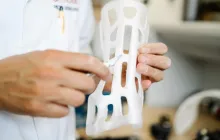
In orthopedics, digital twins support planning for joint replacement, fracture fixation, and soft tissue reconstruction by creating anatomically accurate models that reflect the patient’s bone density, geometry, and alignment. When combined with measures of bone healing potential and mechanical loads, these twins can predict implant longevity, stress shielding effects, and postoperative gait adaptations. The models may incorporate patient specific material properties and activity patterns to forecast the success of different implant configurations or rehabilitation protocols. In rehabilitation, digital twins of the musculoskeletal system can be used to simulate muscle activation patterns and movement strategies, enabling personalized therapy regimens and progress tracking. This approach helps surgeons and physical therapists design interventions that minimize tissue damage, accelerate recovery, and improve functional outcomes while maintaining a clear line of communication with patients about the expected trajectory of healing.
Oncology and tumor modeling
Digital twins in cancer aim to capture tumor biology, heterogeneity, and microenvironmental interactions that drive growth and response to therapy. A tumor twin can integrate radiomics features from imaging, histopathology data, genomic alterations, and immune context to simulate tumor evolution under different treatment plans. By running virtual clinical trials in silico, oncologists can compare chemotherapy regimens, targeted therapies, immunotherapies, or radiation strategies and estimate which approach is more likely to achieve tumor control with acceptable toxicity. Such models can also anticipate resistance mechanisms, identify biomarkers of response, and adapt therapy as the tumor changes. The hospital setting may host population level twins that guide policy decisions about resource allocation and protocol selection, while the patient level twins support shared decision making and individualized monitoring during treatment courses.
Neurology, neurodegenerative diseases, and brain health
In neurology, digital twins can represent brain networks, vascular pathways, and metabolic processes to study diseases such as epilepsy, Alzheimer’s disease, and multiple sclerosis. A brain twin can integrate neuroimaging, electrophysiology, cognitive assessments, and genetic risk factors to forecast disease progression, seizure likelihood, or responses to neuromodulation therapies. This application has the potential to personalize treatment plans, optimize stimulation parameters for devices like deep brain stimulators, and guide rehabilitation strategies after strokes. By simulating how neural circuits adapt to injury or degeneration, clinicians can anticipate adverse effects and adjust interventions proactively, improving safety and quality of life for patients with complex neurological conditions.
Pharmacology, drug development, and precision medicine
Digital twins play a growing role in the development and testing of drugs by simulating pharmacokinetics and pharmacodynamics in virtual populations that reflect genetic, metabolic, and comorbidity diversity. In early phase trials, twins of patients can be used to explore dosing strategies, predict adverse events, and optimize trial design for more efficient discovery. In precision medicine, individualized twins can forecast how a patient might metabolize a new compound, how efficacy may vary across subgroups, and how drug interactions could influence safety. This level of modeling reduces uncertainty before moving into expensive and time consuming clinical testing, thereby potentially accelerating the translation of novel therapies from bench to bedside while protecting participants through more thorough preclinical exploration.
Surgical planning and intraoperative guidance
Digital twins support surgical planning by providing a patient specific, dynamic representation of anatomy and tissue properties that helps surgeons rehearse procedures, select the most appropriate approach, and anticipate technical challenges. During complex operations, real time feeds from imaging, physiological monitors, and device telemetry can update the twin, allowing the surgical team to adjust strategy on the fly. In some cases, the twin can simulate hemodynamic consequences of maneuvers or implant choices, enabling optimization of critical parameters such as blood flow, pressure, and tissue tension. The fusion of preoperative planning with intraoperative feedback via a twin platform has the potential to improve precision, reduce operation time, and lower complication rates while enhancing patient outcomes and training for junior surgeons who benefit from realistic, data driven rehearsal experiences.
Medical training, simulation, and workforce development
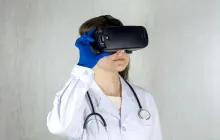
Beyond patient level applications, digital twins provide immersive training environments for clinicians and allied health professionals. High fidelity simulators can reproduce anatomical variation, disease states, and procedural challenges in a controlled, repeatable setting. Trainees interact with the twin to practice decision making, communications, and teamwork under pressure, while educators can measure performance against objective metrics and refine curricula accordingly. Linked to virtual reality or mixed reality interfaces, twin based training can progress from basic anatomy to highly specialized scenarios requiring precise procedural execution. This educational utility supports continuous professional development, reduces learning curves for new techniques, and fosters a culture of safety by allowing experimentation without risk to patients.
Hospital operations, workflow optimization, and resource planning
Digital twins extend into the operational realm by modeling patient flow, bed occupancy, staffing needs, and supply chains. A hospital twin can simulate surge scenarios, optimize scheduling of diagnostic studies, and predict demand for critical resources such as intensive care unit beds, imaging capacity, or operating room time. By incorporating patient level variability and stochastic processes, these models help administrators identify bottlenecks, test policy changes, and plan for contingencies. The operational twin supports not only cost containment but also improvements in patient experience through reduced waiting times, more predictable care trajectories, and safer care delivery by anticipating staffing shortages or equipment failures before they occur.
Wearables, remote monitoring, and home health twins
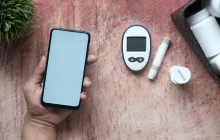
Patient generated data from wearables, home monitoring devices, and telemedicine interactions contribute to the living twin that tracks health status outside clinical settings. In chronic disease management, real time signals can reveal subtle deterioration early, enabling timely interventions. Remote twins empower patients with actionable feedback about activity plans, medication adherence, and lifestyle choices, reinforcing engagement and self management. The combination of in clinic measurements with home based data creates a richer representation of health trajectories, allowing clinicians to detect trends, personalize coaching, and adjust therapeutic targets without requiring frequent in person visits. This paradigm aligns with the broader shift toward value based care and patient centered models that recognize the patient as an active participant in health maintenance.
Ethical, privacy, and regulatory considerations
The deployment of digital twins raises important questions about privacy, consent, data ownership, and equity. Because twins rely on highly granular personal data spanning imaging, genetics, lifestyle, and clinical history, robust safeguards are essential to prevent misuse, discrimination, or breach events. Transparent governance structures, data minimization, and secure data transmission are foundational to maintaining trust among patients and providers. Regulatory oversight must evolve to address validation standards, explainability, and risk management for twin based recommendations. Clinicians must be equipped to interpret twin outputs responsibly, recognizing the limits of models and avoiding over reliance on computational forecasts in situations where clinical judgment and patient preferences remain paramount. Equity considerations require deliberate effort to ensure that digital twins do not widen gaps in access to advanced therapies or become tools that are only available in well resourced settings.
Validation, trust, and evidence generation
Establishing trust in digital twins hinges on rigorous validation against real world outcomes and transparent reporting of model performance. Validation often involves retrospective assessments, prospective trials, and benchmarking against established clinical standards. It requires documenting when twins agree with observed results and when they diverge, along with an explanation rooted in model assumptions or data quality. Independent reproducibility, cross center validation, and calibration to diverse populations are essential to avoid biases that could compromise safety or effectiveness. Clinician involvement is critical throughout since domain expertise guides meaningful interpretation, helps identify clinically relevant endpoints, and ensures that the twin serves as a decision support tool rather than a replacement for clinical reasoning or patient engagement.
Interoperability, standards, and data integration
A major hurdle for widescale adoption is ensuring that digital twins can work across different healthcare systems, devices, and software. Interoperability requires standardized data formats, common ontologies, and robust APIs that enable secure data exchange while preserving privacy. Standards bodies, professional societies, and regulatory agencies are increasingly encouraging the use of modular architectures and open interfaces that support plug and play with existing electronic health records, imaging archives, and device telemetry streams. Effective data integration also demands careful curation, harmonization of units, and methods for handling missing or noisy data. When these technical foundations are well established, twin platforms can scale from single patient pilots to hospital wide programs and multicenter collaborations that advance scientific understanding while delivering clinical value.
Future directions, acceleration, and potential impact
The future of digital twins in medicine is likely to involve deeper personalization, with twins that adapt in real time to acute events, gradually improving their predictive accuracy as more data accumulate. Advances in quantum computing, physics based simulation, and multi modal AI could enable more ambitious twins that simultaneously consider metabolic, immunologic, and psychosocial dimensions of health. As data ecosystems mature, clinicians may routinely consult a patient twin alongside imaging and lab data to discuss risk, test scenarios, and preferences during shared decision making. The most transformative outcomes may arise from integrating medical twins with public health twins that help optimize screening programs, resource allocation, and population level interventions, creating a feedback loop in which individual insights inform system wide strategies and policy while real time population trends refine individual care. Such a virtuous circle has the potential to enhance precision medicine, reduce unnecessary interventions, and improve overall health outcomes across diverse communities.