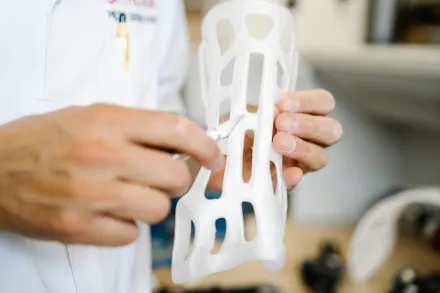
The Digital Foundation of Modern Implants
Orthopedic implants in contemporary medicine are no longer limited to standard shapes forged and machined from a few traditional geometries. The convergence of high resolution medical imaging, digital modeling, and additive manufacturing has created a new paradigm in which every implant can be designed around the biology of a single patient. In this digital foundation, surgeons, engineers, and regulatory specialists collaborate to translate a surgical plan, a patient’s anatomy, and healing goals into a physical device with a precision that was not possible a decade ago. The process begins with a detailed image of the patient’s skeleton captured through CT or MRI, and ends with a tangible part whose geometry respects bone contours, smooth interfaces with soft tissues, and the mechanical demands of the joint or bone segment involved. The value lies not only in faithfully reproducing anatomy but also in the ability to tailor stiffness, porosity, and surface texture to stimulate healing and reduce stress shielding. This fusion of imaging, software, and printer performance is what allows 3D printing to move from a prototyping tool to a standard method for producing implantable components.
From Imaging to Implant: A Seamless Digital Workflow
At the heart of this transformation is a seamless digital workflow that flows from image data to a finished device. It begins with high fidelity imaging and proceeds through segmentation, CAD modeling, and simulations before production. Segmentation translates grayscale CT or MRI slices into a three dimensional representation that isolates bone from marrow and surrounding tissues. Engineers then define the implant geometry, often using topology optimization to distribute material where it is most needed while preserving strength and reducing weight. Lattice structures are introduced to mimic the porous network of natural bone, creating an internal scaffold that promotes osseointegration. The digital model is tested virtually for stiffness, fatigue resistance, and wear behavior, and surgical cues such as guides and drill trajectories are incorporated to ensure a smooth transition from plan to actual operation.
Materials that Meet the Body: Biocompatible Alloys and Polymers
Materials chosen for orthopedic implants must harmonize strength, biocompatibility, corrosion resistance, and the ability to support bone ingrowth. Titanium alloys, particularly Ti-6Al-4V ELI, remain a mainstay for load bearing implants because their combination of high strength, moderate weight, and proven biocompatibility has been validated across decades of clinical use. In the 3D printing era, these alloys are printed with controlled porosity to create a trabecular like interior that reduces stiffness mismatch with native bone and buffers the interface against micromotion. Alternative materials such as tantalum offer exceptional corrosion resistance and surface roughness that enhance fixation, while polymers like PEEK and bioactive ceramics or composites can be used for specific applications such as spinal interbody devices or temporary implants. Surface treatments and coatings, including hydroxyapatite and calcium phosphate layers, are often applied to accelerate initial bonding and support long term stability. In some cases, composites combining polymers and ceramics enable a graded response that can absorb loads while presenting a bioactive surface to tissues.
Manufacturing Technologies: The Tools Behind the Print
Multiple additive manufacturing modalities enable implants to meet a spectrum of mechanical and biological requirements. Laser powder bed fusion, commonly referred to as SLM or DMLS, uses a focused laser to melt metallic powder within a defined cross section, producing dense parts with intricate internal channels. Electron beam melting accelerates the process in a vacuum, which is advantageous for certain alloys and helps manage heat input, but it requires careful handling of residual stress and post heat treatment. Binder jetting offers speed and the ability to work with ceramics or composites by printing a liquid binder that binds particles before a final sintering step, enabling porous architectures and rapid design iteration. Each technique imposes distinct constraints on porosity, surface finish, isotropy, and dimensional accuracy, which must be matched to the intended patient indication. The choice of process is influenced by material, required mechanical properties, cost considerations, and the regulatory pathway.
Patient-Specific Implants and Customization
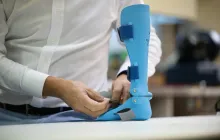
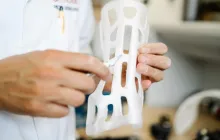
One of the most compelling advantages of 3D printing in orthopedics is the ability to tailor implants to the individual patient’s anatomy and pathology. In cases where a segment of bone is damaged by tumor, trauma, or degenerative disease, the surgeon can review a three dimensional model of the patient’s anatomy and design an implant that conforms to the remaining bone and fills the void with a precisely shaped cage, cap, or wedge. Customization extends beyond size; curvature, thickness, and interface geometry can be tuned to optimize load transfer and minimize stress concentrations. This patient specific approach reduces intraoperative guesswork, shortens operative times, and improves alignment, which in turn can translate into shorter hospital stays and easier rehabilitation. Real world examples include vertebral body replacements, acetabular augments, and long bone supports that mirror the patient’s unique geometry, providing stable fixation while maintaining soft tissue balance.
Porous Architectures: Designing for Osseointegration
Porosity is not a cosmetic feature; it is a functional characteristic that influences how bone tissue interacts with an implant. Additive manufacturing makes it possible to engineer a network of interconnected pores with controlled size, shape, and distribution. Typical pore sizes intended to promote bone ingrowth range from hundreds of microns, while the overall lattice can be designed to preserve mechanical integrity under physiological loads. By adjusting porosity and strut geometry, engineers tailor the modulus of the implant to closely approximate bone, which reduces stress shielding and supports early fixation. In titanium, the micro and nano scale roughness of the surface also plays a critical role in protein adhesion and cell response, guiding the healing cascade from inflammation to remodeling. The result is a more durable bond between implant and host, often reducing loosening and the need for revision surgery over many years of use. Engineers also explore hollow arterial network designs to enable vascular ingrowth and potential drug delivery within implants, though this remains an area of ongoing research.
Surgical Guides and Instrumentation
Beyond the implant itself, 3D printing enables an integrated set of tools that support the entire surgical workflow. Patient specific drilling guides and jigs are produced from the same digital model that defines the implant, aligning cutting planes with remarkable accuracy and reducing the chance of human error in the operating room. Custom guides streamline complex resections, precisely orient the implant, and preserve critical anatomical structures such as nerves and blood vessels. Instrumentation can also be customized for particular procedures, from compatible trial components to temporary inserts that help verify fit during the operation. The combination of anatomically accurate guides and well matched implants often translates into shorter anesthesia times, reduced blood loss, and quicker transitions to recovery. In institutions that adopt in house printing, teams coordinate planning sessions that preview the entire operation, increasing surgeon confidence and patient safety.
Regulation, Quality Assurance, and Safety
Regulatory and quality assurance considerations are central to the adoption of 3D printed orthopedic implants. Implants are classified according to their risk profile, and manufacturers must demonstrate material traceability, process validation, and biocompatibility data through well defined pathways. Standards organizations prescribe criteria for quality management systems, printing process controls, post processing, sterilization, and packaging. In practice, this means that a final implant carries documentation about the material batch, printer calibration, build orientation, and environmental conditions during manufacture. The FDA and other regulatory bodies increasingly treat additive manufacturing as a standard method of production when the design, production, and testing pathways are transparent, reproducible, and capable of meeting or exceeding historical performance. In addition, clinical evaluation and post market surveillance help confirm that patient outcomes align with the anticipated benefits, and ongoing reporting supports continuous improvement in both technique and device performance.
Clinical Outcomes, Patient Experiences, and Economic Considerations
Clinicians report a range of patient centered benefits when 3D printed implants enter the operating room. An accurately matched geometry reduces soft tissue irritation, improves joint mechanics, and can shorten the learning curve for surgeons adopting novel techniques. Some patients experience less pain after recovery when the implant shape better complements their unique anatomy and rehabilitation protocols are tailored to the new structure. The precise fit can also minimize the need for intraoperative improvisation, translating into shorter operative times and less exposure to anesthesia. On a systems level, hospitals that invest in in house or regional printing facilities may see reduced wait times for custom devices and lower inventory costs, as standardized off the shelf implants can be complemented by on demand builds for unusual indications. While upfront investment and specialized expertise are required, long term outcomes often include faster return to function, fewer postoperative complications related to misfit, and greater patient satisfaction.
Challenges, Risks, and Mitigation Strategies
No discussion of additive manufacturing in orthopedics would be complete without acknowledging the challenges and potential risks. Reproducibility depends on material quality, machine calibration, and operator skill; small deviations in powder characteristics or laser parameters can alter porosity, strength, and fatigue life. Sterilization methods must preserve microstructure and surface texture without compromising mechanical integrity or releasing contaminants, which is particularly important for complex lattice implants where trapped contaminants or residual moisture can create problems. Regulatory pathways require robust documentation and traceability at every step, which can slow development and increase cost. Importantly, there is a need for standardized testing protocols that reflect real world loading, patient diversity, and long term performance. To mitigate these risks, teams implement rigorous quality assurance programs, perform destructive testing on representative samples, run finite element analyses to anticipate failure modes, and maintain strong supplier qualification practices for powders, binders, and post processing services.
Future Horizons: What Lies Ahead for 3D Printed Orthopedics
The trajectory of additive manufacturing in orthopedics points toward multi material printing, bioactive coatings, and ever more sophisticated simulation driven design. Researchers are exploring the feasibility of printing implants with gradient properties that gradually transition from stiff cortical regions to more compliant porous cores, reducing abrupt changes in stiffness that can stress surrounding bone. There is growing interest in bioprinting approaches that combine living cells with structural scaffolds to accelerate healing, though translating these concepts to permanent load bearing implants will require careful regulatory navigation and long term clinical validation. Sensor integration is another promising direction, with embedded microelectronics or wireless telemetry that monitors mechanical strain, temperature, or signs of infection. In parallel, artificial intelligence guided design and real time intraoperative planning may streamline case selection and calibration, making custom solutions more accessible in diverse clinical settings and lowering barriers to widespread adoption.
Ethical and Social Dimensions of Personalization in Orthopedics
As the ability to tailor implants becomes more widespread, ethical considerations accompany technical progress. Access to advanced 3D printed solutions may be uneven across regions, hospitals, and patient populations, potentially widening disparities if the technology is concentrated in well resourced centers. Clinicians must balance patient expectations with realistic outcomes, ensuring patients understand the implications of customization, repair potential, and the need for follow up and imaging surveillance throughout the device life cycle. Cost structures, reimbursement policies, and the allocation of research funding will influence how widely these innovations reach patients who could benefit most. Informed consent processes should explicitly address questions about manufacturing variability, data provenance from imaging studies, and the potential for subsequent design modifications as new information becomes available from ongoing clinical experience. Responsible stewardship of resources and transparent reporting will catalyze trust and sustain the momentum of this transformative field.
Ultimately, the transformation of orthopedic implants by 3D printing is not a single breakthrough but a long running dialogue among materials scientists, engineers, surgeons, patients, and regulators. Each new device reflects a careful balance between the biology of healing, the physics of load sharing, and the practical realities of operating room workflows. The most impactful applications demonstrate not only technical prowess but also an appreciation for patient stories and the ways in which a precisely shaped implant can restore mobility, reduce pain, and improve confidence. As manufacturing capabilities continue to evolve, the emphasis on reliability, reproducibility, and safety will stay central, while new opportunities emerge for prompting faster recovery, extending implant life, and enabling a future where customization is standard practice rather than an exception.
For clinicians, researchers, and patients, the practical message is clear: three dimensional printing is not merely a novel manufacturing trick but a supportive framework that integrates imaging, engineering, and surgery. Its most powerful impact arises when a team collaborates across disciplines to translate a unique patient story into a device that fits, heals, and endures. The broader healthcare ecosystem benefits when hospitals invest in data management, supplier governance, and training that align with the careful standards demanded by implants with life long implications. As demand grows, workflows will mature, manufacturing will become more accessible, and the field will continue to push the boundaries of what is possible in orthopedic care.