Understanding the demand for customized implants
In modern medicine the demand for implants that perfectly fit a patient’s unique anatomy has grown steadily as imaging technologies and surgical planning have advanced. Traditional off the shelf devices often require compromises in fit, leading to longer surgeries, suboptimal load distribution, and sometimes less than ideal long term outcomes. The rise of three dimensional printing, or additive manufacturing, offers a pathway to craft implants that mirror the exact contours of bone and soft tissue, enabling surgeons to address patient specific geometry with precision. This shift is not merely about making a device that fits better; it is about enabling a holistic planning process where imaging data, computer aided design, and manufacturing converge to produce a finished implant that can integrate with the surrounding biology in ways that conventional methods struggle to achieve.
In clinical practice the move toward customization has become a practical reality thanks to improvements in imaging, segmentation, and digital workflow. When a patient’s computed tomography or magnetic resonance imaging data are converted into a detailed three dimensional model, engineers and clinicians can collaborate to explore alternatives, simulate how an implant will bear loads, and anticipate potential complications before a scalpel touches tissue. The resulting designs can accommodate irregular bone surfaces, reconstructs for complex defects, and accommodate constraints from adjacent joints, vessels, and nerves. The outcome is a personalized implant that not only fits but works in harmony with the patient’s biology, reducing the need for procedural ad hoc adjustments during surgery.
Personalization and fit: the core advantage
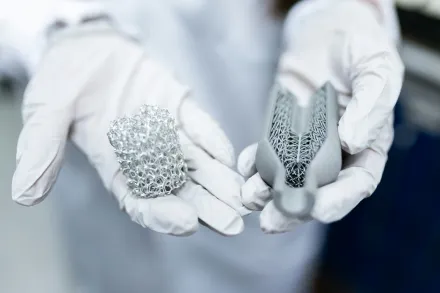
At the heart of 3D printed implants lies the capability to tailor form and function to the patient rather than forcing the patient to adapt to a generic shape. This level of personalization makes it possible to reproduce exact anatomical geometries, which improves contact between implant and host bone, fosters mechanical stability, and enhances healing through optimized load transfer. Porous architectures can be engineered into implants to promote osseointegration, allowing bone tissue to grow into the implant surface and creating a stable, long lasting interface. In addition to the overall morphology, the internal lattice can be tuned to modulate stiffness, reducing stress shielding and encouraging natural remodeling processes that support patient recovery.
Customization extends beyond shape to include the precise orientation of features such as porous regions, screw holes, and fixation channels. With three dimensional printing engineers can design implants that align with patient specific trajectories and avoid critical anatomical structures. This capability dramatically reduces the risk of intraoperative surprises and often decreases operative time. By combining high resolution imaging with sophisticated CAD tools, the design can be iteratively refined in collaboration with surgeons, ensuring that each implant is truly tailored to the patient’s unique anatomy and functional needs, rather than relying on an average representation of a population base.
Materials science and biocompatibility
The materials used in 3D printed implants are chosen for their compatibility with human tissue, mechanical properties, and their ability to withstand the sterilization processes required for implantation. Titanium alloys such as Ti-6Al-4V have become a mainstay in orthopedic and craniofacial implants due to their excellent biocompatibility, corrosion resistance, and a favorable strength to weight ratio. Specialty alloys and cobalt chromium components also find application in areas where higher stiffness is advantageous or where radiopacity is beneficial for postoperative monitoring. For patients and surgeons seeking alternatives, polymer based implants using materials like polyetheretherketone (PEEK) or PEKK offer radiolucency for imaging alongside a favorable strength profile, enabling innovations in spine and cranial applications where metal implants may pose imaging challenges.
The surface texture of an implant can be as important as its bulk composition. Additive manufacturing enables fine control over porosity, roughness, and microarchitecture, all of which influence how the body responds to an implanted device. Engineers can create surface features that encourage bone on growth, reduce micromotion, and create paths for vascular ingrowth. Post processing steps such as machining, surface polishing, heat treatment, or chemical etching may be used to achieve the exact surface characteristics required by a given application. Sterilization compatibility is also a critical consideration, with different materials responding differently to gamma irradiation, ethylene oxide, hydrogen peroxide plasma, or steam, which informs the selection of material and the design of the final product.
Imaging, modeling, and digital workflow
The journey from patient imaging to a finished implant begins with high fidelity three dimensional representations of anatomy. Advanced imaging modalities capture detailed skeletal and soft tissue information, and sophisticated segmentation algorithms translate this data into a digital mesh that can be manipulated within computer aided design software. Clinicians and engineers then collaborate to sculpt an implant that matches the patient’s anatomy while respecting biomechanical constraints. This process is not purely aesthetic; it is driven by the need to align implant surfaces with bony contours, ensure physiologically appropriate load paths, and preserve critical anatomical relationships that influence function and recovery.
Once a design is established, computational analyses such as finite element modeling can simulate how the implant behaves under physiological loads. This predictive capability helps identify potential failure points, verify stability, and optimize internal channels for vascularization or drug delivery when appropriate. The digital workflow also facilitates the creation of surgical guides and jigs that translate the virtual design into precise intraoperative execution, improving accuracy and reducing variability between cases. Throughout this cycle, rigorous documentation and traceability support regulatory compliance and quality assurance.
Manufacturing processes and validation
Amid the technical breadth of custom implants, the manufacturing process itself plays a decisive role in performance and reliability. Additive manufacturing encompasses a variety of technologies, including selective laser melting, electron beam melting, and binder jetting for metals, as well as fused deposition modeling, stereolithography, and material jetting for polymers. Each method offers distinct advantages in terms of resolution, material compatibility, and production speed. For metal implants, powder bed fusion techniques provide dense, robust components suitable for load bearing applications, while polymer or composite constructs can be employed for temporary implants, scaffolds, or non load bearing components. Post processing such as heat treating, surface finishing, and dimensional inspection are critical to ensure consistency with the digital design.
Validation of a custom implant goes beyond dimensional accuracy; it requires a comprehensive assessment of mechanical performance, biocompatibility, and sterility. Mechanical testing evaluates fatigue life, resistance to corrosion, and the device’s ability to withstand repetitive physiological loads. Biocompatibility testing ensures that materials do not elicit adverse tissue or systemic responses. Sterilization validation confirms that the implant can be rendered free of viable contaminants without compromising its properties. Regulatory frameworks require meticulous quality control, process validation, and traceability, with documentation that connects every step from design to finished product and ultimately to patient outcomes.
Clinical integration: planning and surgery
The true value of a patient specific implant emerges when it is smoothly integrated into the clinical workflow. Preoperative planning becomes more precise as surgeons interact with digital models to simulate implant insertion, verify the fit, and anticipate potential challenges. Surgical guides printed alongside the implant translate the virtual plan into actionable steps during the operation, guiding drilling trajectories and insertion paths with heightened accuracy. This coordinated approach can shorten operation times, reduce tissue trauma, and minimize intraoperative guesswork, contributing to safer procedures and improved patient recovery profiles.
In addition to technical benefits, patient communication gains clarity through tangible, three dimensional representations of anatomy and proposed implants. Patients can visualize how an implant will conform to their anatomy, understand the rationale for the chosen design, and participate more meaningfully in shared decision making. The multidisciplinary collaboration that underpins this process typically involves surgeons, radiologists, biomedical engineers, and anesthesiologists, all contributing distinct expertise to ensure that every implant supports a successful surgical and rehabilitation trajectory rather than merely occupying space within the body.
Regulatory landscape and safety
Regulatory oversight for custom implants reflects their unique position in healthcare. Standards bodies and regulatory agencies emphasize rigorous design control, material qualification, and process validation to ensure safety and efficacy. In many regions, approvals require comprehensive documentation that traces the device from initial concept through manufacturing, testing, packaging, sterilization, and installation. Quality management systems, such as ISO 13485, provide structured frameworks for maintaining consistent processes, while post market surveillance helps identify rare failures and inform ongoing improvements. For patient specific implants, regulatory pathways often include additional considerations for customization, including documentation of clinical justification and the intended patient population.
Transparency and traceability are essential in additive manufacturing for implants. Unique device identifiers, batch records, and material certifications help track each implant’s provenance, while ongoing quality assurance programs monitor dimensional tolerances, surface characteristics, and sterilization outcomes. Manufacturers, surgeons, and institutions collaborate to ensure that the benefits of customization are realized without introducing unacceptable risks. Ethical considerations also guide the responsible use of 3D printed implants, including patient consent, equitable access, and attention to long term safety during follow up care.
Economic and access considerations
The economics of customized implants are shaped by upfront design and manufacturing investments balanced against long term clinical savings. Although initial costs can be higher due to bespoke design, sophisticated materials, and specialized equipment, the potential for reduced revision surgeries, shorter hospital stays, and expedited rehabilitation can yield meaningful savings over time. Hospitals and clinics may realize economies of scale as repeatable workflows mature, allowing for faster turnaround times, improved inventory control, and better utilization of surgical theater resources. The ability to plan and rehearse complex cases digitally can also contribute to predictable procedures and resource planning that benefit overall hospital performance.
Access to customized implants is a critical consideration, particularly in diverse healthcare environments. Advances in automation, digital libraries of standard design modules, and collaborations between manufacturers and medical centers can drive down costs while expanding availability. Local manufacturing capabilities in larger hospital systems may provide rapid response to urgent cases, bypassing some delays associated with external supply chains. However, this shift also introduces new governance challenges related to quality control, training, and regulatory compliance that institutions must manage through comprehensive programs and robust oversight.
Case studies and real world outcomes
Across orthopedic, craniofacial, dental, and spinal specialties, clinicians are reporting tangible gains from patient specific implants. In craniofacial reconstruction, for example, implants matched to the patient’s skull morphology can restore symmetry and protect vulnerable structures with greater precision, while reducing oral and aesthetic disturbances that often accompany generic devices. In orthopedic applications, patient tailored joints and fixation systems can enhance alignment, restore biomechanical function, and shorten rehabilitation timelines by delivering stable fixation and improved load sharing. The cumulative effect across these domains is a shift toward procedures that respect individual anatomy and patient goals, supported by evidence gathered through careful follow up and outcome tracking.
Implant based dental therapies have benefited from custom abutments, surgical guides, and prosthetic components designed to align precisely with an individual’s dentition. This not only improves the fit and function of implants but also enhances patient comfort and satisfaction. In spine surgery, patient specific cages and implants can improve segmental stability and enable more natural motion preservation when feasible, while conforming to the unique curvature of each patient’s spine. Such cases underscore how three dimensional printing broadens the therapeutic envelope by enabling solutions that were previously constrained by standard shapes and sizes, opening new possibilities for recovery and long term health.
Future directions: smart implants and bio printing
The frontier of 3D printing in medicine is expanding toward multifunctional devices that combine structural support with intelligent capabilities. Sensors embedded within implants could monitor mechanical load, temperature, and biochemical signals, transmitting data that informs postoperative care and early detection of complications. Gradient materials and multi material printing enable implants that transition gradually from stiff, load bearing regions to more compliant zones that interface better with soft tissue, potentially reducing discomfort and improving integration. Drug delivery channels and localized release systems can further enhance healing, delivering anti inflammatory agents or growth factors exactly where needed over time.
Emerging bio printing concepts aim to extend customization to living tissues, with scaffolds designed to guide cellular growth and vascularization in ways that support genuine tissue regeneration. While this field presents scientific and regulatory challenges, progress is being made in matching scaffold architecture to biological function, enabling implantation strategies that not only replace tissue but actively participate in restoring physiology. Artificial intelligence and advanced simulation are increasingly used to optimize design choices, predict patient specific outcomes, and streamline the validation process, creating a future where implants are not merely devices but integrated components of a patient’s healing ecosystem.