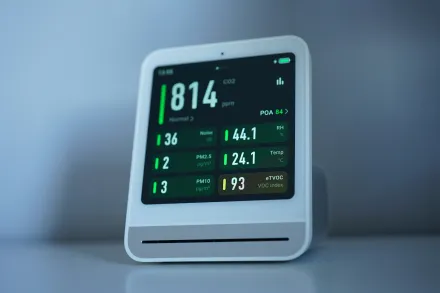
In the modern landscape of healthcare, AI-powered health monitoring platforms stand as a transformative force that blends continuous data collection with intelligent interpretation. These platforms synthesize streams from wearables, medical devices, and electronic health records to produce actionable insights that can guide both clinical decisions and patient self-management. The promise lies not merely in accumulating data, but in transforming it into meaningful context that can detect subtle changes in health status, predict potential deterioration, and prompt timely interventions. As digital health ecosystems expand, the ability to harness machine learning, advanced analytics, and secure data orchestration becomes a central driver of outcomes, access, and efficiency across diverse populations.
Foundational technologies behind AI health monitoring
The backbone of AI-powered monitoring platforms rests on a confluence of sensors, data pipelines, and intelligent models that can operate across heterogeneous environments. Wearable devices capture physiological signals such as heart rate variability, sleep patterns, activity levels, and sometimes glucose or oxygen saturation, while dedicated medical devices contribute high-fidelity measurements like continuous blood pressure, electrocardiograms, and laboratory biomarkers. These data streams are fused in real time or near real time, creating rich longitudinal profiles that reflect the trajectory of an individual's health over days, weeks, and months. At the core of these systems are machine learning and statistical algorithms capable of handling noisy time-series data, recognizing normal rhythms, and spotlighting deviations that deserve attention. On-device processing and edge computing are increasingly employed to reduce latency, preserve privacy, and operate in settings with intermittent connectivity, while cloud-based platforms offer scalable resources for heavier analyses, model training, and epidemiological insights. Robust architectures implement data normalization, synchronization across devices, and calibration routines that help align measurements from different sensors, ensuring that a change in a signal is attributable to a genuine physiological shift rather than device drift.
Data governance and privacy in AI health monitoring
In this field, safeguarding privacy and ensuring responsible data use are not add-ons but foundational requirements that shape design choices and business models. Platforms must navigate a complex landscape of regulatory expectations, including patient consent, data minimization, and access controls, while balancing the need for rich data to train robust models. Techniques such as de-identification, pseudonymization, and privacy-preserving machine learning help protect individual identities while preserving analytic value. When clinicians and patients interact with AI systems, transparency about data provenance, model performance, and the limitations of automated recommendations becomes essential for trust. Ethical considerations extend to bias mitigation, ensuring that models do not disproportionately misinterpret signals from underrepresented groups, and to equity in access so that digital health advances do not widen existing disparities. As data flows across domains, governance frameworks emphasize auditability, accountability, and the ability to trace decisions back to data sources and methodological choices.
Interoperability and standards
Interoperability is the enabling layer that allows AI health platforms to work across ecosystems, devices, and institutions. Standardized data models and open interfaces facilitate seamless integration with electronic health records, laboratory information systems, imaging repositories, and population health analytics platforms. The adoption of widely used standards such as accessible health data exchange protocols and interpretable coding systems helps harmonize measurements that may originate from different vendors, ensuring that clinicians obtain a coherent picture rather than a mosaic of incompatible signals. Semantic interoperability further enhances understanding by aligning terms and concepts so that a heart rate reading from one device corresponds to the same clinical interpretation as the same reading from another. When data gaps occur, robust imputation strategies, quality confidence scores, and provenance tagging support researchers and clinicians in assessing the reliability of the information they rely upon for decision making. In this context, governance of APIs becomes as important as the APIs themselves, with careful emphasis on rate limits, access controls, and secure authentication that protects sensitive health information.
Clinical applications and patient-centric care
The clinical applications of AI-powered health monitoring platforms span chronic disease management, postoperative recovery tracking, elder care, and acute care settings. In chronic conditions such as cardiovascular disease, diabetes, and respiratory illnesses, continuous monitoring enables early detection of exacerbations, adherence monitoring, and timely medication adjustments. For patients recovering from surgery, remote monitoring supports personalized rehabilitation plans by evaluating activity progression and vital signs for safety. In oncology, wearable-derived data can complement imaging and lab results to monitor treatment tolerance and fatigue, guiding supportive care interventions. The patient-centric dimension of these platforms emphasizes shared decision making, where insights are presented in clear, actionable forms and accompanied by explanations that help individuals understand what changes in their data might signify. Clinicians benefit from synthesized views that reduce information overload while preserving access to granular signals when needed for deeper assessment. This integrated approach helps align care delivery with patient preferences, lifestyle, and social determinants that influence health outcomes.
Consumer health and risk management
Beyond clinical settings, AI-enhanced monitoring serves the broader public by supporting informed lifestyle decisions and proactive risk management. Consumer-facing platforms harmonize data from wearables, mobile health apps, and environmental sensors to generate personalized risk scores, wellness recommendations, and goal tracking. While these tools promote empowerment and motivation, they also require careful framing to avoid overmedicalization of normal variations. Clear boundaries between consumer insights and medical-grade evaluation help manage expectations, particularly when users interpret warning signals without professional consultation. In addition, educational content and contextual explanations assist users in distinguishing between symptoms that warrant urgent care and those that can be managed with self-care strategies. The most successful consumer platforms integrate seamless clinician access when professional interpretation is necessary, maintaining a pathway from self-monitoring to appropriate medical support.
AI architectures and deployment models
AI health platforms employ a mix of architectures to balance performance, privacy, and scalability. On-device inference enables real-time feedback and reduces data exposure by processing signals locally, while cloud-based inference can harness larger models and historical data to generate more nuanced insights. A hybrid approach often emerges, with sensitive streams processed at the edge and aggregated patterns uploaded to the cloud for longitudinal analysis and model refinement. Federated learning and other privacy-preserving training methods allow models to improve from data that never leaves the user’s device, mitigating privacy concerns while still advancing performance. Streaming analytics pipelines enable continuous evaluation of incoming data, triggering alerts or recommendations when abnormal patterns are detected. Model governance practices, including versioning, validation in diverse cohorts, and monitoring for drift, help maintain reliability as populations and devices evolve over time. The deployment strategy must consider regulatory requirements, latency constraints, and resource availability across different care settings and geographic regions.
Safety, validation, and regulatory considerations
Before AI-powered monitoring platforms can influence clinical care, their safety and effectiveness must be demonstrated through rigorous validation. Analytical performance metrics such as sensitivity, specificity, timeliness of alerts, and the clinical relevance of detected signals are essential for credible use. Real-world evidence collection, prospective studies, and post-market surveillance contribute to an evolving safety profile that informs updates and mitigations. Regulatory pathways vary across jurisdictions but share common expectations for traceability, risk assessment, and human oversight. In the clinical domain, federal and regional authorities increasingly recognize digital tools as integral components of care, provided they demonstrate reliability, data integrity, and user-centric design. Adverse event reporting, calibration protocols, and clear delineation of the roles of AI recommendations versus clinician judgment support responsible adoption. The governance of risk encompasses not only the technology itself but the entire ecosystem that surrounds data collection, model use, and patient communication.
Ethical and social implications
As AI-enabled monitoring becomes more pervasive, it raises important ethical questions about autonomy, fairness, and the distribution of benefits. Bias in training data can propagate through systems, leading to unequal performance across demographic groups or underrepresented populations. Addressing these issues requires deliberate dataset curation, fairness audits, and inclusive design practices that involve diverse stakeholders in the development process. Transparency about how models arrive at conclusions, along with explainable outputs that clinicians and patients can understand, supports trust and informed consent. The digital divide remains a barrier to equitable access, so programs must consider affordability, device availability, digital literacy, and user-friendly interfaces that accommodate varying levels of experience. Equity-focused design also means ensuring language options, culturally sensitive content, and adaptable interfaces that accommodate disabilities, all while preserving the rigor needed for clinical usefulness.
Implementation challenges in real-world settings
Real-world deployment of AI health monitoring platforms encounters a spectrum of operational obstacles and organizational dynamics. Integrating new systems with existing electronic health records requires careful mapping of data elements, robust data quality checks, and ongoing collaboration with information technology teams. Clinicians face workflow changes, and the design of alert mechanisms must be tuned to minimize fatigue while preserving patient safety. Patient engagement hinges on perceived usefulness, simplicity of use, and the availability of timely support when users encounter questions or issues. Data quality is a persistent concern, with irregular sampling, missing values, and sensor drift needing explicit handling to avoid misleading interpretations. Governance structures must align with clinical governance, IT security, and legal obligations, creating a coherent environment where technology enhances care without introducing new risk vectors. Training and change management play crucial roles in achieving sustained adoption and meaningful outcomes.
Operational considerations and ecosystem design
A robust AI health monitoring platform is not a solitary tool but part of an ecosystem that includes device manufacturers, healthcare providers, payers, and patient communities. Interoperability and reliable data exchange underpin the ability to scale from a pilot to a population-level program. Business models must balance value creation with patient privacy, reimbursement considerations, and the practical realities of healthcare economics. User experiences should prioritize clarity, actionable guidance, and appropriate escalation paths when automated insights indicate potential issues. Security-by-design principles help protect credentials, servers, and data in transit, while disaster recovery and business continuity plans safeguard continuity of care even in adverse conditions. The most enduring platforms cultivate trust through consistent performance, transparent governance, and a demonstrated commitment to improving health outcomes without compromising individual rights.
Future directions and research horizons
Looking ahead, AI-powered health monitoring platforms are likely to expand their reach through multi-modal data integration, combining physiological signals with environmental context, behavioral indicators, and psychosocial factors to paint a holistic picture of health. Advances in sensor technology, such as noninvasive continuous measurements and more sensitive wearables, will enrich the granularity of observations, enabling earlier detection of subtle shifts in health status. Personalization will deepen through longitudinal learning, where models adapt to the unique baselines and responses of each individual, while federated learning frameworks will allow cross-institutional learning without compromising privacy. In research, synthetic data generation and rigorous validation on diverse cohorts will help overcome biases and enhance generalizability. The ethical landscape will continue to evolve, demanding vigilant oversight, transparent reporting, and mechanisms for patient empowerment that sustain trust as technology becomes more embedded in daily life. At scale, these platforms have the potential to transform preventive care, optimize treatment pathways, and support resilient health systems that respond more effectively to infectious disease outbreaks, chronic disease burdens, and aging populations.
As the field progresses, the convergence of biomedical engineering, data science, clinical expertise, and policy development will shape how AI-powered health monitoring platforms define quality, safety, and value. The goal remains to enhance human judgment rather than replace it, offering clinicians precise, timely signals while enabling patients to participate actively in their own care. The journey requires ongoing collaboration across disciplines, thoughtful design that respects privacy and dignity, and a commitment to equity so that innovations benefit every segment of society. When these principles come together, AI-enabled monitoring becomes a scalable, trustworthy ally in the pursuit of healthier lives and more efficient, responsive healthcare systems.