Overview of physical therapy in injury recovery
Physical therapy is a discipline that centers on restoring function, reducing pain, and enabling individuals to return to meaningful activity after injury. It draws from an array of scientific principles, including biomechanics, anatomy, neuroscience, and tissue healing, to craft individualized plans that respect the unique circumstances of each person. The essence of physical therapy in injury recovery lies not merely in addressing current symptoms but in understanding how movement patterns, strength, flexibility, and coordination interact to influence long term health. Therapists work with patients across a spectrum of injuries, ranging from acute sprains and strains to chronic tendinopathies, post-surgical recoveries, and complex orthopedic conditions. By studying movement in real life, therapists identify compensations and maladaptations that may hinder healing and then guide the patient through a sequence of interventions that promote proper loading, tissue repair, and functional restoration. The objective is to empower individuals with strategies that are practical, evidence informed, and adaptable to daily life so that progress is sustainable beyond the therapy session. This approach recognizes that healing is an active process that requires clear instructions, consistent practice, and a partnership between the patient and the clinician, built on trust, education, and a shared commitment to gradual improvement.
Foundations of healing and the physical therapy timeline
The journey of recovery begins with an appreciation of the biology of healing and how it influences rehabilitation. Tissue repair proceeds through phases, including inflammation, proliferation, and remodeling, each with characteristic timelines and responses to mechanical load. Physical therapy respects these stages by applying interventions that protect healing tissues while introducing safe, progressive challenges that encourage realignment of force, tissue strength, and functional capacity. The timeline is highly individualized, as age, overall health, prior injuries, and the specific tissue involved all shape the pace of recovery. Early in the process, the emphasis often falls on reducing pain, controlling swelling, and maintaining as much mobility as possible within safe limits. As healing advances, therapy shifts toward restoring range of motion, gradually increasing resistance, and reestablishing neuromuscular control. The long view centers on returning to activities that bring meaning and purpose to the patient, whether that involves daily tasks, recreational pursuits, or professional duties. A well-structured timeline integrates clinical findings with patient goals, ensuring that every intervention has a rationale rooted in both science and lived experience. The ultimate aim is to reach a state where movement is efficient, pain-free, and capable of accommodating the demands that the individual expects from their body.
The initial assessment and goal setting
Every successful rehabilitation begins with a comprehensive assessment that blends objective measurements with patient narratives. A physical therapist evaluates range of motion, strength, flexibility, stability, balance, and functional performance while also listening to the patient’s description of pain, activities limited by injury, and the impact on mood and confidence. The assessment extends beyond the injured site to consider adjacent joints, regional mechanics, and overall alignment, recognizing that compensations in one area can propagate to others. Goals are co-created with the patient and framed in concrete, measurable terms that align with daily life and sport or work requirements. Specificity matters; when a goal is clearly defined, progress can be tracked with meaningful milestones, and motivation is sustained through visible improvement. The initial plan outlines a sequence of therapeutic strategies designed to restore function methodically while safeguarding against re-injury. By combining data from physical tests with patient-centered objectives, therapists craft a roadmap that is both personalized and adaptable, ensuring that adjustments can be made as healing unfolds and the patient’s readiness changes.
Manual therapy and hands-on approaches
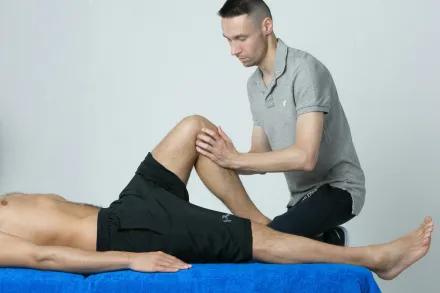
Manual therapy encompasses a range of hands-on techniques that aim to decrease stiffness, improve joint mobility, alleviate muscle tension, and optimize tissue glide. Therapists may employ soft tissue mobilization to address scar tissue and trigger points, joint mobilization to restore arthrokinematics, and mobilization with movement to encourage efficient joint mechanics within functional patterns. These approaches can reduce pain sensitivity and enhance the patient’s perception of movement, which often translates into greater confidence during exercise. Manual therapy is typically integrated with active interventions, ensuring that tissue changes are reinforced by purposeful loading and neuromuscular control. The choice and intensity of manual techniques are tailored to the patient’s tissue quality, stage of healing, and tolerance, avoiding excessive force in the early phases while providing meaningful stimulus when safe and appropriate. By combining precise contact, patient positioning, and controlled motion, manual therapy supports the nervous system’s interpretation of movement as safe, which can accelerate early gains and set the stage for more challenging rehabilitation tasks.
Therapeutic exercises and progressive loading
Therapeutic exercises form the core of most rehabilitation programs and are designed to restore strength, stability, flexibility, and endurance in a coordinated and purposeful manner. Progressive loading involves increasing resistance, repetitions, or complexity in a deliberate fashion that matches the tissue’s capacity to adapt. Early movements may emphasize gentle, pain-free tasks that promote joint lubrication and muscle activation, while later stages introduce more demanding activities that resemble real-world demands. The art of exercise prescription lies in balancing challenge with safety, ensuring that the central nervous system remains engaged through accurate feedback and motivation. Specific exercises may target isolated muscle groups to rebuild strength, followed by integrated patterns that simulate functional tasks such as walking, climbing stairs, lifting objects, or running. The goal is not merely to strengthen muscles but to restore the timing and coordination of movement, so that the body can perform the required activities with efficiency, economy, and resilience. Consistency in performing home exercise programs complements clinic sessions, reinforcing gains and fostering autonomy in recovery.
Neuromuscular re-education and balance training
Injury often disrupts the nervous system’s control over movement, leading to altered neuromuscular patterns that can persist even after tissue healing. Neuromuscular re-education focuses on retraining the brain and spinal cord to coordinate muscles, control joint positions, and respond to dynamic perturbations. Techniques may include practice of precise foot placement, coordination drills, and tasks that challenge proprioception and timing. Balance training, perturbation work, and closed-chain activities help improve postural stability and functional confidence, reducing the risk of re-injury. This dimension of rehabilitation emphasizes the integration of sensory feedback, motor output, and cognitive attention to movement, recognizing that optimal recovery requires not only physical strength but also accurate neural control. Through progressive challenges, patients relearn how to move efficiently in unpredictable environments, which is especially important for athletes returning to sport or individuals resuming job duties that demand steadiness and control under real-world conditions.
Gait rehabilitation and functional restoration
When injuries involve the lower body or the spine, gait analysis becomes a central component of recovery. Therapists assess stride length, symmetry, weight transfer, cadence, and runner or walker mechanics to identify dysfunctions that could hinder performance or predispose to compensation. Interventions may include gait retraining with cues to normalize foot strike patterns, hip and knee alignment, and trunk stability during walking or running. Functional restoration extends beyond locomotion to daily activities such as stairs, standing from a chair, bending, and lifting. Practice is guided by objective measures and patient feedback, ensuring that improvements in strength translate into smoother, safer, and more efficient movement patterns. By connecting basic therapeutic exercises to real-life tasks, therapists help patients experience tangible progress that reinforces adherence and confidence in the recovery process.
Plyometrics, endurance, and cardiovascular conditioning
As healing advances, it becomes important to reintroduce dynamic loading and cardiovascular conditioning that reflect the demands of work or sport. Plyometric drills, when appropriate, help restore explosiveness, springiness, and rapid force production, while gradually increasing impact tolerance and motor control. Endurance training supports overall conditioning, enhances tissue resilience, and contributes to mood and energy levels, all of which facilitate adherence to rehabilitation plans. Care is taken to tailor intensity, volume, and progression to the injury type, the patient’s baseline fitness, and the stage of tissue healing, ensuring that cardiovascular work complements strength and movement training rather than overwhelming recovering tissues. By integrating these components, physical therapy creates a holistic program that supports steady improvements across multiple domains, promoting sustainable outcomes and reducing the likelihood of re-injury during the return-to-activity phase.
Education, self-management, and psychological aspects
Education empowers patients to understand the rationale behind each intervention, recognize warning signs, and actively participate in their own recovery. Self-management includes learning proper body mechanics, pacing activities, applying home strategies like ice or heat when appropriate, and maintaining motivation through progress tracking. The psychological component of injury recovery is equally important, with therapists acknowledging fears, frustration, and apprehension that can accompany healing. Clear communication, goal setting, and patient-centered coaching help build resilience and confidence, enabling individuals to manage setbacks when they occur and to maintain a constructive mindset throughout the rehabilitation journey. By fostering a sense of agency, education supports long-term health behaviors that extend beyond the clinical setting and contribute to a more robust, injury-resilient lifestyle.
Return-to-activity criteria and progression decisions
Decisions about returning to sport, work, or other demanding activities are guided by a combination of quantitative measures, qualitative assessments, and patient readiness. Clinicians use objective tests to evaluate strength symmetry, functional performance, endurance, and movement quality, while also considering symptom response to progressively challenging tasks. A cautious, staged progression helps ensure that tissues can tolerate load without regressing into pain or dysfunction. Return-to-activity decisions are not based on time alone but on evidence of functional capacity and the patient’s confidence in performing tasks without compensatory patterns. The process often includes graded exposure to sport-specific drills, simulated work tasks, and endurance challenges that reproduce real-world demands while maintaining a safety net. The overarching principle is a gradual, data-informed, individualized transition from therapy to autonomous activity, with ongoing monitoring to catch any early signs of flare-ups or compensations.
Injury types and tailored rehab strategies
Physical therapy adapts to a broad spectrum of injuries by applying principles that are universally applicable while customizing specifics to the tissue and context involved. In acute sprains, early controlled movement and swelling management help preserve joint mobility and prevent stiffness, followed by progressive loading that restores ligament integrity and functional stability. Tendinopathies respond to graded loading schemes that stimulate tendon remodeling while reducing pain, with attention to training load, rest periods, and technique. Fracture rehabilitation emphasizes staged protection and controlled motion to promote callus formation and alignment, gradually advancing to weight-bearing as radiographic healing allows. Post-surgical rehab varies with the operation performed and the surgeon’s protocol, but commonly includes milestones such as achieving adequate range of motion, regaining strength, reestablishing neuromuscular control, and performing sport- or job-specific tasks. In sports injuries, rehabilitation often integrates sport-specific drills, reaction time training, and biomechanical analysis to ensure that performance is restored in a way that minimizes the risk of re-injury. Across all injury types, the core directives remain clear: restore function, protect healing tissues, optimize movement, and support a confident return to the activities that define the patient’s life.
The role of home exercise programs and self-management
The success of physical therapy hinges substantially on what patients do outside the clinic. Well-designed home exercise programs provide structured opportunities to practice skills learned during sessions, reinforce correct movement patterns, and sustain gains achieved in therapy. Programs are tailored to the individual’s schedule, access to equipment, and personal preferences, increasing the likelihood of consistent adherence. Therapists emphasize clear instructions, progression criteria, and practical adaptations so that exercises remain feasible within daily routines. Self-management also encompasses activity pacing, sleep, nutrition, and strategies to manage pain without dependence on passive measures. When patients become active participants in their recovery, they carry forward healthier movement habits, better problem-solving skills, and a stronger sense of control over their bodies, which translates into more durable outcomes and a higher likelihood of long-term well-being.
Interdisciplinary collaboration and care settings
Physical therapists operate within multidisciplinary teams that may include physicians, nurses, occupational therapists, athletic trainers, and other health professionals. Collaboration ensures that treatment aligns with medical diagnoses, imaging findings, and surgical plans, while also contributing a unique perspective on movement, function, and rehabilitation potential. The setting of care shapes the approach: inpatient rehabilitation may emphasize early mobilization and functional training in a controlled environment; outpatient clinics allow for longer, more detailed progressions; and community-based or home health services extend expertise to individuals with limited access to clinics. Across settings, communication remains central, with concise handoffs, shared goals, and a unified focus on optimizing recovery trajectories. This integrative approach ensures that physical therapy complements other interventions, amplifying the overall impact on patient health and quality of life.
Safety, risk management, and red flags
Safety is foundational in physical therapy, and clinicians remain vigilant for signs that require modification or escalation of care. Early post-injury red flags may indicate underlying complications such as occult fractures, nerve compression, or infection, necessitating prompt medical evaluation. Therapists screen for contraindications to certain movements, monitor responses to loading, and adjust plans to respect individual tolerance. Clear communication with the patient about pain levels, swelling, and functional limits helps set realistic expectations and reduces the risk of overloading recovering tissues. In all cases, the philosophy centers on patient safety, gradual progression, and ongoing assessment to identify any signals that healing is not proceeding as expected. By maintaining a cautious, attentive stance, therapists protect progress while fostering trust and empowerment in the rehabilitation process.
Future directions in physical therapy for injury recovery
The field of physical therapy continues to evolve with advances in technology, research, and clinical practice. Emerging approaches include precision medicine concepts that tailor rehab to genetic, biomechanical, and psychosocial factors, as well as enhanced imaging and wearable sensors that provide real-time feedback on movement and tissue loading. Data-driven decision making supports more accurate progressions, while tele-rehabilitation expands access to expert care for individuals in remote or underserved areas. Innovations in rehabilitation science emphasize early engagement, multimodal strategies that combine manual therapy with targeted exercises, and personalized return-to-activity planning that integrates mental readiness and confidence-building. As knowledge expands, physical therapists strive to translate evidence into practical, accessible care that respects each patient’s unique story, goals, and life context, ensuring that injury recovery remains a dynamic, patient-centered journey rather than a rigid timetable confined within clinic walls.