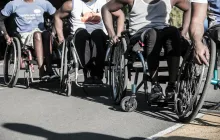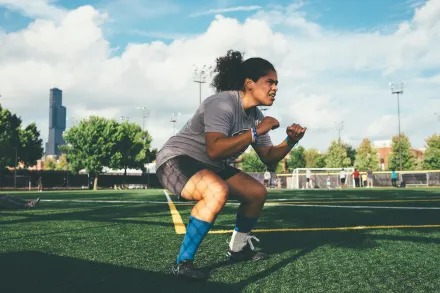
Agility stands as a dynamic intersection of speed, coordination, balance, and decision making that allows an athlete to change direction, accelerate, decelerate, and adapt to ever shifting demands of a game or competition. Unlike raw sprint speed, agility embodies the ability to process information, adjust mechanical output in real time, and execute precise movements under fatigue and pressure. This article explores a comprehensive approach that goes beyond drills and showcases how to build a resilient, adaptive athletic system. It presents a pathway that integrates neuromuscular control, movement efficiency, sport-specific demands, and recovery strategies so that improvements in agility translate into higher performance in the field, court, track, or arena.
Understanding agility and why it matters
Agility is a multi dimensional attribute that emerges from the harmony of the nervous system, muscular strength, joint stability, and proprioceptive awareness. It begins with the capacity to perceive cues from the environment, interpret them quickly, and convert intention into coordinated action. In sports, this translates to reacting to an opponent’s feints, selecting the optimal cut, maintaining body control while changing direction, and sustaining high-quality locomotion even when the surface or fatigue level shifts. Athletes with refined agility can maintain balance on uneven terrain, adapt to tactical plans, and reduce the latency between decision and movement. The significance of agility expands beyond competition; it also underpins everyday movement safety and injury resistance by teaching the body to absorb forces efficiently and reroute energy through stable joints and resilient connective tissue.
Foundational principles of agility training
The foundation for improving agility rests on a few core principles that apply across sports and disciplines. First, specificity matters: drills should mimic the unique patterns of movements, angles, and speeds encountered in a given sport. Second, progressive overload is essential: systematic increases in complexity, volume, or intensity drive adaptation while reducing the risk of overtraining. Third, consistency over intensity yields better long term gains: regular, well designed sessions create neural adaptations and habitual motor patterns more effectively than sporadic maximal efforts. Fourth, stability and mobility must be developed in tandem: strong, stable joints paired with adequate range of motion enable smoother transitions and reduce compensatory movements that can lead to injury. Fifth, the neuromuscular system benefits from variability: varied tasks challenge the brain to solve movements in different contexts, improving adaptability on game day. Finally, recovery and tissue readiness are non negotiable: adequate sleep, nutrition, and loading strategies support high quality performance and reduce setbacks from fatigue or overuse.
Assessment and goal setting for agility
A precise starting point allows athletes and coaches to tailor programming toward measurable improvements. Practical assessment includes evaluating basic movement quality, change of direction speed, reaction time, and balance. Exercises like the T test, lane drill, or hexagon pattern can provide insight into how quickly an athlete can decelerate, plant, and reaccelerate. More sophisticated measures may involve timing during sport specific drills, instrumented gait analysis, or video review to quantify foot placement, knee alignment, trunk control, and hip hinge mechanics. Goals should be specific, observable, and time bound: for example, achieving a certain improvement in change of direction time, enhancing movement efficiency on a particular cut angle, or maintaining form under fatigue. A data driven approach fosters accountability and helps adjust training loads to avoid stagnation or injury risk. Regular re assessment reinforces progress and identifies potential compensations that can be addressed with targeted interventions.
Neuromuscular training and coordination
At the heart of agility lies neuromuscular coordination—the seamless communication between the brain, spinal cord, and muscular system. Training that emphasizes rapid, accurate muscle activation patterns improves the speed with which the body can respond to stimuli and execute movements with precision. Drills that blend sensory cues with motor output, such as light based reaction drills or randomized cue patterns, sharpen reaction speed while maintaining movement quality. A well designed program blends sprint to cut sequences with change of direction tasks that require rapid deceleration, trail leg clearance, and stable trunk mechanics. Central to this is the concept of soft, controlled landings that absorb impact through the kinetic chain rather than overstressing a single joint. Through progressive exposure to complex, variable movement patterns, athletes cultivate proprioception and control that translates to more reliable agility in dynamic game situations.
Footwork and movement mechanics
Efficient footwork underpins all agile actions. The feet must react quickly to cues while maintaining balance, alignment, and propulsion. Coaches emphasize landing softly with slight knee flexion, pushing off the toes or the ball of the foot to generate propulsion, and maintaining an upright torso to optimize balance and vision. Training should address landing mechanics, push off timing, and stride length in relation to shin angle and hip position. Drills that dissect pivoting, cutting, and backward stepping help athletes refine the precise foot sequence required for different directions. A focus on decoupled trunk and limb movement reduces the transmission of unwanted momentum and makes transitions smoother. When footwork becomes more economical, athletes conserve energy, extend their maintainable performance, and execute sharper changes in direction under pressure.
Balance, proprioception, and stability
Balance training improves the body’s ability to maintain control in the presence of perturbations, which is essential during unpredictable sport demands. Proprioception—awareness of joint position and movement—enhances the brain’s capacity to anticipate and adjust. Exercises that challenge single leg stance, unstable surfaces, and multi directional stance shifts build neural and mechanical readiness. Incorporating closed kinetic chain activities that require simultaneous upper and lower body coordination fosters integrated stability. Athletes should progress from stable surfaces to more challenging environments where perturbations are introduced intentionally and progressively, ensuring that the body learns to stabilize the trunk, hips, and ankles while the feet maneuver quickly. Robust balance and proprioception improve the precision of decelerations, the accuracy of cuts, and the reliability of directional changes under fatigue.
Plyometrics and explosive power
Plyometric training enhances the storage and release of elastic energy within the musculotendinous system, a key driver of rapid force production needed for sharp changes in direction. Training progressions begin with controlled landings, gradually increasing depth and reactive components to stimulate the stretch shortening cycle. Emphasizing lower body power across the sagittal and transverse planes supports explosive propulsion and quick transitions. It is important to optimize loading to prevent joint overload and to emphasize technique during hops, bounds, and box drills to ensure safe, effective adaptation. Proper progressions include balancing bilateral and unilateral Plyometrics, integrating landing mechanics that protect the knees and hips, and coordinating arm swing with leg drive to amplify overall momentum. When implemented thoughtfully, plyometrics accelerate response times and strengthen the foundation for aggressive, multidirectional movements.
Speed and change of direction training
Speed development for agility involves not only raw sprint capacity but also the cadence and angle control that enable rapid direction shifts. Drills should integrate short sprints with abrupt decelerations, pivots, and accelerations in the new direction, simulating the moments of game play where the athlete must react to a defender or a ball trajectory. Emphasis on braking mechanics reduces joint loading while preserving momentum. Coaches often structure sessions to enhance ground contact time, optimize foot strike pattern, and improve hip extension through targeted resistance or assisted modalities. The combination of technical refinement, neuromuscular efficiency, and strategic tempo manipulation yields improvements in both the magnitude and quality of directional changes, which is the essence of practical agility on the field or court.
Sport-specific agility drills and variations
Specificity is the channel through which general improvements translate into competition performance. Drills must reflect the typical patterns, angles, and decision making demands of a sport. For instance, basketball players benefit from rapid lateral shuffles and explosive change of direction with ball handling; soccer players rely on precise cuts, acceleration in tight spaces, and spatial awareness as they track teammates and opponents; tennis players require rapid adjustments to retrieve shots with varying spins and trajectories; football players benefit from multi directional step patterns that replicate blocking and evasive maneuvers. Creating a library of sport specific drills, with variations in lighting cues, defender presence, and ball interactions, helps athletes generalize improvements to real game situations. These drills should challenge perceptual speed, motor planning, and kinetic control in ways that resemble the competitive environment while remaining safe and controllable in a training setting.
Injury prevention and safety considerations
Agility training, when designed with respect for the body, reduces injury risk by improving joint stability, connective tissue resilience, and movement quality. A proactive approach includes screening for prior injuries, addressing mobility restrictions, and incorporating gradual progression to accommodate tissue adaptation. Emphasizing proper landing mechanics, pelvis and trunk control, and knee alignment helps minimize many common injuries such as ACL strains, ankle sprains, and overuse issues. Accessory work that targets neglected areas, such as hip abductors, calves, and intrinsic foot muscles, supports the forces experienced during rapid cuts and accelerations. Safety also means recognizing signs of fatigue and technique breakdown and adjusting intensity, rest periods, and volume to keep sessions productive and sustainable. A culture of mindful training and injury literacy empowers athletes to train harder without compromising long term health.
Nutrition, recovery, and performance
Performance in agility hinges on adequate energy, hydration, and timely recovery. Nutrition should support training loads, with emphasis on balanced macronutrients, sufficient protein for muscle repair, carbohydrates for high intensity work, and fats for hormonal balance and sustained energy. Hydration status influences neuromuscular function and reaction time, making consistent fluid intake a practical performance factor. Recovery strategies such as sleep optimization, strategic naps, massage, mobility work, and low intensity movement on rest days contribute to tissue quality and central nervous system readiness. Monitoring signs of overreaching, adjusting caloric intake to match training demands, and periodizing nutrition around heavy or technical sessions can preserve agility capacities over the course of a season. When recovery aligns with training, the brain and body can encode faster, more reliable movement patterns under rival pressure and fatigue.
Mental aspects of agility training
Agility is as much a mental skill as a physical one. Decision making under pressure, situational awareness, and the ability to regulate arousal influence how swiftly and accurately an athlete changes direction. Mental rehearsal, implicit learning under time constraints, and anxiety management techniques help athletes cope with the cognitive load of rapid movement decisions. Creating a practice environment that mirrors competition, with variability and uncertainty, helps the brain adapt to unpredictable stimuli. Focused cueing, positive feedback, and constructing a growth oriented mindset support consistent performance improvements. The synergy between mental conditioning and physical training makes agility improvements more robust and transferable to the chaos of real events.
Programming and periodization for agility
Effective agility development benefits from a structured plan that manages intensity, volume, and tissue load across weeks and microcycles. A periodized approach balances accumulation, intensification, and peaking phases, ensuring the nervous system and musculoskeletal system are prepared for the demands of competition. Within each phase, sessions should progressively increase difficulty through added complexity, reduced recovery intervals, and greater sport specificity. A well designed program alternates between high intensity orientation blocks and technique focused sessions that emphasize quality of movement. Integrating deload weeks and cross training can reduce monotony and injury risk while maintaining progress. Planning for maintenance once peak agility is achieved helps sustain gains even during off seasons or concurrent sport commitments.
Technology and measurement in agility development
Modern training benefits from objective feedback that guides decisions about technique and progression. Tools such as timing gates, force plates, and wearable sensors can quantify movement speed, ground contact times, center of mass trajectory, and joint angles during cutting maneuvers. Video analysis provides qualitative feedback on posture, foot placement, and limb alignment, enabling targeted corrective cues. Biofeedback and real time performance data help athletes feel periods of optimal force production and identify patterns associated with errors. The responsible use of technology complements coaching, offering measurable indicators that support motivation and accountability. The aim is to translate data into actionable adjustments that refine movement efficiency, accelerate decision making, and reduce the risk of injury while preserving athletic confidence.
Integrating agility into a weekly training plan
In practice, agility work should be woven into a holistic weekly plan that also includes strength, mobility, conditioning, and sport skill sessions. A well balanced schedule places agility in close proximity to related tasks, ensuring you reinforce movement patterns when the neuromuscular system is fresh and responsive. Training blocks might begin with foundational stability and mobility work, progress to technique and plyometrics, then integrate sport specific drills in the mid to late week when the athlete is prepared for higher intensity and more complex decision making. Adequate recovery days and nutrition planning support quality sessions and prevent performance plateaus. The final result is a coherent training ecosystem where improvements in agility reinforce both physical capacity and tactical execution, translating to measurable gains in competitive performance.