Engaging in physical activity with another person has a way of transforming routine exercise into a shared experience that carries its own momentum, rhythm, and meaning. When two people commit to a workout together, the process becomes a conversation between bodies and goals, a dynamic exchange of encouragement, feedback, and synchronized effort. The benefits extend beyond the obvious gains in strength, endurance, or flexibility; they seep into the way individuals plan their days, decide what is worth prioritizing, and approach setbacks as a shared challenge rather than a solitary burden. The simple truth is that human beings are social creatures whose best efforts are often sparked by connection, accountability, and the sense that someone else is counting on us to show up and push a little further than we would on our own. Partner workouts leverage that social dimension to lift both participants toward healthier habits and more consistent practice, while preserving a sense of enjoyment rather than turning exercise into a grind.
In the broad landscape of fitness, the value of companionship during training emerges as a practical advantage as well as a psychological one. When you know a partner is waiting for you, you reduce the friction that often accompanies the start of a workout—the mental hurdle of getting dressed, gathering gym gear, and driving to a venue. The companionship helps create a predictable routine, which research often correlates with better adherence to long-term exercise programs. Moreover, working with a partner introduces an element of real-time feedback that can expedite improvement. If one person demonstrates a movement with good form or celebrates a small milestone, the other person experiences a contagiously positive effect, leading to enhanced confidence and a greater willingness to accept and overcome the tiny, almost invisible disruptions that accumulate into meaningful progress over weeks and months. The net effect is a training experience that feels more like a mutual investment than a solitary obligation, with each participant acting as a mirror, a coach, and a companion in equal measure.
Motivation through accountability and shared goals
Accountability is not about guilt or pressure; it is about reliability and commitment. When two people share a plan and agree on specific weekly targets, the plan becomes more than an outline on a calendar; it becomes a living contract rooted in trust. This fosters consistent engagement because both participants know that their actions have a direct impact on the other person’s progress. Even on days when enthusiasm wanes, the presence of a partner can provoke a quiet, steady push forward: a friendly nudge to complete a set, a shared stretch after a hard interval, or a collective decision to continue a workout when fatigue is tempting a withdrawal. Over time, the routine morphs into a predictable and reliable cadence that supports habit formation, reduces the chance of slipping into inactivity, and anchors the relationship in a constructive daily ritual that benefits both minds and bodies.
Shared goals amplify motivation by aligning passions and creating a purpose that extends beyond individual achievement. A couple training together might set a joint objective such as completing a 10K, mastering a complex movement, or simply improving endurance to enjoy longer hikes with a friend or family member. When goals are aligned, progress becomes a communal triumph rather than a solitary achievement, which increases emotional investment and savor. This social dimension also invites accountability in subtler ways, such as scheduling workouts during certain days of the week, planning recovery and nutrition around training, or celebrating milestones with deliberate, meaningful rituals. The psychology of shared purpose makes the ordinary act of showing up more satisfying and more likely to become a lasting habit, not just a period of enthusiasm that fades when motivation dips.
Improved safety and technique through mutual spotting
Safety in exercise is not a luxury; it is a foundational benefit that becomes more noticeable when two people train side by side. A partner can observe form, provide gentle cues, and assist with spotting during movements that carry risk if performed incorrectly. This mutual monitoring reduces the likelihood of injury by early detection of misalignment, compensatory patterns, and fatigue-induced lapses. For beginners or returning exercisers, the presence of a trained partner or a patient, observant friend can be the difference between a productive session and a discouraging one. Even in workouts that emphasize technique rather than heavy loads, a partner can help lock in stable posture, remind you to keep breathing, and encourage a pace that minimizes strain. The result is a training environment where precision is valued, progress feels sustainable, and confidence grows as technique improves hand in hand with effort.
Mutual spotting does more than prevent injuries; it cultivates awareness. Partners learn to read subtle signals in each other’s bodies—micro-adjustments in shoulder height, ankle alignment, or hip tilt that indicate a need to modify range of motion or tempo. This shared attention promotes a higher level of body awareness for both participants, extending beyond the gym floor into daily activities. When someone notices a small misalignment and offers a corrective cue, the correction becomes a teachable moment, encouraging both individuals to cultivate better movement literacy. In this way, partner spotting is not merely a safety measure but a mutual education that deepens understanding of one’s own mechanics and how to maintain them through consistent practice.
Social bonding and relationship benefits
Partner workouts are a unique context in which social bonding can flourish through shared challenge, humor, and vulnerability. When two people commit to training, they create a space in which goals are negotiated, progress is celebrated, and obstacles are discussed openly. The shared journey builds trust as well as appreciation for one another’s strengths and weaknesses. This bonding often extends beyond the gym, positively influencing communication, patience, and empathy in everyday life. The simple act of encouraging a partner after a tough interval or congratulating someone for sticking to a plan can strengthen emotional connections and produce a sense of mutual respect that enriches relationships in multiple domains. The physical exertion becomes a catalyst for social warmth, a reason to connect, and a shared language through which both people can express care and commitment.
Friendships and romantic partnerships alike can benefit from these dynamics. In couples, the routine can become a shared ritual that fosters intimacy by providing a common project that requires cooperation, planning, and a degree of vulnerability. In friendships, workouts can deepen loyalty and provide a reliable space for ongoing interaction that is not centered on entertainment alone but on mutual growth. The benefits also extend to families, where parent-child or sibling partnerships in activity create opportunities to model healthy behavior, teach cooperation, and celebrate physical milestones together. Across relationships, the effect is a subtle strengthening of social capital that supports emotional well-being and resilience as life presents its usual ups and downs.
Variety and creativity in workouts
One of the overlooked advantages of partner training is the opportunity to expand the range of movements, formats, and modalities you explore. With two minds and two bodies contributing ideas, you can blend strength work with mobility, cardio bursts with balance challenges, and endurance sets with playful interactions. This collaborative creativity reduces the monotony that often accompanies solo routines and keeps training fresh, interesting, and engaging. Partners can design circuits that blend partner-resisted exercises, synchronized movements, and lightweight, high-velocity sequences, producing a dynamic tapestry of stimuli that trains multiple systems. The result is a more holistic program where cardiovascular fitness, muscular strength, mobility, and stability are developed concurrently, reducing the temptation to skip workouts out of boredom or fatigue.
Creativity also invites experimentation with tempo, rest intervals, and pacing to suit both participants. For instance, a long, smooth tempo on one exercise can be balanced by a rapid push-pull pair on the next, creating a rhythm that keeps both people mentally present and physically challenged. The social aspect encourages a playful attitude toward challenges that might otherwise feel bleak when approached alone. A partner can propose a novel exercise, introduce a moment of cooperative balance, or even incorporate elements of coordination that require timing and trust. In this way, variety becomes a shared exploration rather than a solitary obligation, expanding the mental space in which progress occurs and encouraging ongoing curiosity about what the body can accomplish when two people collaborate.
Psychological benefits and stress relief
Exercise is a known stress buffer, but partner workouts magnify this effect through interpersonal support and shared emotional regulation. When a person faces pressure from work, family, or other life demands, a partner can offer encouragement, normalize struggle, and provide perspective. This companionship creates an environment in which anxiety around performance or outcomes is reduced because the effort is anchored in mutual care rather than solitary achievement. The physical act of moving together releases endorphins and gut hormones that uplift mood, while the social interaction provides additional stimulation, reducing rumination and promoting a sense of belonging. The combination of chemical and social rewards can lead to greater emotional resilience, improved sleep, and a more positive outlook, all of which feed back into the motivation to maintain consistent exercise routines over time.
Over the course of weeks and months, regular partner workouts can recalibrate stress responses. The predictability of shared sessions trains the nervous system to anticipate physical exertion in a way that feels manageable and even enjoyable. This, in turn, lowers baseline stress levels and reduces the likelihood of burnout. The supportive context also makes it easier to experience and process discomfort in a healthier manner, framing it as a temporary, reversible state rather than a personal failing. In short, partner workouts become not only a way to improve physique and fitness but a practical tool for emotional regulation and mental well-being that compounds with other healthy habits to create a more resilient life pattern.
Adapting to different fitness levels and scheduling challenges
Flexibility is a core strength of partner training, particularly when the participants bring diverse fitness backgrounds or shifting schedules. A capable partner can adapt by scaling exercises, modifying loads, and adjusting tempo so that both people remain engaged and appropriately challenged. For someone newer to fitness, a partner can provide gentle substitutions, simpler progressions, and more frequent rest breaks without breaking momentum. For a more advanced participant, a partner can introduce higher-intensity variations, complex movements, or longer intervals, ensuring continued progression for both parties. This mutual adjustment fosters an inclusive training culture where growth is measured not by a single standard but by individual trajectories that converge in shared time together.
Scheduling is another practical area where partner workouts shine. When two people commit to a routine, they create a mutual investment that makes it easier to align calendars, coordinate transportation, and protect workout time from competing demands. Even with busy lives, the social contract reduces the friction that often prevents exercise from happening, because there is a social consequence to missing sessions. This accountability does not imply coercion; rather, it is a dependable structure that respects both participants’ limits while encouraging consistent effort. In environments where flexibility is essential, such as remote or hybrid work, partner workouts can be adapted to home spaces, parks, or gym facilities, maintaining continuity and reinforcing the idea that fitness is an integrated part of everyday life rather than a separate, isolated activity.
Programs you can try with a partner
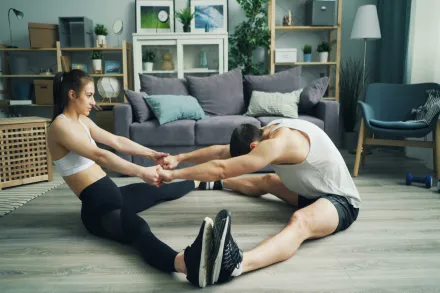
When two people plan together, the repertoire of possible workouts expands dramatically, enabling a balanced blend of strength, cardio, mobility, and functional training. A well-rounded partner program can begin with a joint warm-up that includes dynamic mobility and light activation, followed by a sequence of compound movements that require collaboration, and end with a cooldown that emphasizes flexibility and breathing. Movements such as partner squats, medicine ball passes, or synchronized planks create moments of teamwork that are both effective and engaging. The structure of these sessions allows for progression by raising resistance, increasing duration, or adding more complex coordination tasks as synergy grows between partners.
For both novices and seasoned exercisers, the key is to tailor the workouts to the shared goals and current capabilities. A plan might involve alternating responsibilities, with one person guiding the tempo while the other maintains posture and core engagement, then switching roles. This approach ensures equal participation, mutual accountability, and a sense of equal contribution. The workouts can also be enriched by incorporating intervals that pair cardio bursts with strength challenges, or by embedding mobility drills between sets to improve flexibility and reduce stiffness. The variety and structure help prevent plateauing, promote balanced development, and keep sessions interesting enough to sustain over months and years.
Family fitness and healthy routines for kids
Introducing partner-style workouts into family life can create long-lasting habits that benefit children as they grow. When parents or older siblings model consistent physical activity, kids observe not only the concrete gains in strength or stamina but also the values of discipline, patience, and perseverance. Family-friendly partner routines can include playful activities that build coordination and confidence while remaining accessible to younger participants. The environment becomes a space where physical literacy is learned through success experiences, encouragement, and shared celebration. In these contexts, exercise is reframed as a joyful, collaborative endeavor rather than a chore or a punishment, which lays the groundwork for healthier choices later in life.
With children involved, safety considerations take on additional importance, including appropriate supervision, age-appropriate loads, and clear boundaries around what counts as safe practice. Partners can design sessions that pair challenging elements with lighter, more playful tasks to maintain enthusiasm and reduce frustration. The goal is to cultivate a positive association with movement, one that emphasizes exploration, cooperation, and mutual respect. As kids become more engaged, parents can gradually introduce more structured progressions, helping the whole family to grow together in a way that supports physical development, social bonding, and emotional well-being. The result is a household culture where activity appears as a natural and enjoyable part of daily life rather than an occasional obligation.
Workplace wellness and team cohesion
Beyond home and family settings, partner workouts can be a powerful tool for workplace wellness and team-building. When colleagues share exercise experiences, they create a common language of effort, resilience, and mutual encouragement that translates into improved collaboration, communication, and morale on the job. Teams that train together often develop a heightened sense of trust, increased accountability, and a willingness to support one another through challenging projects. The physical challenge becomes a shared metaphor for professional challenges: pushing through fatigue, coordinating with teammates, and maintaining a focus on collective progress. In this context, fitness becomes part of organizational culture, reinforcing values such as dedication, empathy, and the importance of looking after one another’s well-being.
Practical programs for workplace groups can involve short, modular sessions that fit into lunch hours or early mornings, with clear roles and scalable difficulty. A well-designed partner routine may incorporate brief warm-ups, synchronized strength work, and brief cardio circuits that can be completed in a small space with minimal equipment. The social benefit is amplified when participants rotate roles, encourage one another publicly, and celebrate group milestones. This approach not only helps individuals achieve personal health goals but also strengthens team identity, making the workplace a more resilient and supportive environment that values health as a shared priority rather than a private concern.
Long-term adherence and lifestyle integration
The enduring value of partner workouts lies in their potential to become an integrated aspect of daily life, not a transient phase of enthusiasm. When two people regularly train together, the commitment is reinforced by routine, relationship, and reciprocal accountability. Over time, workouts push beyond the initial novelty and become a stable, expected part of the calendar, much like family meals or scheduled appointments. This level of integration supports a broader lifestyle shift toward consistent activity, healthier nutrition choices, and more mindful recovery practices. Individuals often report improved sleep quality, higher daily energy, and a greater sense of purpose that arises from contributing to another person’s progress as well as their own.
Adherence is further strengthened by the adaptive nature of partner programs. As fitness levels evolve, partners can negotiate new challenges, adjust goals, and reframe success in ways that preserve motivation without risking burnout. The duo can experiment with different training modalities, such as hybrid workouts that combine cardiovascular intervals with resistance training or mobility-focused sessions that emphasize posture and joint health. The social reinforcement inherent in partnership helps sustain momentum through inevitable life events that disrupt solo routines, turning temporary disruptions into negotiable pauses rather than permanent breaks. In this way, partner workouts offer a durable strategy for maintaining activity across seasons, life transitions, and changing health circumstances.
Challenges and how to overcome stalemates
Even with strong motivation and clear goals, partner training can encounter friction. Scheduling conflicts, mismatched energy levels, and disagreements about pace or intensity can temporarily stall progress. The key to navigating these moments is communication, flexibility, and a shared commitment to long-term progress rather than short-term comfort. Partners can establish agreed-upon signals for when one person needs a lighter load or more rest, and they can practice nonviolent communication to voice concerns without blame. It is also helpful to design contingency plans, such as backup workouts that can be done individually if schedules do not align, ensuring that the overarching objective—consistency—remains intact even when a session cannot proceed as planned. The most resilient partnerships approach obstacles as a joint problem to solve rather than a fault to assign, which sustains trust and continues to move both people forward.
Another potential challenge is plateaus in progress, which can lead to frustration or diminished enthusiasm. A practical response is to introduce variety with intention: swap in a few new movements, adjust tempo, or shift the order of exercises to re-ignite interest and challenge different muscle groups. Partners can also recalibrate goals to emphasize quality of movement and sustainable effort rather than chasing ever-increasing numbers. By maintaining a mindset that values process, posture, and consistency over immediate results, the partnership preserves motivation and reduces the risk of burnout. In essence, the ability to adapt, forgive, and refocus is what makes partner workouts durable over the long haul, even when life’s fluctuations threaten routine and momentum.
Getting started: practical tips for initiating partner training
Starting a partner workout routine requires a light blend of planning, openness, and a willingness to experiment. The first step is to identify a partner with compatible schedules and a shared interest in improving health, rather than seeking a perfect match in ability. From there, a simple, scalable plan can be created, starting with two to three short sessions per week that emphasize consistency over intensity. It is helpful to set clear, achievable objectives for the first month, such as learning correct form on a few fundamental movements, building a habit of arriving on time, and learning how to communicate needs effectively during a workout. The logistics matter as much as the physical work, so choosing a consistent location, bringing essential gear, and agreeing on a cancellation policy can reduce friction and keep momentum intact.
As you begin, prioritize movements that build confidence for both participants and avoid complex choreography that may derail early efforts. A practical approach is to begin with a circuit that alternates between a few compound exercises and a brief cardio interval, allowing for short rest breaks and easy progressions. The emphasis should be on sustainable effort, mutual encouragement, and attention to form. Regular feedback sessions—perhaps at the end of a week—help refine techniques, adjust the difficulty, and ensure that both partners feel valued and challenged in constructive ways. With time, the routine becomes a natural part of life, a shared practice that strengthens bodies and relationships in equal measure.
In the broader arc of personal development, partner workouts can become a gateway to other healthy behaviors, such as improved sleep hygiene, more mindful nutrition, and a calmer, more focused day-to-day mindset. For many people, the social dimension of exercise provides a reason to prepare the body with care, hydrate consistently, and approach recovery with the same seriousness they bring to workouts. The cumulative effect is an integrated pattern of living that supports long-term health goals, quality of life, and a resilient sense of belonging. When two people commit to this journey together, they not only improve their fitness but also cultivate a shared narrative of persistence, mutual respect, and cooperative growth that can sustain them through years of change and challenge.