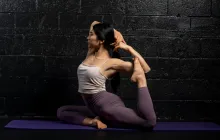
The practice of Tai Chi is often described as a dance between stillness and motion, a slow and deliberate unfolding of movement that invites the practitioner to experience an intimate dialogue between the body and the mind. At its core, Tai Chi is more than a sequence of choreographed postures; it is a structured invitation to align breath, posture, sensation, and intention so that each movement becomes a moment of mindful awareness. In this sense, the mind-body connection is not a distant ideal but an experiential reality that emerges from the steady attention paid to the body in motion and the breath that guides that motion. The slow tempo and continuous flow of Tai Chi create a natural cadence that allows the nervous system to calibrate, dampening turbulence in thought and enhancing the clarity of physical sensation in the muscles, joints, and fascia. Over time, practitioners report a growing sense of coherence where the mental state tends to follow the external rhythm of the body, a synchrony that can extend beyond the dojo or park where practice takes place and influence daily activities, sleep, mood, and even the perception of stress. This systemic alignment rests on a variety of factors, including breathing patterns, postural alignment, proprioceptive feedback, and the cultivated capacity to remain present with each incremental shift in weight, angle, and balance. The result is a practice that fosters a perception of wholeness, an integrated sense of self that integrates emotional, cognitive, and physiological experiences into a single, continuous experience. As a consequence, Tai Chi becomes both a physical discipline and a formal practice of mind training, a dual function that is uniquely situated to nurture the mind-body connection in ways that few other forms of exercise can easily reproduce. In exploring this role, researchers, clinicians, and practitioners alike have begun to articulate the pathways through which Tai Chi supports nervous system regulation, perceptual acuity, and emotional balance, while keeping a grounded emphasis on safety, accessibility, and personal meaning. This integrative perspective invites readers to move beyond the stereotype of Tai Chi as mere gentle exercise and to recognize it as a comprehensive practice that can cultivate a more resilient relationship between mind and body over time.
Historical roots and philosophical underpinnings
To understand the mind-body interplay in Tai Chi, it helps to acknowledge the historical and philosophical ground from which the practice springs. Originating in China as a martial art steeped in centuries of philosophical reflection, Tai Chi grew from a synthesis of martial technique, medical theory, and contemplative tradition. The concept of qi or vital energy is central in traditional narratives, representing an integrated life force that flows through meridians and channels within the body. Although qi is often described in metaphysical terms within ancient texts, modern interpretations tend to reframe it in physiological language, linking energetic concepts to patterns of respiration, muscle activation, and autonomic regulation. In parallel, the framework of Yin and Yang offers a way to understand balance and harmony in movement. Rather than an absolute dichotomy, Yin and Yang describe complementary forces that interact dynamically, suggesting that stillness and motion, softness and firmness, inhale and exhale, are not opposites but coexisting aspects of a single living system. This philosophical lens helps practitioners cultivate patience, restraint, and quiet attention, as the body learns to move with gravity rather than against it and to breathe with a gentle efficiency that minimizes unnecessary strain. The historical emphasis on balance, sensitivity, and mindful intention prepares the practitioner to engage with the body as a living instrument of awareness, rather than as a set of isolated muscles bound to a mechanical routine. When revived in contemporary contexts, these ideas offer a bridge between traditional wisdom and modern science, inviting a more nuanced inquiry into how slow, deliberate practice can recondition neural pathways, influence autonomic tone, and foster a refined sensitivity to sensory input that characterizes the mind-body connection. By recognizing the lineage and the philosophy behind Tai Chi, readers can approach the practice not only as physical training but as an invitation to participate in a long-standing inquiry into how mind and body inform each other during movement and stillness alike.
Physical foundations of Tai Chi practice
At the most tangible level, Tai Chi training focuses on the body as a unified system rather than a collection of isolated parts. The practice emphasizes alignment, breathing, weight shifting, and relaxed but purposeful muscular engagement. An enduring principle is the maintenance of an upright yet relaxed posture that allows gravity to assist movement, enabling smoother transitions between postures. Core stability plays a pivotal role, not through strenuous exertion but through controlled, gentle activation of the deep stabilizing muscles. This approach helps to stabilize the spine, protect joints, and support efficient energy expenditure during movement. The feet act as the base of support, with a sense of rooting that is cultivated through slow, deliberate weight transfer from one leg to the other. As weight shifts, the torso naturally aligns with the pelvis and the spine, creating a continuous chain of proprioceptive feedback that informs every action. The hands and arms, while seemingly light, participate in precise arcs and circular paths that guide the body with a sense of momentum rather than force. Breath plays an integral role in this physical framework, not as a mere background process but as an active regulator of movement. Coordinating breath with the pace of each movement fosters a rhythm that stabilizes the nervous system, reduces muscular tension, and enhances the subtle synchronization of muscle groups. Through repeated practice, these physical foundations ripen into a refined sense of embodiment in which the body and mind can anticipate, monitor, and adjust movement with a degree of fluency that distinguishes expert practice from brief exposure. In this way, the physical mechanics of Tai Chi become a vehicle for cultivating a more intimate, reliable, and nuanced relationship with one’s own body, a prerequisite for a robust mind-body connection that endures beyond the immediate act of practice.
Physiological mechanisms behind the mind-body connection
The deepening mind-body connection cultivated by Tai Chi can be understood through several interwoven physiological mechanisms. One central thread involves autonomic nervous system regulation, where slow, diaphragmatic breathing tends to tilt the balance toward parasympathetic dominance, promoting rest, digestion, and recovery while dampening the stress response. This shift often manifests as a lower heart rate and a more favorable heart rate variability pattern, indicators that the body is better prepared to adapt to changing demands rather than to react with sudden, reactive bursts of activity. At the muscular level, the controlled, continuous movement reduces excess co-contraction around joints, which in turn lowers metabolic cost and decreases the subjective sense of effort. The consistent attention to posture and alignment enhances proprioceptive feedback, sharpening the brain’s ability to map the position and movement of the limbs in space. This refined proprioception supports more accurate motor planning and smoother execution in everyday tasks, from walking on uneven surfaces to stabilizing the torso when carrying objects. The circulatory system also benefits from the gentle, sustained movement that promotes steady blood flow to the brain and muscles, supporting metabolic exchange and waste removal. Additionally, the meditative aspect of Tai Chi engages neural networks involved in attention, emotion regulation, and self-monitoring. Repeated cycles of focused attention on breath, movement, and body sensation can strengthen the connectivity of networks such as the prefrontal cortex and the anterior cingulate, enhancing executive control and reducing susceptibility to intrusive thoughts or rumination. Through these coordinated physiological processes, Tai Chi offers a unique blend of motor conditioning, autonomic regulation, and cognitive engagement that collectively reinforces the mind-body connection in a durable and adaptive way.
Interoception, attention, and the brain
Interoception—the brain’s ability to sense the internal state of the body—is central to how we experience the mind-body link during Tai Chi. Practices that heighten interoceptive awareness invite people to observe subtle cues such as breath depth, chest expansion, shoulder relaxation, and the feel of weight settling and shifting. This heightened perceptual sensitivity is closely tied to attention and awareness, guiding the practitioner to maintain a continuous feedback loop between sensation and action. Regularly attending to internal cues during movement can refine the quality of attention, strengthening sustained focus over the length of a movement sequence and enabling a more resilient response to distractions. The brain’s networks involved in interoception and attention, including regions of the insula and related cortical areas, appear to respond adaptively with sustained practice. As these networks become more finely tuned, practitioners may experience smoother transitions between postures, a more stable center of gravity, and a calmer, less reactive mental state. The integration of breath and movement further supports a harmonious autonomic state, in which sensory input from muscles, tendons, and joints is integrated with cognitive evaluation to guide decisions about balance, postural corrections, and energy expenditure. This combination of interoceptive accuracy and attentional control anchors the mind-body dialogue in a language of sensation and intention, rather than in hurried motor responses or external cues alone. Many practitioners report a heightened sense of body ownership and a more precise sense of where they are in space, a foundation for improved daily function and emotional regulation informed by a robust internal map of the body.
Impact on stress, emotion, and mental health
The relationship between Tai Chi practice and mental well-being is often described in terms of reduced stress, improved mood, and greater emotional resilience. The gradual and controlled nature of movement reduces the frequency and intensity of sympathetic arousal, which translates into calmer everyday responses to stress. Breathing practices embedded in Tai Chi contribute to a more balanced hypothalamic-pituitary-adrenal axis response, potentially lowering circulating stress hormones and facilitating quicker recovery after challenging experiences. In addition, the mindful observation of breath and sensation can modulate emotional reactivity by engaging brain regions involved in cognitive control and emotion regulation. The practice provides a structured environment in which difficult emotions can be approached with curiosity and nonjudgmental awareness, which in turn can mitigate rumination and promote adaptive coping strategies. Over time, the repeated alignment of breath, posture, and attention fosters a mental habit of present-centered awareness, which can influence sleep quality, daytime energy, and overall affect. While Tai Chi is not a substitute for clinical intervention when mental health concerns are severe, it has shown promise as a complementary approach that supports psychological well-being, reduces perceived stress, and enhances quality of life for diverse populations, including older adults, individuals experiencing anxiety, and those managing chronic conditions that heighten emotional strain. The cumulative effect of regular practice is often described by participants as a sense of gradual steadiness, an increased tolerance for discomfort, and a better ability to remain centered in the face of daily challenges.
Balance, gait, and fall prevention in aging
One of the most practical manifestations of the mind-body connection in Tai Chi is its impact on balance, stability, and walking patterns—areas of particular importance for aging populations. Tai Chi trains the nervous system to integrate proprioceptive feedback with motor commands in a way that improves postural control. The slow, deliberate transitions between postures cultivate a steady center of gravity and reduce the likelihood of abrupt, uncontrolled shifts that can lead to falls. Regular practice enhances the synergy between the vestibular system, vision, and somatosensory input, supporting more accurate balance responses to perturbations. The continuous weight shifting and multi-directional movements encourage a fuller range of trunk and hip mobility, which can reduce stiffness and improve gait symmetry. For older adults or those with balance concerns, Tai Chi offers a low-impact, scalable approach to equip the body with protective habits—careful weight distribution, mindful stepping, and gradual adjustments to posture—that preserve independence and functional mobility. The mind-body aspects of Tai Chi, including attention to breath and sensory cues, further contribute to confidence in movement and a greater willingness to engage in daily activities that require steadiness and coordination. By cultivating a calm, deliberate approach to movement, practitioners may experience fewer near-miss events and a more reliable sense of safety as they navigate stairs, uneven surfaces, or crowded environments.
The cognitive dimensions of Tai Chi practice
Beyond physical conditioning, Tai Chi engages cognitive processes essential for learning, planning, and execution. Each form presents a sequence that requires memory, attention, and working memory to recall the next move while maintaining posture and alignment. The continuous attention to breath and sensory feedback fosters a form of procedural learning in which the body begins to anticipate the next step with reduced cognitive load over time. This learning process can translate into better multitasking in daily life, as the mind experiences less interference from competing tasks when performing familiar activities. The practice also emphasizes flexibility of attention, inviting practitioners to observe movement, breath, and sensation without clinging to a single outcome. Such cognitive flexibility is associated with executive function improvements and enhanced mental clarity, which can be particularly meaningful for people coping with cognitive aging or stress-induced cognitive fatigue. In addition, the social aspect of group practice and the presence of a teacher can provide a real-world context for practical problem solving, encouraging adaptive strategies and gradual skill refinement. The synthesis of motor, sensory, and cognitive demands in Tai Chi creates a rich training ground for the mind to develop resilience, precision, and a nuanced awareness of internal states that together strengthen the mind-body alliance.
Evidence from research and clinical practice
A growing body of research across disciplines has begun to chart the benefits of Tai Chi for physical health, cognitive function, and emotional well-being, reinforcing subjective reports from practitioners. Studies commonly report improvements in balance and postural control, decreased fall risk, and enhanced gait stability, particularly among older adults. In addition, several investigations have noted favorable changes in cardiovascular markers, such as resting blood pressure and heart rate responsiveness, as well as improvements in heart rate variability, which signals more adaptive autonomic regulation. From a cognitive perspective, Tai Chi has been associated with gains in attention, executive function, and processing speed in some populations, though results can vary depending on duration, intensity, and the specific Tai Chi style practiced. Emotionally, practitioners frequently report reduced perceived stress, lower anxiety levels, and improved mood, with some studies suggesting reductions in inflammatory markers and improvements in sleep quality. It is important to recognize that the strength of the evidence base varies by study design and population, and that Tai Chi is often most effective when integrated into a broader health strategy that includes guidance from healthcare professionals. Nonetheless, the convergence of data from biomechanical analyses, neurophysiological measurements, and patient-reported outcomes points toward a coherent model in which slow, mindful movement acts as a catalyst for both bodily regulation and mental well-being. In clinical contexts, instructors and therapists increasingly tailor Tai Chi interventions to individual needs, aligning postures and forms with a person’s physical capacities and goals to maximize safety, enjoyment, and therapeutic potential.
Practical integration into daily life and personal practice
For those seeking to cultivate the mind-body connection through Tai Chi, practical integration involves thoughtful sequencing, consistent practice, and a focus on quality over quantity. Beginners are often encouraged to start with a short daily window that emphasizes relaxed breathing, stable posture, and smooth transitions between a few foundational movements. As proficiency develops, sessions may gradually extend in duration and introduce longer form sequences while preserving a sense of ease and interest. A key aspect of sustainable practice is attending to the breath as an anchor, allowing each inhale to invite expansion and each exhale to support release and softness in the joints. Practitioners are advised to cultivate curiosity about how different postures feel in the body, paying attention to which movements require more attention to balance, which parts of the torso respond most readily to weight shifts, and how the mind tends to wander during the practice. It can be beneficial to practice in a quiet environment, free of interruptions, but Tai Chi can also be adapted to daily routines, such as gentle stepping during breaks or mindful movement before sleep. Safety considerations include acknowledging personal limitations, avoiding sudden or jarring motions, and using supportive aids or supervision when needed. The goal is not to perform each movement perfectly but to nurture a daily relationship with body and breath that invites calm, steadiness, and a growing sense of embodied presence. In this way, Tai Chi becomes a portable, adaptable practice that can travel with a person through work, family life, and personal routines, enriching the mind-body connection wherever attention is directed.
Potential limitations and misconceptions
While Tai Chi offers a host of potential benefits, it is important to approach the practice with realism and critical consideration. The effects of Tai Chi can vary widely depending on factors such as practitioner age, health status, prior experience, and the quality of instruction. Some individuals may experience transient discomfort as new movement patterns are explored, highlighting the value of gradual progression and professional guidance in the initial stages. A misconception sometimes encountered is the notion that Tai Chi is merely gentle or passive exercise; in reality, effective Tai Chi requires sustained attention, precise breath control, and attentive alignment, all of which demand focus and practice. Another misunderstanding concerns the universality of results; while many people report meaningful changes in mood, balance, or sleep, these outcomes are not guaranteed and should be pursued as part of a broader wellness plan rather than treated as a standalone cure. It is also essential to respect medical conditions and consult healthcare providers when integrating Tai Chi into treatment regimens, especially for individuals with cardiovascular disease, severe osteoporosis, or joint instability. By recognizing both the strengths and limits of Tai Chi, students and clinicians can set appropriate expectations, design safer programs, and cultivate a mindset of ongoing learning and adaptation that supports a resilient mind-body connection over time.
Bridging cultures: from ancient wisdom to modern science
The journey of Tai Chi from its roots in traditional Chinese culture to contemporary Western wellness contexts illustrates the richness of cross-cultural exchange in understanding the mind-body connection. The translation of ancient concepts into modern terminology invites a broader audience to engage with the practice while preserving its depth and historical significance. This bridge is not a simplification but a translation that preserves core principles—centeredness, balance, breath awareness, and mindful movement—while making them accessible to people with diverse backgrounds, languages, and health concerns. In contemporary practice, collaboration between traditional instructors, physical therapists, psychologists, and neuroscientists fosters an integrative approach where practitioners can benefit from a coherent model that respects tradition while embracing empirical inquiry. By acknowledging the value of both articulate philosophical underpinnings and rigorous scientific examination, the field can continue to refine protocols, measure outcomes more precisely, and tailor interventions to individual needs. This fusion, when guided by expertise and humility, fosters a richer understanding of how a practice rooted in ancient wisdom can contribute to modern well-being, cognitive health, and emotional balance, without losing its essential character. The ongoing dialogue between cultures thus becomes a living laboratory for exploring the nuanced rhythms of the mind-body connection in everyday life.
Future directions and personal growth
Looking ahead, the role of Tai Chi in promoting mind-body harmony is likely to expand through personalized approaches, technology-assisted training, and expanded clinical collaborations. Emerging methods may include biofeedback-informed practice, where learners receive real-time data on breath, heart rate, or movement quality to guide adjustments in real time. Such tools can support the refinement of proprioceptive awareness and autonomic regulation, helping practitioners experience the subtle shifts in internal states as they engage with postures and forms. Additionally, Tai Chi programs tailored to specific populations—such as older adults, individuals with chronic pain, or those coping with anxiety—can be designed to emphasize safety, accessibility, and meaningful outcomes. The social aspect of practice, whether in group settings or guided online communities, offers opportunities for shared learning, mutual encouragement, and the cultivation of supportive habits that reinforce consistent engagement. As research continues to elucidate the neural and physiological correlates of Tai Chi, the practice may become an even more integrated component of holistic health strategies, complementing other modalities such as mindfulness meditation, physical therapy, and conventional medical treatments. In the grand arc of personal development, Tai Chi invites practitioners to nurture a steady, compassionate awareness of their own bodies and minds, fostering a sense of agency that extends beyond the mat and into all aspects of life. This trajectory suggests that the mind-body connection cultivated through Tai Chi can become a durable resource for resilience, creativity, and well-being across the decades of a person’s journey.
In sum, Tai Chi offers a distinctive pathway to cultivate the mind-body connection by harmonizing movement, breath, attention, and intention. Its physical demands mellow into a refined artistry of balance and spatial awareness, while its inward focus fosters emotional regulation and cognitive clarity. The practice acts as a bridge between ancient wisdom and modern science, a living demonstration that slow, mindful movement can recalibrate the nervous system, sharpen perception, and nurture a sense of grounded presence. For individuals seeking to cultivate resilience, calm, and coherence in daily life, Tai Chi provides not merely an exercise routine but a way to inhabit the body with kindness, curiosity, and enduring awareness. The journey invites ongoing exploration, personal adaptation, and generous attention to the sensorial language of the body, inviting every practitioner to experience, in real time, how the mind and body can cooperate to meet the complexities of living with grace and steadiness.