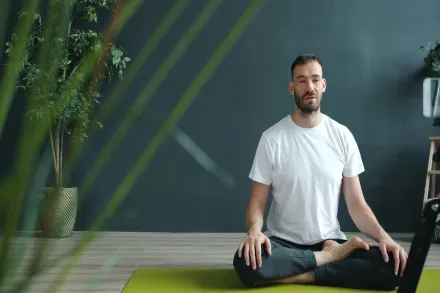
The Link Between Breath and Attention
In the practice of yoga, the breath is not merely a background rhythm but a guiding thread that shapes the entire mental landscape of a session and, gradually, daily life. When a person engages with a deliberate breath, the nervous system receives a signal that the body can shift from a state of vigilance or scattered rumination toward a steadier interior tempo. This shift is not instantaneous, but with consistent patience, the mind begins to settle into a calmer, more attentive mode. The breath acts like a bridge between sensation and perception, drawing the focus away from the noise of external demands and toward the subtleties of the present moment. In that gentle narrowing of attention, cognitive processes such as concentration, working memory, and selective attention begin to operate with greater clarity. The practice is not about forcing attention through sheer willpower; it is about creating conditions in which attention can arise naturally from a calmer physiological state and a clear, compassionate intention.
As practitioners observe the breath in a controlled manner, they notice how inhalation and exhalation patterns influence heart rate, muscle tension, and even skin temperature. The autonomic nervous system responds to these signals, guiding the body toward parasympathetic dominance when the breath lengthens and smooths. This parasympathetic shift reduces the physiological noise that often obscures focus: the rapid chatter of racing thoughts, the surge of stress hormones, and the habitual pull toward distraction. When the body is more at ease, the mind finds it easier to hold one thread of attention without being pulled into other demands, worries, or impulses. In this sense, breathwork becomes a natural training wheel for mental focus, a way to rehearse returning attention to a chosen anchor—whether it is the sensation of the breath itself, a visualization, or a specific point of awareness in the body.
Regular exposure to mindful breathing nurtures an implicit sense of safety within the nervous system. This safety does not imply ignorance of challenge; rather, it signals that challenge can be faced with steadiness. Over time, the skill of returning to the breath strengthens, and with it the capacity to sustain attention through small irritations, external distractions, or internal restlessness. The mind learns that attention can be reoriented without judgment or self-criticism, a change that reduces the emotional currency of distraction. This reorientation is especially valuable in tasks that demand extended focus, such as studying, writing, or problem solving, where a quiet inner environment supports cognitive operations, memory retrieval, and creative synthesis. The breath, then, becomes a practical tool that trains the mind to acknowledge distraction without being overwhelmed by it, and to re-engage with the task at hand with a sense of deliberate calm.
In practical terms, students often discover that a brief pause to adjust the breath before diving into a difficult problem reduces the cognitive load of the later stages of work. Rather than pushing through fatigue, a few conscious cycles of inhaling and exhaling can reset the lens through which information is processed. This reset is not a simple cure but a skillful reweighting of mental resources. In a yoga class, a facilitator might guide waves of breathing that synchronize with subtle visual or tactile anchors. The mind follows these anchors, and as the anchor stabilizes, the content of thought becomes easier to manage. The capacity to notice when attention drifts without chastising oneself creates a learning loop in which focus improves with each cycle of breath and return. Over months of practice, this repeated pattern of attention, drift, and return helps to strengthen neural pathways associated with sustained attention, including frontoparietal networks that support executive control and goal-directed behavior.
Breath as a Gateway to the Nervous System
The body carries information about stress and safety through domains of sensation, muscle tone, and autonomic signaling. When a practitioner engages in specific breathing patterns, such as elongating the exhale or alternating nostril breathing, physiological changes accompany shifts in mental state. An extended exhale tends to favor the activation of the parasympathetic system, which reduces arousal and can soften the edge of alertness that often accompanies restless thinking. This calmer baseline primes the brain for sustained attention because the adversaries of focus—overstimulation, fear, and rumination—lose some of their edge. In addition, rhythmic breathing can synchronize neural oscillations, creating a cadence that supports information processing, error monitoring, and the organization of thoughts into coherent sequences. The rhythm fosters predictability, and predictability is a solvent for chaotic thought patterns, allowing the mind to explore ideas with a steadier tempo rather than a flickering, disorganized pace.
From a neurobiological perspective, regular breathwork can influence the brain's limbic system and prefrontal cortex, regions deeply involved in emotion regulation and executive function. When these areas operate in harmony, the individual experiences a clearer sense of where to place attention and how to move it from one objective to another without abrupt shifts. This harmony translates into an improved ability to manage tasks that require holding information in working memory, updating that information as new details arise, and resisting the pull of salient but irrelevant stimuli. In the long term, the brain may adapt through neuroplastic changes that strengthen circuits responsible for sustained attention, cognitive flexibility, and the quiet, continuous monitoring of progress toward a goal. Such changes support not just moments of focus in a classroom or office, but the ongoing practice of mindful presence in daily routines, conversations, and decisions.
With practice, breath-led attention becomes less about a dramatic act of concentration and more about a gentle, ongoing alignment between inner state and outward activity. The breath becomes a compass that helps the practitioner navigate the storms of daily life without losing the thread of what matters. It is not the absence of distraction that is pursued but the skillful management of attention that allows the mind to return to its chosen anchor with patience and curiosity. In this sense, yoga offers a scalable approach to mental focus: start with a small, accessible breath practice and gradually integrate it into more complex activities, weaving a consistent pattern that supports clarity, calm, and purpose during both ordinary and demanding moments.
Physical Postures and Cognitive Readiness
Beyond the breath, the physical postures of yoga contribute to mental focus by cultivating body awareness, proprioception, balance, and musculoskeletal ease. When the body is misaligned or tense, the brain receives signals of discomfort that can distract the mind from higher-order tasks. Postures that invite lengthened spine, open chest, and relaxed shoulders create a more comfortable nervous system environment, providing a stable foundation for attention to rest upon. The experience of balancing poses, for example, challenges the mind to stay present while the body experiences micro-instability. The need to adjust, recalibrate, and maintain equilibrium invites a continuous loop of sensory feedback and cognitive processing, strengthening the capacity to monitor performance, anticipate next moves, and adjust strategies in real time. In such moments, attention is not merely anchored in a single point but distributed across a field of bodily sensations, breath, and intention, which can translate into a more versatile and resilient focus during intellectual tasks that require multi-step reasoning or problem solving.
As sensations accumulate, practitioners learn to decouple automatic, reflexive responses from deliberate actions. When a posture becomes challenging, the mind may want to shift away or seek comfort. Instead, a trained focus notices the sensation, labels it in a nonjudgmental way, and proceeds with mindful adjustment. This practice cultivates cognitive flexibility: the ability to adapt strategies when the environment changes, rather than locking into a single routine. Such flexibility complements focus by enabling a person to adapt to shifting details in a problem, to switch tasks efficiently when required, and to sustain effort without collapsing into fatigue or frustration. The clarity that emerges from improved posture also supports better visualization, planning, and execution, enabling a student or professional to map out steps with greater confidence and to monitor progress with a steady gaze rather than a hurried, fragmented glance.
In addition, the simple awareness of alignment during movement encourages a more resilient autonomic balance. When the torso grows open and the breath lengthens around the chest, the body experiences less tension that could otherwise strain attention. This physical ease reduces the cognitive load associated with maintaining posture, freeing mental resources for deeper thinking, sensory observation, and sustained focus. Over time, the synergy between body comfort and cognitive readiness yields a practical outcome: tasks that once felt draining become manageable with consistent practice, and the mind learns to sustain concentration with less effort, turning focus into a natural byproduct of a well-tuned body chemistry and a receptive mindset.
Mindfulness in Motion
Mindfulness in motion is a central thread that connects breath, posture, and intention in yoga with the cultivation of mental focus. Rather than treating focus as a pure cognitive outcome achieved through forceful concentration, mindfulness invites individuals to observe their experience with curiosity and nonjudgmental awareness. When a practitioner notices the onset of distraction, temptation, or fatigue, there is a moment of choice: react or gently steer attention back to the anchor. This habit, anchored in movement, teaches patience and self-compassion. It also reduces the emotional charge often associated with distraction, which can otherwise lead to spirals of worry or self-criticism that erode focus. Through mindful movement, attention becomes an adaptive skill rather than a brittle state that breaks under pressure.
In practice, mindfulness in motion may appear as a slow flow that synchronizes breath with deliberate transitions between postures. The mind learns to track the sequence of movements, the sensation of balance, and the rhythm of exhalation and inhalation along with the cadence of shifting weight. The continuous loop of noticing, labeling, and returning becomes a mental workout that strengthens attentional control. In addition to improving present-centered focus, this type of practice supports meta-awareness—the ability to observe one’s cognitive processes from a step removed vantage point. Meta-awareness helps individuals identify patterns of thought that derail performance, such as perfectionistic rumination, overgeneralization, or premature evaluation of ideas. By recognizing these patterns without judgment, a practitioner can choose more constructive responses and maintain a steadier internal weather system that supports sustained attention over time.
Another benefit of mindful movement is emotional regulation. Yoga often elicits a gentle release of tension that is attached to emotional experiences. When emotions are recognized and allowed to pass through without clinging, cognitive resources are freed up for focused tasks. This emotional clarity does not erase feelings but reframes their relevance to the task at hand. In environments where decisions are sensitive or complex, the ability to regulate emotion supports better decision quality, reduces impulsivity, and improves the persistence necessary to complete challenging projects. The result is a practical, lived experience of focus that does not demand extraordinary willpower but relies on a grounded, compassionate engagement with each moment as it arises.
Neuroplasticity and Focus
Advances in neuroscience increasingly illuminate how regular contemplative movement reshapes the brain. Through yoga practice, patterns of neural activity associated with attention and executive function can become more efficient. The prefrontal cortex, a region responsible for planning, cognitive flexibility, and error monitoring, benefits from sustained training that pairs controlled breathing, mindful attention, and purposeful action. Concurrently, the amygdala, which processes emotional responses, often shows reduced reactivity after consistent practice, allowing the frontal networks to operate without being overwhelmed by fear-based stimuli. While such changes require time and consistent effort, the trajectory suggests that yoga can contribute to a more stable neural architecture for focus. The brain may improve its ability to filter irrelevant information, maintain goal-directed focus, and switch tasks with less cognitive cost when needed, all of which are valuable in academic work, professional life, and creative endeavors.
In practical terms, practitioners may notice improvements in the speed and accuracy of perceptual discrimination, enhanced working memory when juggling multiple streams of information, and a more resilient pattern of sustained attention across tasks. The capacity to monitor internal states, track progress, and adjust approaches becomes more automatic, reducing the mental fatigue that often accompanies extended cognitive effort. Importantly, these neural adaptations are not about achieving a single moment of peak focus; they represent a durable reorganization of how attention operates under typical daily pressures. The long view suggests that yoga can act as a training ground for the mind, much as physical exercise trains the body, yielding lasting gains in concentration, composure, and the capacity to engage deeply with complex tasks.
Daily Practice and Small Habits
One of the most practical advantages of yoga for mental focus lies in its accessibility and adaptability to everyday life. A consistent routine does not require hours in a studio; even brief sessions centered on breath, gentle movement, and mindful intention can accumulate meaningful benefits. Establishing a sustainable cadence—whether it is a few minutes each morning, a short pause during lunch, or a winding-down sequence in the evening—creates a predictable platform for focus to strengthen gradually. The repetition itself is a kind of cognitive training: the brain learns to anticipate the sequence, manage transitions, and maintain a steady internal tempo across days and weeks. Over time, this regularity shifts from a conscious effort into a probiotic of attention, a daily practice that supports mental clarity and emotional balance in the face of fluctuating demands and unpredictable schedules.
Habits form through small, consistent choices that align with personal goals. A person might begin a session by setting a clear intention for focus, a sentence or image that anchors the mind. Then, together with a disciplined breath cycle, the body follows through with a sequence that invites ease and stability. The intention acts as a cognitive landmark, helping the mind resume its focus when distractions arise. In cultures that emphasize productivity, this approach offers a humane alternative to relentless striving: it honors the need for recovery, rest, and attentive work. The slow, patient accumulation of mindful practice cultivates a durable attentional stamina that persists beyond the yoga mat and informs choices in study, work, and relationships, where sustained focus matters to outcomes and quality of experience.
Additionally, yoga routines often include restorative elements that reduce cognitive load and support mental balance. Poses that emphasize gentle traction, supported stretching, and quiet breath can reset the nervous system after a demanding work session, preparing the mind for the next challenge. In environments where constant noise and interruption are common, maintaining a practice that alternates between effort and ease becomes a reliable anchor for attention. The rhythm of a daily practice—an inhale that invites expansion, an exhale that invites release, a steady sequence of movement—anchors the mind in a gentle, nonjudgmental rhythm. That rhythm is a practical scaffolding for focus, enabling a person to re-enter tasks with renewed clarity and calm, rather than with a sense of exhaustion or overwhelm.
Yoga Techniques that Enhance Concentration
Several specific techniques within yoga contribute directly to concentration in everyday life. One example is a focusing breath that coordinates inhalation with a visualized object or a touch point on the body, such as the tip of the nose or the abdomen rising with the breath. This technique anchors attention and reduces the tendency to drift toward distraction. Another technique involves a slow, deliberate sequence of movements that emphasizes precise alignment and mindful transitions. The act of guiding intent through each transition—inviting awareness to the area of contact between body and mat, noting the sensations of weight shift, then returning to the breath—develops a habit of mindful observation that translates into sharper, more intentional thinking during non-yoga activities.
Postural awareness also plays a significant role. By learning to sit or stand with an upright spine, open chest, and relaxed jaw, the practitioner reduces physiological tension that can interfere with mental clarity. The body becomes a reliable signal of the mind's state; as posture becomes more integrated with breath and attention, the mind naturally follows into steadier focus. Moreover, the practice can incorporate short periods of meditation embedded within movement. Short moments of stillness in a pose, followed by a transition, teach the brain to hold attention even when the body is not actively moving. These micro-moments of stillness train the attention system to resist fragmentation, a skill invaluable for tasks that require long attention spans, such as problem solving, writing, or studying complex material.
On a practical level, teachers and practitioners often encourage a simple ritual: begin with a calm breath, proceed through a few restful poses to release tension, then move into poses that require balance or coordination, and finish with a brief period of seated meditation. This sequence models how to manage cognitive load by alternating zones of effort with zones of ease, mirroring the fluctuating demands of real-world tasks. The mind learns to anticipate transitions, maintain focus during movement, and recover quickly when shifting gears is necessary. Beyond the technical aspects, the essence of these techniques lies in cultivating a relationship with attention that is compassionate, curious, and patient, rather than punitive or anxious. This attitude itself becomes a powerful mental habit that supports sustained focus in daily life.
Yoga Philosophy and Mental Discipline
Yoga philosophy offers a framework for understanding focus not merely as a cognitive achievement but as a quality of awareness that arises from alignment between body, breath, and intention. The discipline invites practitioners to observe desire, aversion, and impatience with equal curiosity, recognizing how such mental currents can undermine steady attention. When these tendencies arise, the philosophical lens suggests returning to a chosen anchor with nonjudgmental presence, thereby reinforcing mental discipline. This approach cultivates a sense of inner stability that resists the pull of external stimuli, while maintaining a flexible mind capable of adapting to new information and changing circumstances. In this light, focus is not a rigid state but a balanced mode of engagement that honors the complexity of experience while preserving clarity of intention.
Key philosophical themes—nonattachment, equanimity, and discernment—support cognitive resilience by reducing the reactivity that often accompanies distraction. When students learn to observe thoughts without clinging to them, they free cognitive space for attention to be directed where it matters most. The practice of discernment helps in distinguishing between noise and signal, a skill that translates directly to reading, listening, and problem solving. Through repeated application, these principles shape not only engagement with yoga but also how a person navigates the world: with a steadier gaze, a more deliberate pace, and a greater capacity to sustain effort without becoming overwhelmed by outcomes. The resulting focus is not an enemy of creativity but a trustworthy partner that allows creative insights to emerge from a calm, attentive mind.
Incorporating Yoga into Modern Life
Integrating yoga into a busy schedule may seem daunting, yet the practice offers scalable options that can fit various contexts. A short, intentional session during a commute break, a sequence of chair poses in a long meeting, or an evening routine that wraps the day in soft, mindful movement can all contribute to improved focus. The key lies in creating rituals that are doable and meaningful, not in pursuing a perfect or flawless practice. Consistency matters more than intensity when the goal is to cultivate a reliable cognitive baseline. When a person approaches practice with realistic expectations, the mind learns to associate yoga with moments of clarity rather than with guilt or pressure. This positive association reinforces the habit, making it easier to maintain and to extend gradually as life allows.
In professional environments, the benefits of yoga for focus can manifest in subtle but consequential ways. Colleagues may notice steadier communication, better listening skills, and a calmer demeanor under pressure. The ability to maintain attention during complex tasks, to notice when a colleague's perspective introduces a valuable nuance, and to return to a goal with renewed energy after a distraction—all of these become practical rewards of a steady practice. The social and cultural dimensions of practice also matter: a shared commitment to mindful presence can influence team dynamics, reduce workplace stress, and create an atmosphere where focused, thoughtful collaboration is possible. The cumulative effect is a work life that sustains attention without sacrificing well-being, enabling sustained performance over time.
Potential Pitfalls and How to Overcome Them
As with any habit, yoga aimed at improving mental focus can encounter obstacles. Some practitioners may experience early frustration when progress appears slow or when the mind stubbornly resists stillness. It is important to recognize that focus is not a single endpoint but an evolving capacity that grows through repeated, imperfect attempts. In these moments, returning to gentle basics—steady breathing, comfortable posture, and compassionate self-talk—often yields the most reliable progress. Others may misinterpret the goal as a suppression of thoughts rather than a refined skill of attention. In truth, a focused mind remains aware of thoughts but chooses not to dwell on them. This distinction is essential for maintaining a healthy relationship with attention and avoiding the trap of attempting to blank the mind completely, which is both unrealistic and stressful.
Physical limitations or discomfort can also impede practice. In such cases, modifications and props are permitted and encouraged. The goal is not to push through pain but to explore ease within safe boundaries. A thoughtful instructor can offer alternatives that preserve breath, alignment, and presence while accommodating individual needs. It is equally important to honor rest. Restorative elements can be integrated into a focus-enhancement routine to prevent fatigue and burn-out, ensuring that the nervous system remains receptive rather than overwhelmed. By approaching practice with patience, curiosity, and flexibility, the risk of discouragement diminishes and the likelihood of consistent engagement rises, enabling the focus to deepen over time rather than flicker and fade.
Continuing the Practice: Sustaining Focus Across Life
The promise of yoga for mental focus lies in its ability to nurture a living habit rather than a temporary technique. When breathing, movement, and mindful attention become a daily reference point, the mind gradually learns to maintain clarity in the face of diverse stimuli. The practice teaches that focus is not a solitary act but a coordinated way of being: a balanced engine that coordinates breath, body, and intention. In work, study, or creative activities, this alignment helps sustain concentration through longer periods without sacrificing sensitivity to nuance or the human need for breaks and recovery. The ongoing challenge is to keep the practice accessible, varied, and personal, allowing focus to mature in ways that support overall well-being and meaningful engagement with life.
In a broader sense, yoga offers a philosophy of attention that extends beyond the mat. It invites a patient, observant relationship to experience, a stance that can reduce burnout and cultivate enduring interest. When the mind learns to rest with gentleness on the present moment, it becomes easier to notice subtle shifts in tone, energy, and understanding. This heightened awareness enriches learning, communication, and decision making. The path is gradual and non-linear, but as long as one returns to breath, body, and intention with kindness, the trend over time is toward a more resilient, flexible, and precise form of focus that supports every facet of life.
Ultimately, the journey of yoga as a support for mental focus invites practitioners to cultivate a spacious attentional field: a place where the mind can pause, observe, and select responses with clarity. It is here, within the quiet center of attention, that concentration can grow into a stable, enduring trait. The practice remains accessible, inclusive, and adaptable, offering a reliable framework to encounter the demands of the modern world with steadiness, curiosity, and a compassionate heart. In this sense, yoga does not simply teach one how to focus; it teaches how to be present with focus, how to sustain it, and how to carry its benefits into every moment of living, one conscious breath at a time.