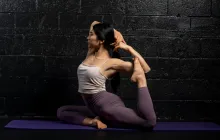
Yoga is often celebrated for its graceful poses and tranquil breath, yet beneath the surface it acts as a comprehensive system that nurtures both flexibility and strength in a balanced, enduring way. Rather than pushing through pain or forcing a pose, practitioners learn to listen to their bodies, align joints, and move with mindful control. This approach gradually expands range of motion across joints, while simultaneously building the muscular support necessary to stabilize that increased mobility. The result is not a single dramatic improvement, but a durable synergy where better movement quality translates into safer stretches, more resilient muscles, and a steadier foundation for daily activities, sports, and rehabilitation. In exploring how yoga improves flexibility and strength, it is helpful to consider the interplay of biomechanics, neurology, breath, and habit formation that makes the practice effective over months and years rather than weeks.
The Link Between Flexibility and Yoga
Flexibility lies at the intersection of muscle length, joint range, and the nervous system’s tolerance for movement. Yoga uniquely combines slow, controlled stretching with proprioceptive feedback, which teaches the nervous system to permit greater elongation without triggering protective tension. When a pose is held with proper alignment, the body has a chance to adapt not only in the muscles but also inside the connective tissues that envelope and connect them. This adaptation includes the fascia, tendons, and joint capsules, all of which contribute to a smoother passage through range of motion. The practice emphasizes not merely forcing muscles to yield but guiding the body to discover accessible positions through alignment, stability, and gradual depth. As this awareness grows, everyday activities such as bending to tie shoes, lifting groceries, or reaching for a shelf become less restricted, simply because the pathways supporting movement have become clearer and more permissive.
In addition, the tempo of a well-designed yoga session matters. Rather than rapid, repetitive motions that resemble traditional stretching routines, yoga invites deliberate, nachhaltige progressions where muscle spindle activity and joint receptors adapt to slow loading. This slow loading is not merely a matter of time but a careful modulation of intensity. A pose held long enough to recruit both stretch and stability cues gives the central nervous system a clearer signal about safe degrees of movement. Over weeks and months, this repeated calibration expands usable ranges without sacrificing control. The result is a durable sense of suppleness that can endure daily life demands, athletic training, and the stresses of aging with less compensatory tension in the body.
Physiological Mechanisms: Muscles, Tendons, and Fascia
The body is a dynamic system in which muscles, tendons, and connective tissues adjust to repeated loading. When yoga practice introduces sustained stretches and deliberate isometric holds, muscle fibers gradually adapt by increasing sarcomere length and reorganizing their cross-bridge dynamics to permit greater excursion. Tendons respond to consistent loading by stiffening in a way that supports efficient force transfer from muscles to bones, while still allowing the tissues to elongate when needed. This combination enhances both flexibility and the control required to operate with strength. The fascia, a continuous network wrapping muscles and organs, becomes malleable through gradual tension and release, contributing to a more integrated feel of movement across the body. The overall effect is a more responsive musculoskeletal system capable of moving through longer ranges without instability or abrupt collapses in form.
Beyond the muscular and fascial changes, yoga alters how we sense position and movement. Proprioception, the awareness of body in space, sharpens as the brain receives richer feedback from joints, muscles, and skin during guided transitions. This heightened awareness supports safer stretching, because the practitioner learns to sense when a limit is approaching and to recalibrate before discomfort intensifies. At the neural level, repeated practice strengthens pathways that coordinate breathing, posture, and motor control. In effect, the body develops a more nuanced map of safe movement, which translates into more confident, controlled flexibility and a stronger foundation for explosive or dynamic actions when necessary.
Strength Gains Through Yoga Practice
Despite a common perception of yoga as primarily a flexibility tool, many styles build significant strength through bodyweight resistance, isometric holds, and controlled transitions. The core idea is to create stable alignment while supporting the body through gravity in challenging positions. In poses that demand balance, leg and core muscles work against the shift in weight, generating steady engagement that improves muscular endurance as well as raw force. In backbends, for example, the spine and chest open while the gluteal and back muscles stabilize the torso, creating a powerful tonic effect that strengthens the posterior chain. In standing poses, the legs, hips, and core experience repetitive load-bearing, which enhances both strength and neuromuscular efficiency. Over time, this translates into better posture, improved athletic performance, and a more robust capacity to meet functional demands with less fatigue and strain.
When practitioners progress to more advanced variations, the challenge shifts from simple strength to integrated strength. This means that the muscles responsible for posture, breath control, and balance must cooperate to maintain form while moving through ranges that are unfamiliar or demanding. The body learns to distribute load across multiple joints and muscle groups, rather than relying on a single area to bear the majority of the work. Such distributed strength reduces the risk of overloading a particular muscle or tendon and supports longer, more sustainable practice. The cumulative effect is a resilient musculature that not only looks athletic but also functions with high efficiency, enabling powerful movements to arise from a stable, coordinated system rather than from brute force alone.
Breath and Movement Synergy
Breath acts as a guiding force in yoga, linking inhale and exhale to the quality and depth of movement. When the breath is synchronized with limbs and torso, movement becomes more controlled and less prone to abrupt, painful jolts. The exhale often accompanies an action that engages effort or lengthening, while the inhale helps to prepare the body for the next phase of movement. This breathing pattern supports endurance by promoting steady oxygen delivery and reducing the build-up of carbon dioxide and acidity in muscles during sustained holds or flows. Over time, the coordination of breath with movement trains the nervous system to pace efforts, which is essential for long, demanding sessions or when integrating yoga with other fitness modalities.
Breath also has a calming influence on the mind, which can translate into muscular relaxation rather than reflexive guarding. When the body feels safe and supported by the breath, muscles can relax more fully into the stretch without sending alarm signals to tighten. This relaxation is not a weakness but a strategic readiness that allows deeper, safer exploration of ranges of motion. For strength, breath control supports core stability, as diaphragmatic engagement during exertion increases intra-abdominal pressure and provides a solid base for powerful, controlled movements. Together, breath and movement create a feedback loop that enhances both flexibility and strength in a manner that feels natural and sustainable.
Core Stability, Posture, and Functional Movement
The core is not simply the rectus abdominis visible in some poses; it is a dynamic system of deep muscles that stabilize the spine, pelvis, and ribcage during almost all physical activities. Yoga emphasizes subtle, continuous engagement of these deep stabilizers as practitioners transition between asanas. This consistent engagement improves postural alignment, reduces compensatory patterns, and enables more efficient transfer of force through the trunk to the limbs. In practice, even poses that seem upper-body or leg-focused require the core to stabilize the spine and pelvis, forging a coordinated strength that carries over into daily tasks such as lifting, twisting, and bending. The benefit extends beyond aesthetic appearance; it translates into safer movement and a more resilient functional physique.
Good posture emerges from the balance between mobility and stability across the spine, pelvis, and shoulders. Yoga cultivates this balance by guiding the practitioner to lengthen spines, broaden the chest, and reeducate the way weight is distributed through the feet and hips. As the center of gravity becomes more stable, arm and leg movements become more efficient because the body operates from a stronger, more connected core. This improved stability reduces energy leakage during activities and supports endurance, whether someone is carrying groceries, working at a desk, or training for a sport. The upshot is a body capable of both flexible reach and solid, dependable strength across everyday life and specialized tasks.
Mobility, Joints, and Functional Movement
Mobility is the capacity to move a joint actively through its full, intended range, while flexibility emphasizes the tissues surrounding the joint. Yoga works with both concepts by guiding joints through composite patterns that involve multiple planes of motion. In this context, mobility is built by practicing safe, controlled transitions that require coordinated action from muscles, ligaments, and cartilage. The practice also gently nourishes the joints through movement and improved synovial fluid circulation, which supports lubrication and nourishment of the joint surfaces. When the body learns to move through smooth arcs rather than abrupt stops, everyday tasks become less taxing, and athletes notice improvements in speed, precision, and injury resistance. The aim is not to achieve maximum range in a single moment but to develop a usable, resilient range that supports durable performance over time.
From a functional perspective, yoga integrates mobility with strength in a way that mirrors real life demands. Everyday actions rarely involve isolated joints moving in isolation; they require coordinated sequences of motion from hips to shoulders, from spine to extremities. Yoga practice trains these integrated sequences by presenting poses that demand balance, weight transfer, and moment-to-moment stability. This holistic approach improves movement patterns in tasks such as lifting a load from the floor, twisting to place a parcel on a shelf, or changing directions rapidly during sport. By reinforcing efficient patterns, yoga helps reduce compensations that often lead to overuse injuries and chronic discomfort in the neck, back, hips, and knees.
Sequence Design: Balancing Flexibility and Strength
A well-designed yoga sequence advances gradually, beginning with gentle warm-ups and moving toward poses that promote both expansion and resilience. The order matters because the body benefits from a logical progression: preparing tissues and joints before deeper work, then consolidating gains with gentle cooling and conscious breath. A balanced sequence typically begins with mobility-oriented movements that awaken the spine and limbs, proceeds to standing poses that cultivate strength and stability, introduces backbends or openers to lengthen the chest and spine, includes twists to promote spinal rotation and digestion, and concludes with restorative positions that allow tissues to adapt and absorb the training stimulus. The repetitive structure of cycles fosters habit formation, which is essential for long-term improvement in both flexibility and strength.
Within any sequence, progression should be individualized and gradual. Pushing into a deeper pose before the body is ready can reinforce guarding patterns rather than true mobility gains. A thoughtful approach emphasizes listening to subtle cues in muscle and joint tissues, adjusting alignment, and varying the holds according to capability. By emphasizing sustainable load and mindful depth, a practitioner can accumulate meaningful gains while maintaining comfort and reducing the risk of overuse injuries. Consistency and attention to form ultimately yield better results than sporadic bursts of intense stretching or ambitious but unsafe attempts at advanced postures.
Yoga Styles and Their Effects on Flexibility and Strength
Different yoga styles emphasize varying aspects of flexibility and strength, and understanding these differences can help a practitioner tailor a practice to goals. Hatha yoga often provides a balanced approach with mindful alignment, offering steady improvements in both mobility and muscular endurance. Vinyasa blends movement with breath into fluid sequences that build functional strength and cardiovascular awareness, while maintaining a flow that challenges stability and balance. Ashtanga emphasizes a set sequence of poses that gradually increases in difficulty, delivering structured, progressive strength gains along with robust flexibility. Iyengar yoga places a premium on precise alignment and the use of props to gradually push the boundaries of safe flexibility. Each style has its own cadence and emphasis, and many practitioners benefit from exploring more than one approach to develop a well-rounded capacity for movement.
For beginners, starting with a slower, alignment-focused practice can establish the foundations of stability and safe range. As experience grows, integrating dynamic flows or longer holds can deepen both flexibility and strength. For athletes or active individuals, the deliberate inclusion of strength-building poses and mobility work into a weekly routine helps protect joints and improve performance. The key is to balance soft tissue gains with bone- and tendon-supporting loads, ensuring that the joints remain protected while the muscles adapt. A thoughtful mix of styles over time tends to deliver the most durable improvements in both flexibility and strength, while also keeping the practice engaging and sustainable.
Safety, Progression, and Common Pitfalls
Safety in yoga hinges on mindful progression, proper alignment, and listening to signals from the body. Pain is a warning sign, not a target, and sharp, stabbing, or lingering discomfort warrants immediate adjustment or rest. Common pitfalls include pushing into a range of motion that outpaces tissue adaptation, neglecting core engagement during transitions, and neglecting breath control in pursuit of depth. A sustainable approach emphasizes building a solid base of mobility and stability before attempting more advanced positions. Regularly revisiting foundational poses helps maintain healthy joints and prevents the development of compensations that can become chronic as the body ages or increases training demands.
Progression should be individualized, taking into account factors such as age, prior injuries, and current fitness level. A practical strategy involves increasing depth gradually, extending hold times incrementally, and varying the angles of a pose to recruit different tissues. Using props, such as blocks or straps, can support safe depth while maintaining proper alignment. It is also important to integrate rest days and restful poses that allow tissues to adapt and recover. With patience and consistency, the risk of overuse injuries decreases, and the body’s capacity for flexible movement and controlled strength expands in a sustainable manner.
Yoga for Longevity and Consistency
Beyond immediate gains in flexibility and strength, yoga offers a long-term framework for healthy aging. The practice encourages attention to breath, posture, and balance, all of which are critical for independence and daily function as life progresses. Regular sessions foster tissue resilience, joint health, and a calm nervous system, which in turn support better sleep, mood, and cognitive clarity. The habit of showing up to the mat—week after week, season after season—creates a reliable vehicle for gradual improvement. In the long run, the cumulative effects of consistent practice are often more meaningful than dramatic, short-term changes. This enduring approach aligns with the body’s natural rhythms and supports a lifestyle that emphasizes vitality, mobility, and confidence in movement across many contexts.
Consistency also means adapting practice to changing needs. As flexibility increases, it becomes possible to explore deeper or more varied poses gradually while maintaining safety. As strength develops, new variations can challenge the body in novel ways, preventing plateaus. The mindful integration of rest, breath, and focus ensures that the practice remains sustainable and enjoyable, rather than becoming an exercise of rigidity or strain. The long view of yoga emphasizes not just how flexible one becomes or how strong one feels in a single season, but how well the body and mind cooperate to sustain healthy movement across decades, allowing people to remain active, capable, and curious about movement throughout life.
Integrating Yoga with Other Fitness Modalities
Yoga is most effective when used in concert with other forms of training that emphasize different aspects of fitness. When paired with resistance training, yoga can enhance mobility, joint health, and core stability, which in turn improves performance and reduces the risk of injury. Pairing yoga with cardiovascular work broadens the athletic envelope, supporting endurance while maintaining adequate strength and flexibility. Even runners, cyclists, and team-sport athletes can benefit from yoga by addressing asymmetries, improving hip and shoulder mobility, and reducing fatigue-related stiffness. The integration is not about replacing established workouts but about complementing them with a practice that fosters recovery, balance, and long-range durability. A thoughtful program weaves in yoga sessions as part of warm-up, mobility work, or restorative cooldowns to create a well-rounded training plan.
In practical terms, a balanced weekly routine might include a short yoga session focused on mobility and breath on non-heavy training days, a longer, more deliberate practice on lighter weeks, and a few sessions that emphasize strength-oriented poses to complement lifting routines. The tempo and intensity should reflect overall training goals and the body's signals. With careful planning, yoga becomes a flexible scaffold that supports progressive overload in other activities while maintaining joint health and muscular balance. The result is a resilient, capable body tuned for both daily life and high-level performance, where flexibility and strength reinforce each other rather than competing for attention.
Practical Tips for Beginners to Advanced Practitioners
For beginners, the emphasis should be on learning alignment, cultivating breath awareness, and building a routine that feels accessible rather than overwhelming. Start with gentle, restorative postures and gradually introduce simple standing poses to build stability and trust in the body. Consistency matters more than intensity, so a modest daily session can yield substantial gains over time. As experience grows, explore a mix of slower holds and dynamic sequences that coordinate breath with movement, as this combination reinforces neuromuscular patterns that support both flexibility and strength. With time, the body becomes more receptive to deeper work while maintaining safety and enjoyment.
Advanced practitioners can benefit from integrating more challenging postures, longer holds, and varied sequences that probe new ranges and load patterns. A well-designed plan balances exploration with recovery, and it remains important to prioritize form over depth. Using props and modifications can help maintain alignment while gradually increasing difficulty, and recognizing when to pause for rest is essential for sustainable progress. The psychology of practice also matters; cultivating patience, curiosity, and nonjudgmental observation helps sustain motivation across plateaus and life’s other priorities. By treating yoga as a lifelong partner rather than a quick-fix program, practitioners of all levels can enjoy meaningful improvements in both flexibility and strength.
Psychological and Neurological Benefits That Support Physical Gains
Yoga fosters a state of mindful presence that extends beyond the mat into daily life. The meditative aspects of practice reduce stress and lower cortisol, which can influence recovery, sleep, and appetite. A calmer nervous system supports more precise motor control, allowing the body to engage in movements with greater clarity and less tension. This improved internal environment enhances the quality of both flexibility and strength gains because it reduces protective guarding that often accompanies strain or fatigue. When stress is managed, training sessions become more productive, and adaptations can accumulate more effectively over time.
Breath-focused techniques also train the autonomic nervous system, shifting balance toward parasympathetic activity after movement. This shift supports faster recovery and better sleep, which are crucial for muscle repair and tissue remodeling. In addition, the mental discipline cultivated through regular practice translates into better focus during workouts, more consistent adherence to routines, and a clearer sense of personal goals. The overlap between psychological well-being, neural efficiency, and physical performance is real and profound, illustrating why yoga is often a valuable complement to other fitness modalities and why its benefits extend well beyond the mat.