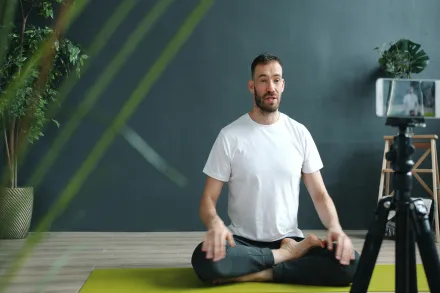
Foundations: What mental clarity means and how body awareness supports it
Mental clarity refers to the ability to hold attention, process information with precision, and act with deliberate intention rather than reacting reflexively. It is not simply a momentary lift of focus but a sustained state in which thoughts are organized, distractions are minimized, and choices feel less clouded by emotional noise. In this sense, clarity arises when the mind is well aligned with the body, and this alignment is something that yoga trains through cultivated awareness. Through a sequence of postures, breath cues, and mindful posture alignment, practitioners learn to observe sensory input without becoming entangled in it. The result is a kind of mental spaciousness that makes it easier to follow through on tasks, solve problems, and maintain a steady rhythm of concentration across the day. When the body is calm and the breath is regulated, the mind often settles into a steadier tempo, which forms the core of mental clarity.
A key aspect of this process is the shift from automatic, habitual patterns to intentional, goal-directed action. Yoga invites a continuous loop of sensing, pausing, deciding, and acting that strengthens executive control networks in the brain. As you move from one pose to another, you learn to notice subtle shifts in attention, to recognize when distraction has crept in, and to gently guide your awareness back to the chosen focus. This repeated practice builds a mental muscle that transfers beyond the mat, helping you approach complex tasks with greater calm, a clearer sense of priorities, and a lower susceptibility to impulsive reactions. In essence, yoga offers a practical framework for cultivating the mental discipline that underpins sustained clarity.
The science behind yoga and brain function
Scientific exploration into yoga has illuminated how regular practice can influence brain structure and function. Studies suggest that yoga can modulate autonomic balance, enhancing the activity of the parasympathetic system while reducing the dominance of the sympathetic, stress-related response. This shift is not merely a physiological footnote; it translates into cognitive benefits such as improved attention regulation, faster recovery after cognitive load, and a greater capacity to sustain focus over time. The breathing techniques often taught alongside postures contribute to these effects by stabilizing heart rate variability, a biomarker associated with adaptability and resilience. When the body is in a state of balanced autonomic tone, the mind experiences less noise from stress hormones and inflammatory signals that can dull clarity and slow decision-making.
Beyond autonomic shifts, yoga appears to influence neural efficiency in networks that govern concentration and working memory. Regular practitioners may show enhanced connectivity between brain regions involved in executive function, emotion regulation, and sensory processing. This means that the brain can coordinate information more efficiently, filtering irrelevant distractions and preserving working memory resources for purposeful tasks. While the exact mechanism is multifaceted and still under investigation, the convergence of improved breath control, calmer physiology, and refined attentional systems helps explain why many people report sharper thinking and greater mental ease after yoga practice. The gains tend to accumulate over time, reinforcing the sense that mental clarity is both a skill and a state that can be cultivated through consistent practice.
Breathwork as the engine of clarity
Breath is the lever by which yoga amplifies mental clarity. Conscious, paced breathing regulates the autonomic nervous system, influences brain chemistry, and signals the body to recalibrate its internal tempo. When breath is slow, deliberate, and rhythmic, it tends to calm the mind, reduce erratic thought patterns, and create a receptive ground for clearer perception. The practice of breathing exercises often accompanies movement, creating an integrated experience in which body and mind synchronize. This synchronization reduces cognitive interference from anxiety and rumination, allowing cognitive resources to be directed toward the task at hand rather than consumed by worry.
Breathwork also fosters metacognition, the capacity to observe one’s own mental processes. As you focus on breath duration, inhalation-exhalation ratios, and breath retention, you become more aware of the streams of thought that arise and pass away. This awareness is itself a form of mental clarity, because it introduces a nonjudgmental stance toward thoughts and feelings. Rather than clinging to a fear-based loop or allowing a distraction to derail the day, you learn to acknowledge the experience, label it, and gently guide attention back to an objective focus. In practical terms, daily breathing routines can be woven into study sessions, work sprints, and problem-solving periods to maintain a steadier cognitive landscape throughout the day.
Mindfulness, attention networks, and neuroplasticity
Mindfulness cultivated through yoga training engages the brain’s attention networks, sharpening the ability to sustain focus on chosen stimuli while reducing susceptibility to distractions. Regular practice strengthens the dorsal attention network, which supports sustained attention, and can refine the ventral attention network that helps detect salient cues in the environment. This dual engagement creates a flexible attentional system: you can hold a task in mind with greater persistence, yet you can also pivot efficiently when new information demands it. The cultivation of nonjudgmental awareness—observing sensations, thoughts, and emotions without clinging to them—reduces cognitive rumination, a common source of mental fog and indecision. Over time, these changes reflect a form of neuroplasticity that enhances cognitive stamina and resilience against fatigue during demanding mental tasks.
Another aspect of this neuroplastic change is the strengthening of inhibitory control, the ability to suppress distractions and habitual responses that no longer serve goals. Yoga practice introduces moments of choice where the immediate impulse to react is tempered by a calmer, more intentional response. This refinement translates into clearer decision-making and more precise execution in daily activities. The synthesis of enhanced attention, reduced internal noise, and improved executive control contributes to a mental clarity that feels both solid and adaptable, enabling you to navigate complex information landscapes with greater poise and efficiency.
Practical yoga practices that sharpen focus
To cultivate mental clarity, a balanced approach combines physical postures with breathing, gaze direction, and pacing. Foundational poses that require balance and alignment—such as tree pose, the warrior family, and supported variations of backbends—invite you to coordinate body tension, breath, and gaze. This integration trains proprioceptive awareness and fosters a steady inner tempo, which translates into steadier cognitive processing. A common practice involves a sequence of slow, deliberate movements linked to a controlled breath cycle. Even short sessions, when done with intention, can recalibrate the nervous system and reset the mind for greater clarity. The key is consistency and mindful engagement rather than pushing for extreme flexibility or advanced postures.
Breathing practices such as slow diaphragmatic breathing, equal inhale-exhale ratios, and extended exhalations anchor attention and temper reactivity. These techniques are versatile enough to be used during study breaks, before important meetings, or after a challenging task to restore mental balance. Instructors often encourage a gentle focus on the sensation of air entering and leaving the body, a practice that grounds awareness and reduces the intrusion of stray thoughts. When these elements are combined with a short, purposeful movement sequence, the result is a comprehensive mental hygiene routine that protects clarity and supports sustained concentration across demanding days.
Effects on stress physiology and cognitive performance
Chronic stress disrupts attention and erodes mental clarity by flooding the brain with cortisol and inflammatory markers. Yoga offers a nonpharmacological approach to countering these effects by restoring a balanced physiological milieu. Regular practice lowers resting heart rate, improves heart rate variability, and changes cortisol rhythms in ways that reduce the cognitive cost of stress. With lower physiological arousal during daily activities, the mind remains more available for deliberate thought, creative problem solving, and careful decision-making. The cumulative impact is an enduring enhancement in cognitive performance, particularly under pressure, where the ability to stay present and act with precision proves most valuable.
In addition to physiological changes, yoga nurtures cognitive flexibility—the capacity to shift perspectives, adapt strategies, and approach problems from multiple angles. This involves not only attention but also emotion regulation. As stress recedes, emotional reactivity diminishes, freeing cognitive bandwidth for higher-order tasks. The synergy between calmer physiology and more balanced affect creates a mental environment conducive to clarity. Practitioners often notice that after a session they experience a moment of mental spaciousness that makes it easier to plan, prioritize, and execute with focus. Over time, this translates into better work performance, more effective learning, and a richer sense of mental agency in daily life.
Yoga styles and how they influence mental clarity
Different yoga traditions offer varying emphases that can influence mental clarity in distinct ways. A steady, alignment-focused practice with longer holds tends to cultivate precision in attention, body awareness, and breath control. Flow-based styles that synchronize movement with breath emphasize cognitive efficiency, as the rhythmic patterning of activity can entrain mental rhythms and reduce cognitive fragmentation. Restorative or gentle styles place a premium on stillness and mindful awareness, which can deepen sensitivity to internal cues and increase tolerance for cognitive ambiguity without becoming overwhelmed. The common thread across these approaches is that when practiced with mindfulness and intention, each style has the potential to sharpen focus, regulate emotions, and support a resilient mental state that remains clear across varying contexts.
Choosing a style is not about chasing novelty but about aligning with personal goals and current capabilities. For someone seeking to deepen concentration and calm, a balanced routine that includes a combination of breath work, mindfulness, and a few foundational postures can yield meaningful gains in mental clarity. Those who enjoy more dynamic sequences may find that the cadence itself becomes a training ground for rapid attention switching and sustained focus. In either case, consistency and an attitude of curiosity are the driving forces that convert practice into clearer thinking and more deliberate living.
Incorporating yoga into daily routines for lasting clarity
Making yoga a regular part of life is less about creating a rigid schedule and more about building accessible habits that honor attention, breath, and body awareness. Short, daily practices—perhaps a morning sequence of ten to fifteen minutes followed by a brief breathing exercise—can accumulate to substantial gains in mental clarity over weeks and months. The key is to embed elements that are repeatable and enjoyable so that consistency feels natural rather than burdensome. In practical terms, this might involve a morning ritual that includes a few grounding postures, a deliberate breath cycle, and a minute of quiet observation before engaging with the day. As these micro-practices become routine, they establish an inner default that preserves clarity even when external circumstances are demanding.
Another strategy is to pair yoga with cognitive tasks that require focus, such as studying or problem-solving sessions. Starting with a short breath-centered warmup, then moving into a few postures that emphasize balance and stability, can prime the nervous system for higher cognitive performance. By ending with a brief period of mindful awareness, you set a mental tone that supports sustained attention, reduces the need for constant task-switching, and lowers the cognitive cost of stress. Over time, this integrated approach reinforces a clear, calm, and purposeful way of engaging with daily responsibilities, making mental clarity feel more accessible in the long run.
Myths and misconceptions about yoga and mental clarity
Many people assume that only intense physical practice delivers cognitive benefits, but the most impactful gains often lie in the intentional, present-centered aspect of yoga. It is not the intensity of the workout alone that cultivates clarity but the quality of attention during practice. Another misperception is that mental clarity depends on achieving a perfect pose; in truth, clarity grows from steady breathing, mindful observation, and a respectful approach to one’s limits. Some believe that yoga only serves relaxation without contributing to sharper thinking, yet evidence points to improved attentional control, better working memory, and more adaptive decision-making as recurring outcomes of sustained practice. Embracing these nuances helps dispel myths and invites a more accurate understanding of how yoga supports cognitive function.
There is also a tendency to overemphasize the spiritual aspects while underestimating the practical cognitive benefits. While the philosophy behind yoga provides meaningful context for practice, the day-to-day gains in mental clarity come from concrete mechanisms such as improved autonomic balance, better breath regulation, and heightened body awareness. Recognizing this distinction allows learners to pursue a pragmatic path that blends technique with awareness, leading to clearer thinking without condescension or over-idealization. Throughout this exploration, it remains essential to honor individual differences, because the pace at which mental clarity develops varies from person to person, influenced by factors such as sleep, nutrition, and life stressors. By staying curious and consistent, you can cultivate a resilient, lucid mind that stays responsive in the face of daily demands.
In summary, yoga offers a holistic approach to mental clarity that bridges physiological regulation, attentional training, and mindful awareness. By integrating deliberate breath, purposeful movement, and compassionate observation, practitioners can sculpt a mental environment that supports precise thinking, calm decision-making, and sustained focus. The journey toward greater clarity is not a quick fix but a steady, evolving practice in which each session contributes to a more accurate reading of reality, a more stable emotional baseline, and a renewed sense of cognitive vitality that can enrich every aspect of life.