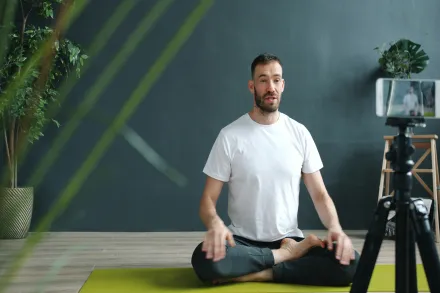
Clarity of mind is not merely the absence of distraction; it is the presence of a steady, purposeful awareness that allows ideas to arise with coherence and decisions to be made with composure. In daily life, mental clarity shows up as the ability to focus on a task, to see connections among competing priorities, and to respond to emotional stimuli without being overwhelmed. Yoga approaches mental clarity from multiple angles. It blends body awareness, breath regulation, and a cultivated posture of nonjudgmental attention. When you step onto the mat with a clear intention, you begin to notice how breath, pace, and posture influence your thinking. The practice does not simply tire the body; it recalibrates the nervous system to reduce reactivity and to widen the window of tolerance for stress. In practical terms, this means fewer moments of scattered thinking during a busy workday, more precise scoring of options when faced with a choice, and a sense that thoughts arrive with enough space to be examined rather than reacted to impulsively. The result is a practical form of mental clarity that serves personal goals, relationships, and creative pursuits.
What mental clarity means in practice
To understand why yoga can sharpen the mind, it helps to ground the discussion in a practical sense of clarity. Mental clarity does not imply a constant state of quiet or an absence of emotion; rather it describes a flexible, spacious way of processing what arises. It includes the ability to sustain attention on a task without letting intrusive thoughts derail progress, to notice when a rumination is taking over and to gently redirect attention back to the present moment, and to recognize patterns in thinking that contribute to stress or indecision. On the mat, this translates into noticing the breath as it moves in and out, observing how a posture invites a new sensory input, and allowing thoughts to pass without clinging. When these elements are practiced with regularity, cognitive functions such as focus, working memory, and cognitive flexibility tend to improve over time. The result is not a flawless mind but a more reliable one, capable of meeting demands with steadiness and a calmer sense of self.
The science behind yoga and the brain
Modern research increasingly points to tangible changes in brain structure and function associated with sustained yoga practice. Neuroimaging studies have shown that regular yoga can influence regions involved in attention, executive function, and emotional regulation, including the prefrontal cortex and the anterior cingulate cortex. The amygdala, a key regulator of fear and arousal, often exhibits reduced reactivity in frequent meditators, and yoga integrates the mind with controlled physiological responses that dampen chronic stress signaling. At the chemical level, consistent practice can alter neurotransmitter systems and neurotrophic factors, such as brain-derived neurotrophic factor, which supports neural growth and plasticity. While the findings are nuanced and vary across populations, the overarching pattern suggests that yoga fosters a brain landscape that supports clearer thinking, improved self-control, and enhanced resilience to stress. These changes do not happen overnight, but they accumulate with steady, mindful practice that blends breath, movement, and awareness.
Breathwork as the doorway to calm and focus
Breath is the bridge between body and mind, and yoga emphasizes breath as a primary tool for cultivating mental clarity. Slow, deliberate breathing slows the heart rate, reduces sympathetic arousal, and increases parasympathetic activation, which promotes a calmer baseline from which thoughts can emerge with greater clarity. Techniques such as nasal breathing, extended exhalations, and lengthened breath cycles train the nervous system to tolerate stress without being overwhelmed. Beyond physiological effects, breathwork cultivates a metacognitive space: you become aware of when your mind wanders and you learn to guide attention back to the current breath. This practice strengthens attentional control, a cornerstone of mental clarity. When breathing patterns become a reliable signal of present moment awareness, the mind naturally finds a steadier tempo, and cognitive tasks feel more accessible because one is less likely to become entangled in automatic thought spirals.
Posture, balance, and cognitive processing
Posture is more than a display of physical alignment; it shapes how information is perceived and processed. In yoga, the alignment of the spine, the opening of the chest, and the distribution of weight all influence the flow of blood and neural signals to the brain. A balanced, open posture can reduce physical discomfort that competes with attention, thereby freeing cognitive resources for problem solving and sustained focus. The practice also engages a proprioceptive loop that heightens body awareness, which has downstream benefits for concentration. When balance and alignment are challenged by a flow of poses, the brain must coordinate sensory input, motor output, and timing, strengthening executive functions related to maintaining focus, planning, and monitoring performance. In daily life, this translates to improved posture during tasks, fewer moments of mind-wandering, and a steadier approach to complex problems.
Mindfulness, attention, and working memory
Mindfulness in the context of yoga refers to present-moment awareness that is nonjudgmental and curious. This stance helps individuals observe thoughts and emotions without becoming entangled in them. Regular mindfulness practice has been linked to improvements in attention control and working memory, the ability to hold and manipulate information over short periods. In yoga, the deliberate coordination of breath and movement creates a living laboratory for mindfulness: each inhale invites awareness of bodily sensations; each exhale invites release of habitual judgments about what the body is doing or how the mind should behave. Over time, attention becomes more resistant to distraction, and working memory gains robustness as the mind learns to retain task goals while filtering out irrelevant stimuli. The result is a sharper sense of mental clarity when facing tasks that demand sustained mental effort or rapid transitions between activities.
Stress reduction and its impact on thought clarity
Chronic stress narrows the window of tolerance and can fragment thinking, leading to impulsive decisions and difficulty concentrating. Yoga offers a practical approach to reducing this burden by addressing both physiological and psychological components of stress. On the physiological side, breath regulation lowers circulating stress hormones and dampens the fight-or-flight response, creating a more stable internal environment. Psychologically, the practice cultivates acceptance and reduces rumination by teaching the mind to witness stress signals without immediate reaction. This combination improves cognitive performance under pressure, enhances problem-solving in high-stakes situations, and sustains attention for longer periods. In real-world settings like work or study, a calmer nervous system often translates into more deliberate decision-making, fewer errors, and a sense of mental space that underpins clearer thinking.
Neural mechanisms: neuroplasticity and yoga
Neuroplasticity refers to the brain’s capacity to reorganize itself by forming new neural connections across different regions. Yoga, with its integrative blend of movement, breath, and mental focus, offers a unique stimulus that can promote adaptive changes in neural networks responsible for attention, interoception, and executive control. The repetitive cycle of mindful movement and breath can strengthen synaptic pathways associated with regulatory control, enabling more efficient communication between the prefrontal cortex and subcortical regions that govern emotion and arousal. As these networks become more efficient, individuals often report increased mental clarity, faster recovery from cognitive fatigue, and a greater ability to switch between tasks without losing track of overarching goals. While individual responses vary, the cumulative effect of consistent practice is a brain that can process information with greater precision and less leakage into worry or distraction.
Emotional regulation and clarity of thought
Emotional regulation is a core contributor to mental clarity because unmanaged emotions can cloud judgment and skew perception. Yoga teaches practitioners to observe emotional states with curiosity, label sensations accurately, and allow them to pass without clinging. This disciplined stance reduces the spin of automatic emotional reactions, creating space for reasoned responses. In turn, clearer thinking emerges from a calmer internal climate where the mind is less dominated by fear, anger, or frustration. The enhanced regulation extends beyond the mat: in conversations, decisions, and creative work, individuals tend to respond rather than react, consider multiple perspectives, and maintain a more even keel when confronted with emotional triggers. The cascade from improved emotion regulation to clearer thought can be subtle but meaningful, contributing to more constructive outcomes in personal and professional relationships.
Sleep, circadian alignment, and daytime clarity
Quality sleep is foundational to cognitive clarity. Yoga can positively influence sleep by reducing hyperarousal, encouraging relaxation before bedtime, and encouraging a wind-down routine that signals to the body it is time to rest. Improved sleep supports memory consolidation, learning, and problem-solving by providing time for neural processing that strengthens content learned during the day. Regular practice can also help synchronize circadian rhythms, making it easier to wake up refreshed and ready to engage with tasks that require focused attention. When sleep quality improves, daytime performance often follows, with sharper recall, quicker reaction times, and a steadier mood. The interplay between breath, posture, and sleep is a practical example of how a regular yoga routine can ripple into cognitive clarity across waking hours.
Yoga practices that support mental clarity in daily life
Beyond formal asana sequences, several on-the-spot practices can cultivate mental clarity throughout the day. A short, mindful pause between activities can reset attention and rebalance breathing; a few minutes of diaphragmatic or box breathing can stabilize arousal levels before a meeting or exam; a gentle stretch in the middle of a demanding task can relieve muscular tension that competes with cognitive focus. The idea is not to transform every moment into a formal practice but to weave mindful awareness into the cadence of daily life. By creating micro-practices that are simple to repeat, you establish anchors that remind the mind to come home to the breath and the body. Over weeks and months, these small rituals accumulate into a broader capacity for steady attention, clear perception, and calm decision-making.
Yoga for different populations and life stages
The benefits of yoga for mental clarity are accessible to a wide range of people, though the approach may vary by age, medical history, and fitness level. Children may experience enhanced focus and self-regulation when yoga is framed as playful exploration, while adults often seek relief from work-related stress and cognitive fatigue. Seniors may use gentler sequences to protect joints while maintaining cognitive engagement through mindful movement and breathing. Pregnant individuals can practice with modifications that honor bodily changes while supporting mental calm and clarity. Across populations, the core principles—presence, breath, alignment, and a nonjudgmental stance—remain consistent, providing a flexible framework that supports cognitive health and emotional balance at every life stage.
Challenges and strategies for sustaining practice
Maintaining a regular yoga routine can present challenges such as time constraints, fluctuating energy, or the monotony of repetition. A practical approach is to start with modest, consistent sessions and gradually expand as confidence grows. When motivation wanes, returning to those elements that first drew you to practice—breath, posture, and mindful attention—can re-establish momentum. It can also help to cultivate a sense of curiosity about what each session offers rather than chasing a particular outcome. If physical discomfort arises, modifying postures with props or choosing gentler sequences keeps practice accessible and safe. Community, whether in person or online, can provide accountability and shared inspiration, while journaling about changes in attention or mood can reveal patterns and progress. By attending to both the inner experience and daily routines, one can build a sustainable practice that continues to nurture mental clarity over years, not weeks.
Integrating mindfulness beyond the mat
The ultimate benefit of yoga for mental clarity emerges when mindfulness extends into daily life. The ability to remain present during conversations, to observe one’s internal chatter without becoming entangled in it, and to respond with intention rather than reflex can transform relationships and work outcomes. This integration does not require heroic effort; it occurs through recurring moments of gentle choice—returning to the breath in a busy moment, choosing a pause before speaking, or noticing tension in the shoulders before a long drive. As the practice becomes more ingrained, the boundary between formal practice and everyday life softens. Mindful attention no longer feels like a separate activity but a natural way of moving through the world, fostering mental clarity that persists well beyond the mat and into the rhythms of daily living.